Coordinate Fabrics using Coloured Dots

A gift of cotton cloth from Japan.

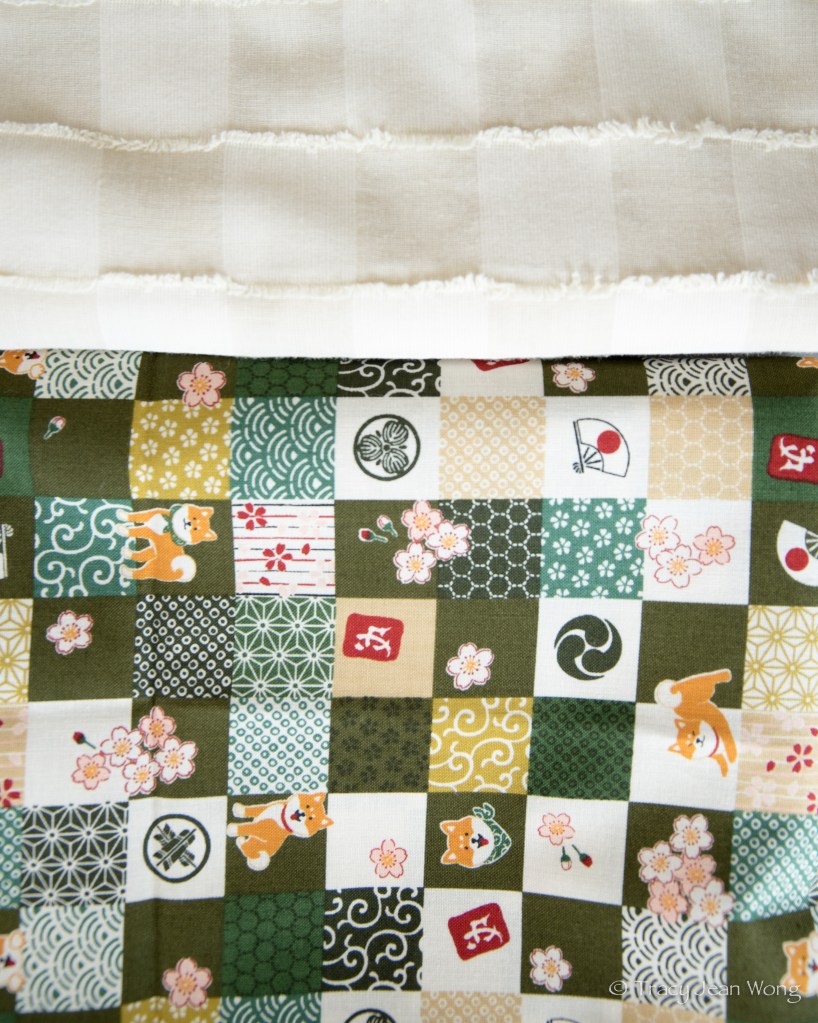
A friend came back from Japan with a much appreciated gift of cotton cloth. There were three cut pieces of cloth, each 110cmX50cm, that could be mixed and matched with one another or with fabrics already in my stash.

Selvedge markings may include coloured dots and other information, such as the name of the manufacturer, designer or collection.

Coordinating fabrics can be easier if you find coloured dots on the edge or selvedge of the fabric pieces. The dots show the hues or colours the screen printers used in creating the fabric. They are called colour registration marks. If they’re numbered, this indicates the order in which colours are used to print the design. They also serve as a measure of quality control during production. If the colour falls outside the circle, the resulting design may be blurry. To prevent this, recalibration of the screen printing process must be done to properly align the screen, fabric and printing machine.

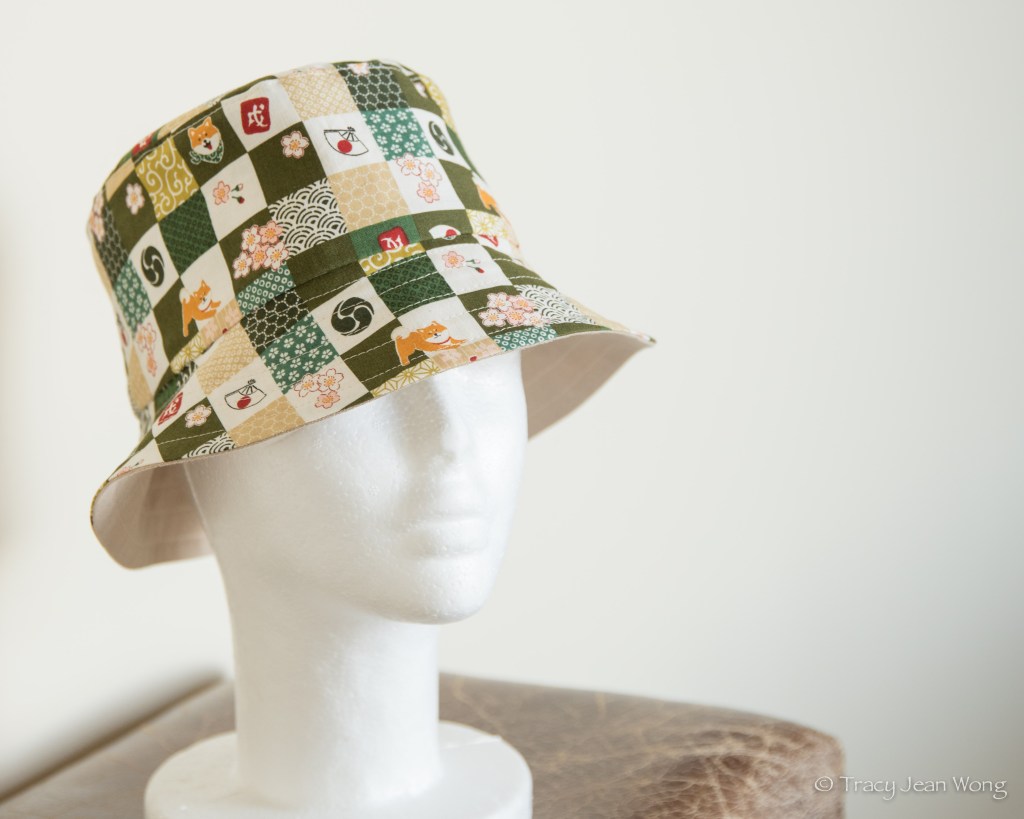
Reversible bucket hat in coordinating cotton fabrics.

I decided to use two of my new lengths of Japanese cotton to sew a reversible bucket hat. It features a patchwork of cats, flowers and geometric designs on one side, while the other side is plain in a warm sand colour.

Some other options I had are shown below. On the left, I paired a two-toned neutral cotton which mirrors the patchwork quilt effect. And in the other two instances, I used the coloured markings on the selvedge to pull out solid colours which I thought would match up well with the print.

Although the choice of coordinating fabric is up to the eye of the maker, the coloured dots on the selvedge can certainly act as a guide.

Crochet Bags

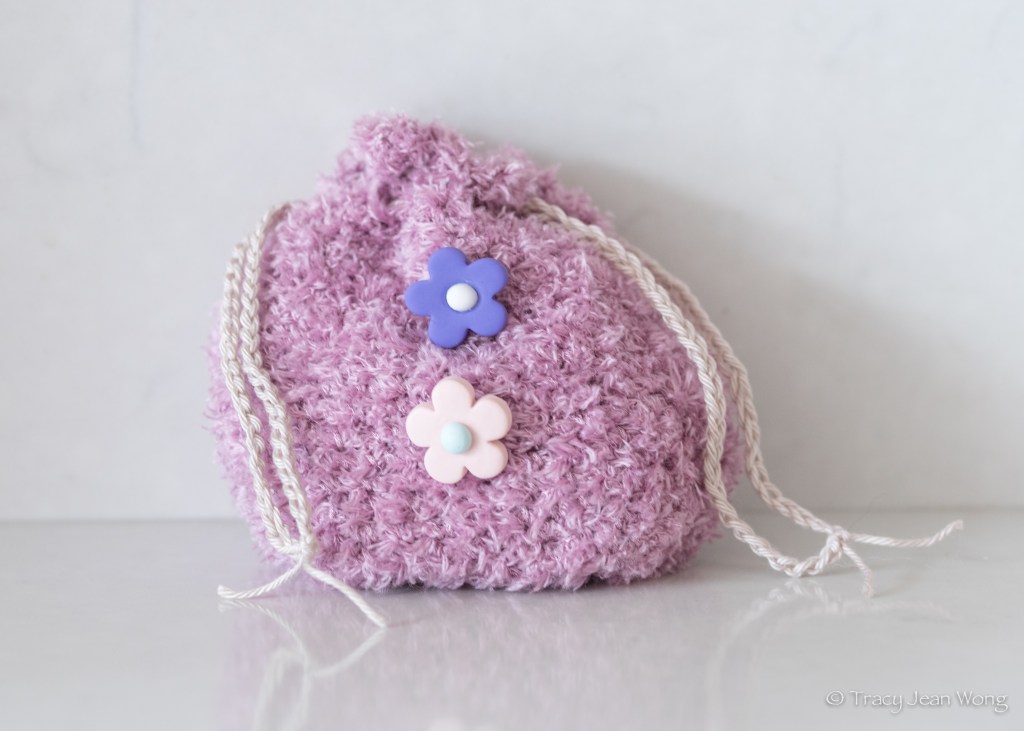
Drawstring pouch, 85% Acrylic/15% Nylon/Polyamide

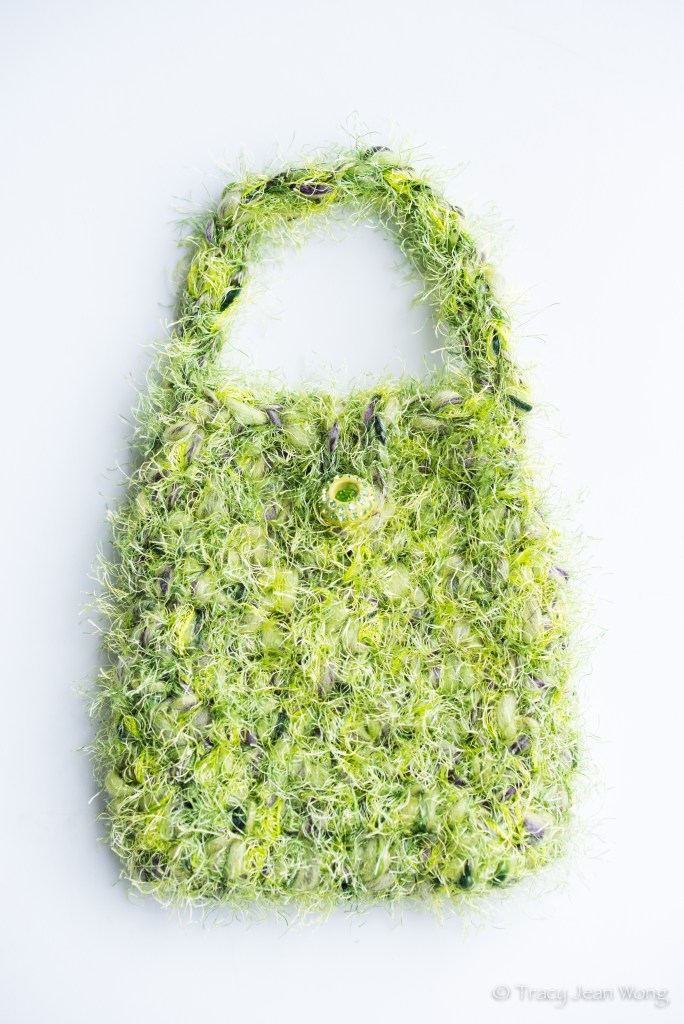
Two girls, my first cousins twice removed, will be visiting soon. They live far away and five years ago when I last saw them, one sister was three years old and the other an infant. I discovered their favourite colours are green/black and pink/purple, respectively. Now, both are school-aged and I wanted to make them each something special. I crocheted one girl a drawstring pouch and decorated it with flower pins. Then I crocheted a second bag with a handle and bejewelled it with a emerald-coloured button.

Handbag, Multi-plied yarn

The primary yarn used in both bags is a fibre of acrylic, nylon and polyamide. It was manufactured with a texture of “eyelashes on a chained binder”, in other words, fuzzy. The green and black handbag is made up of this fibre twisted with two other strands, yielding a multi-plied yarn with even more texture and colour. Each of the bags measures approximately 15-20 cm, just large enough to carry items like a coin purse, tissues, lip balm, and hair ties.

Child’s Shoulder Bag, 50% Cotton/30% Viscose/20% Silk

I used some yarn leftover from hat making to crochet yet another small bag with a shoulder strap and decorated it with wooden beads and fringe. The handspun texture, composition (cotton, viscose and silk), and colour ways of the yarn add to the bohemian look of this child’s bag.

Fabrics for Reversible Bucket Hats

Floral cotton on one side and cotton twill on the other of this reversible bucket hat.

One of my favourite things in hat making is choosing materials. With reversible buckets, it is double the fun and challenge to mix and match fabrics. I am drawn to prints and patterns for spring and summer hats and usually select a neutral coloured fabric on the reverse as a contrast. I like cottons and linens, natural fabrics that are breathable and cool to wear.

Marimekko Räsymatto cotton backed with cotton twill.

My personal tastes gravitate toward blues and greys, but I was captivated by the dots of the Marimekko Räsymatto cotton in apricot and cream. The dot pattern was inspired by allotment gardening in urban settings. It was printed on cotton in Marimekko’s factory in Helsinki, where the themes of sustainability and environmental protection continue.

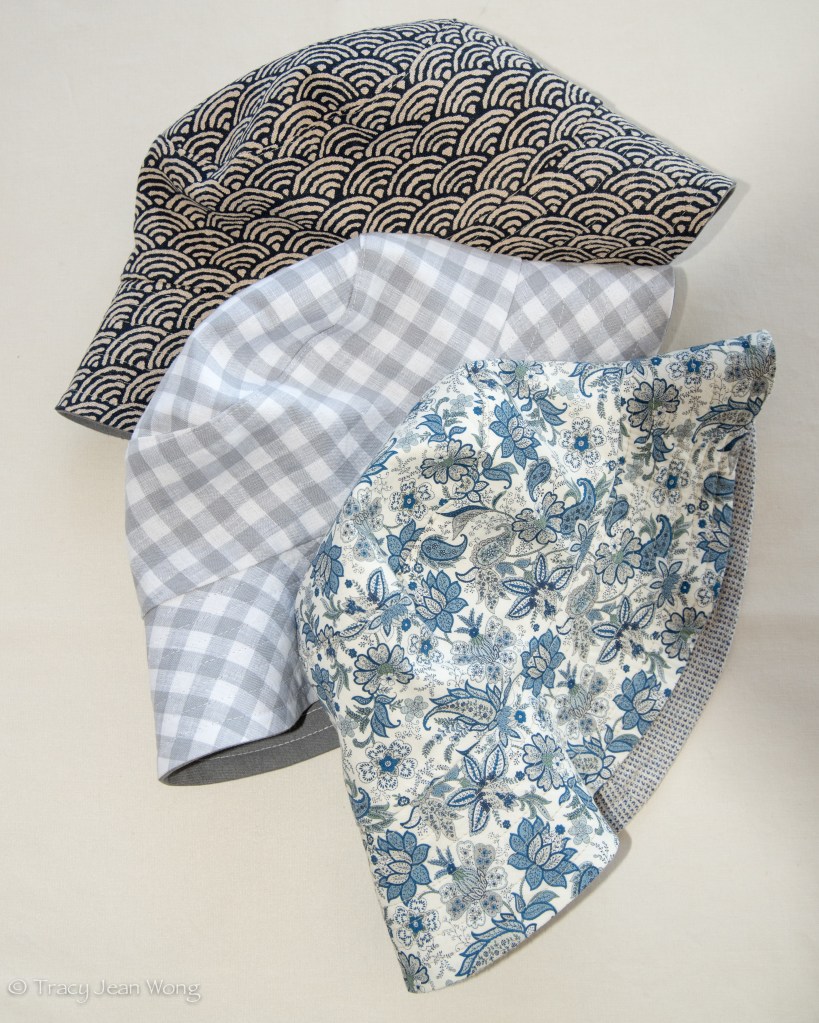
Top to bottom, the fabrics are: Sevenberry Nara Homespun “Waves” cotton, linen, Sevenberry “Vintage Fleur” cotton

Small to medium-sized repeating patterns are appealing on hats. In particular, I enjoy sewing with Sevenberry cottons, especially the Nara Homespun with traditional Japanese motifs. With wear and washing, the feel gets softer and more comfortable. Linen is similar as pectins binding the fibres break down with washing and make the fabric more pliable and less stiff.

Tone-on-tone fringed cotton with reversible cotton twill.

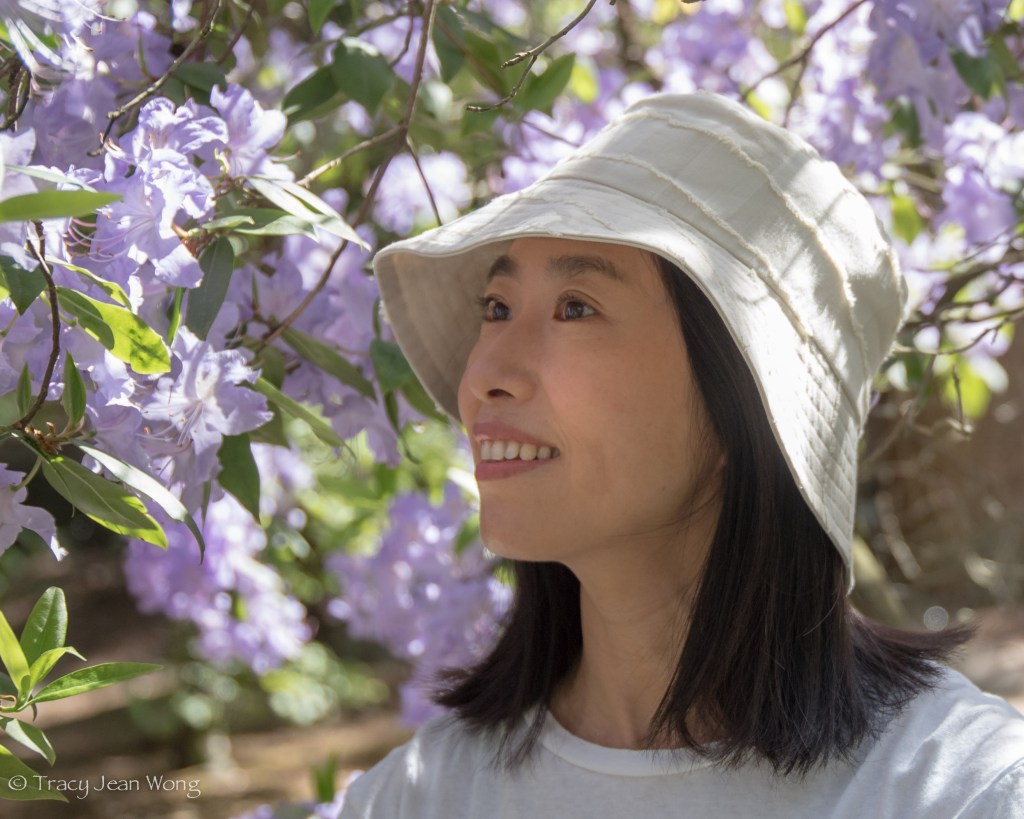
Bucket hats that I sewed recently have a wider brim. A 3-inch brim provides more sun coverage for the face, great for travel and outdoor activities. Although some of the fabrics are heavier, like cotton twill, the hats are all easy to fold and pack in a suitcase or a backpack.

Alpaca

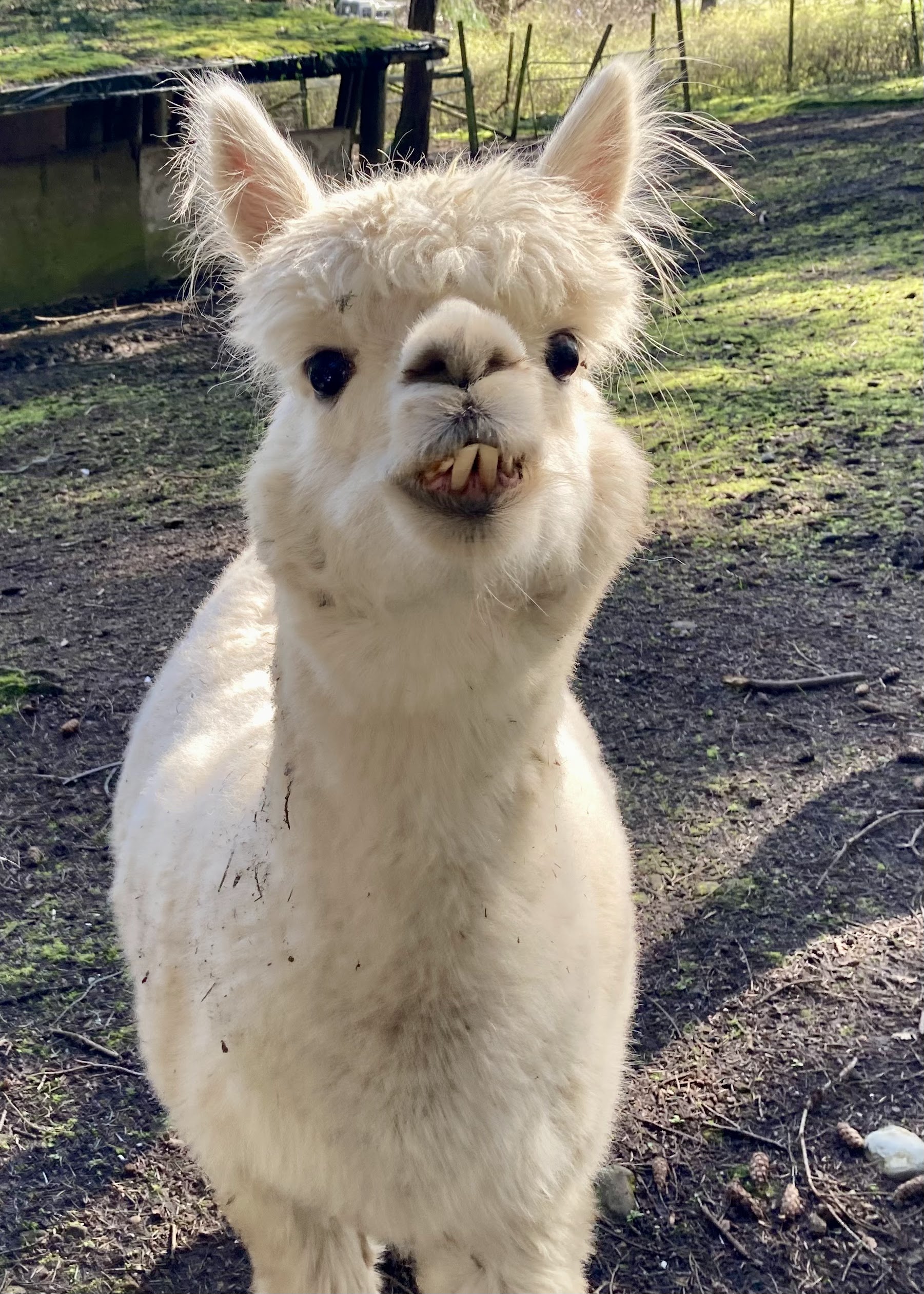
Not only the origin of Nanaimo bars and birthplace of Diana Krall, Nanaimo is also a jumping-off point for the Cedar & Yellow Point Artisans Trail. A self-guided driving tour will take you to visit local British Columbian artists, crafters and farmers. Yellow Point Alpacas in Ladysmith is one such farm where you can see these gentle and curious animals up close. 

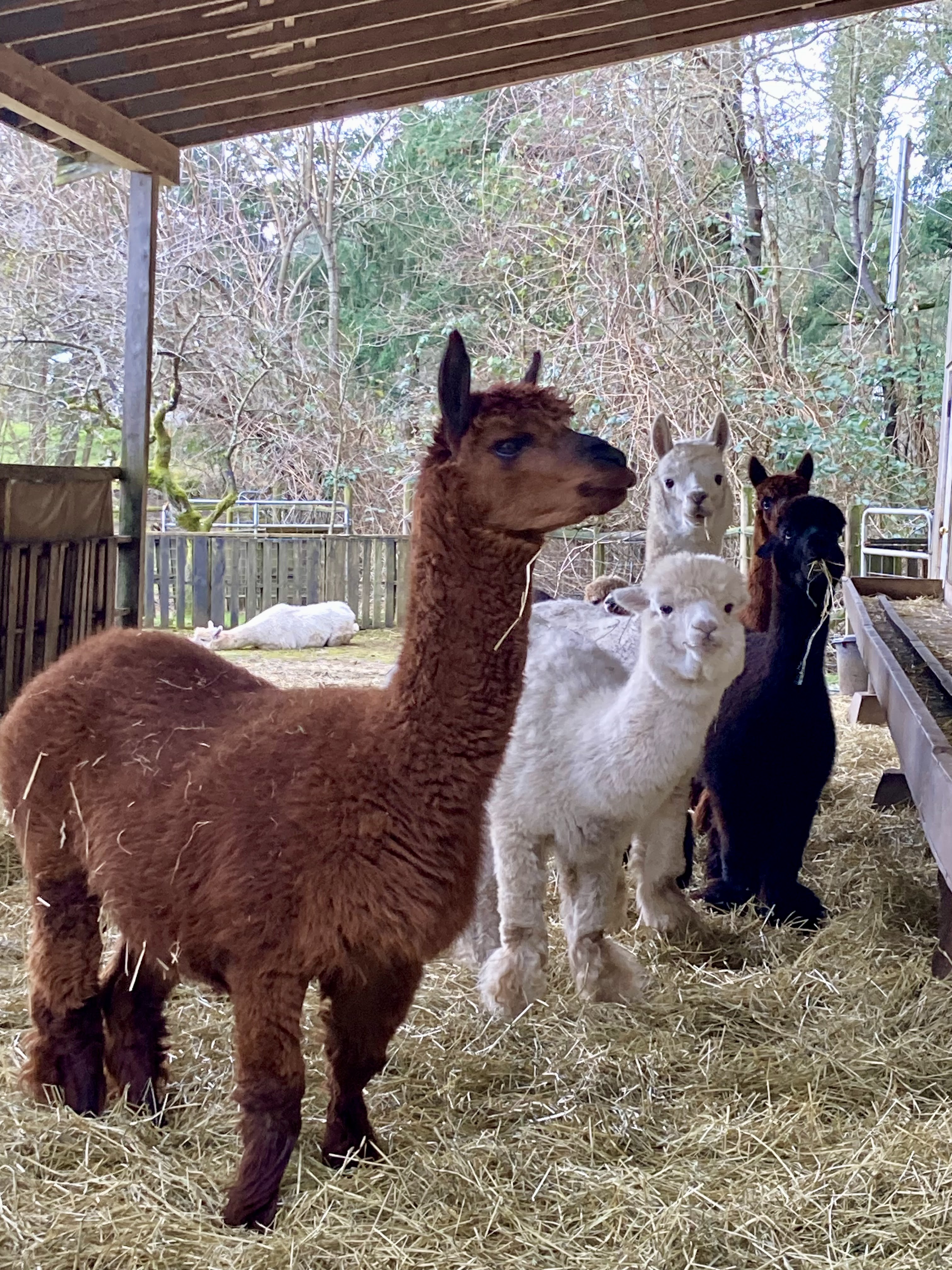
Alpacas were domesticated for their fibre thousands of years ago. They are social creatures, traditionally kept in herds in the Andes of Southern Peru, Western Bolivia, Ecuador and Northern Chile. Naturally, they live in family groups with one dominant territorial male, a female and their young. Because of this and the fact that larger numbers mean better protection from predators, alpaca farmers usually keep at least three animals to keep the animals’ stress levels down.

There is a gift shop on the Yellow Point Farm with warm, soft and luxurious products made from alpaca fleece – scarves, hats, socks, sweaters and stuffed animals. Alpaca is valued for its hypoallergenic characteristic. No lanolin means less washing before spinning the fleece; this is in contrast to sheep fleece. There is a diversity of natural fleece colours from white and beige to shades of fawn, brown, black, and grey. The lighter shades can be dyed to any colour. Blending with other fine fibres such as merino wool, cashmere, mohair, silk, or angora enhance a maker’s toolkit.

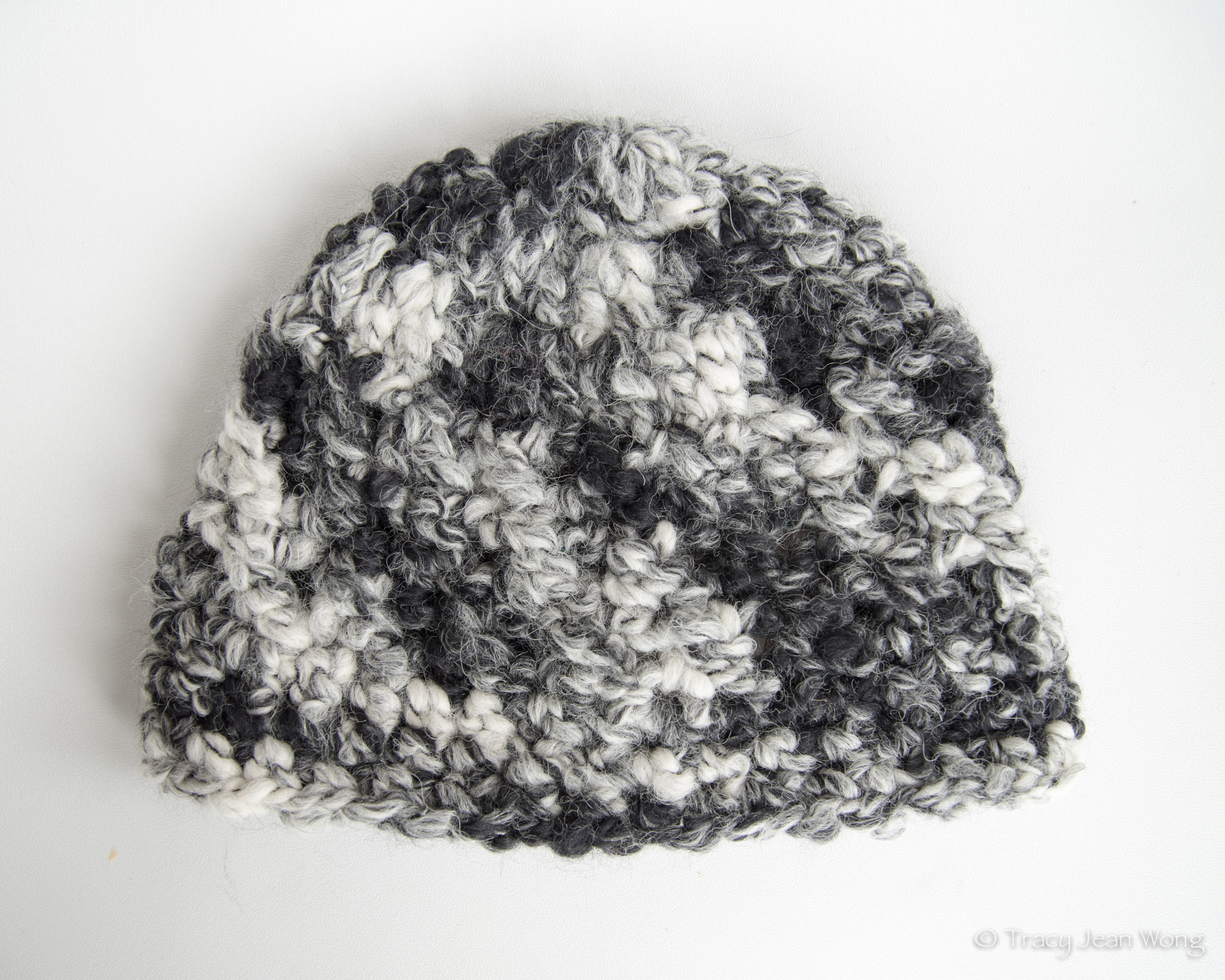
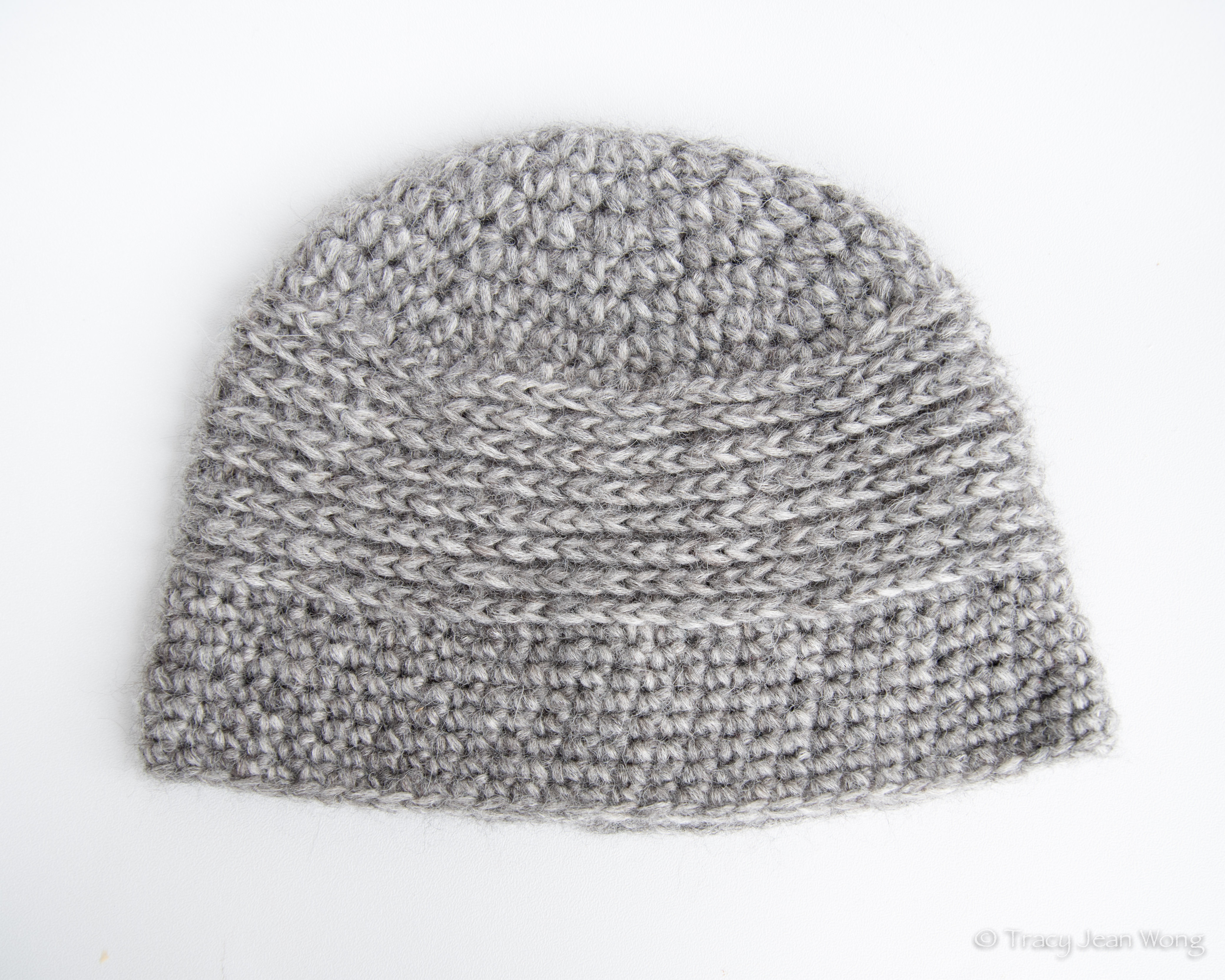
A hank of 100% alpaca yarn is shown in the photo on the left. Adjacent are hats I crocheted using alpaca blended with cotton and/or merino wool. Different combinations, different looks!

Transition to Spring

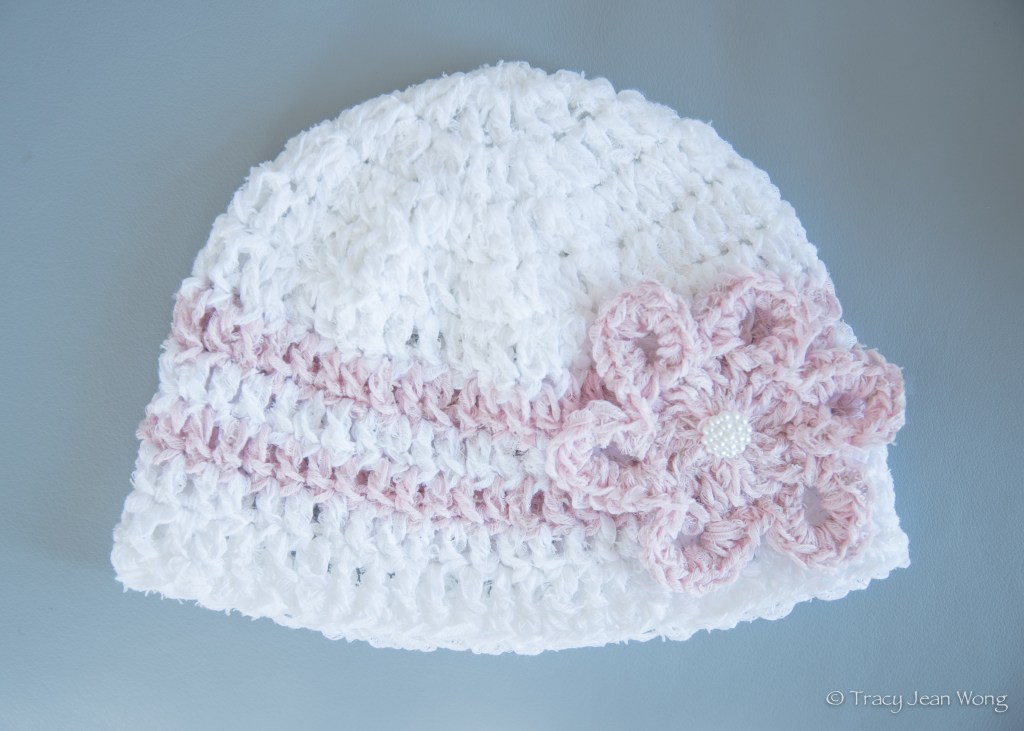
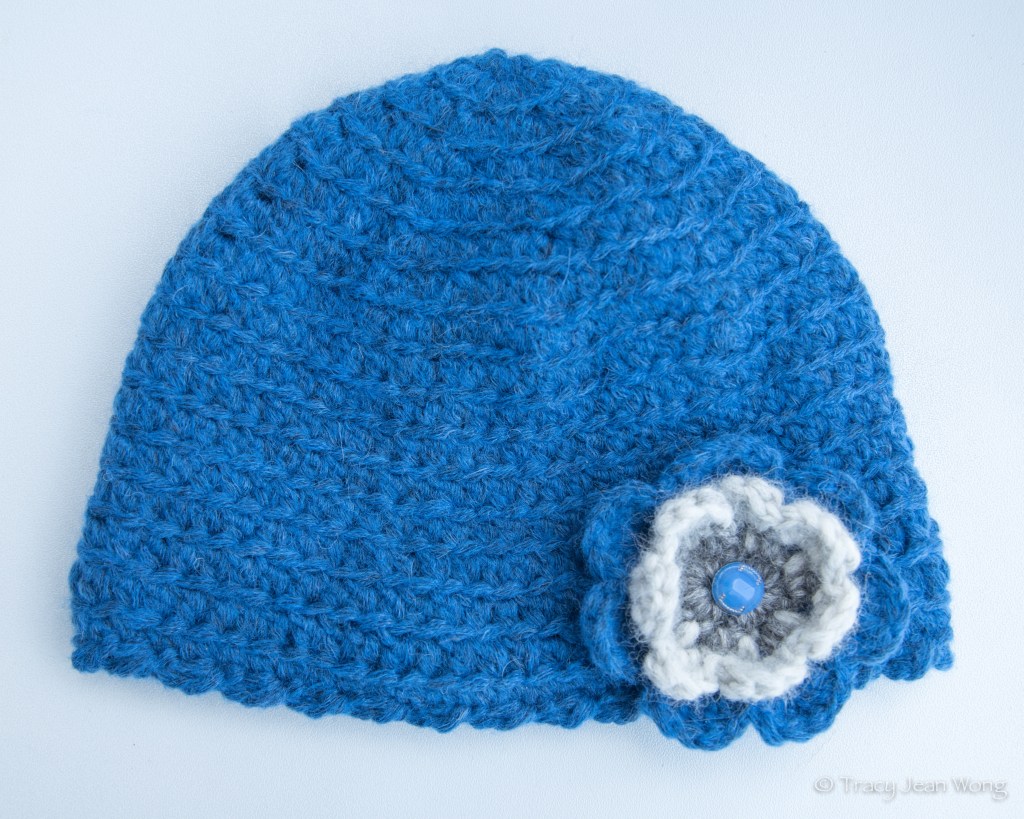
Child’s cloche with simple rose and button adornment, 61% Cotton/12% Linen/27% Polyamide

Spring is the time to transition your wardrobe to lighter pieces and brighter colours. Changing temperatures throughout the day warrant layering clothes and picking versatile breathable fabrics like cotton and linen. You can pack away your winter hats. Instead, accessorize with lightweight hats that will keep your head warm in the cool mornings and evenings. Choose your hats and scarves to bridge between the seasons.

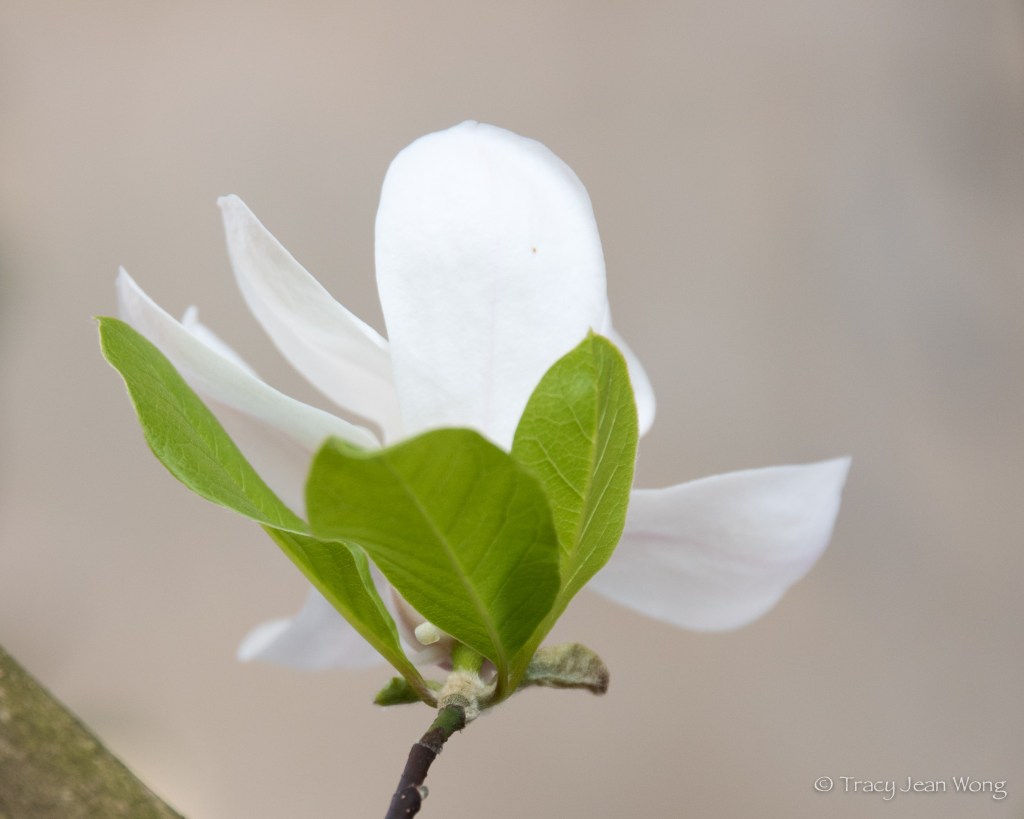
Pure white teacup flower of a Magnolia tree

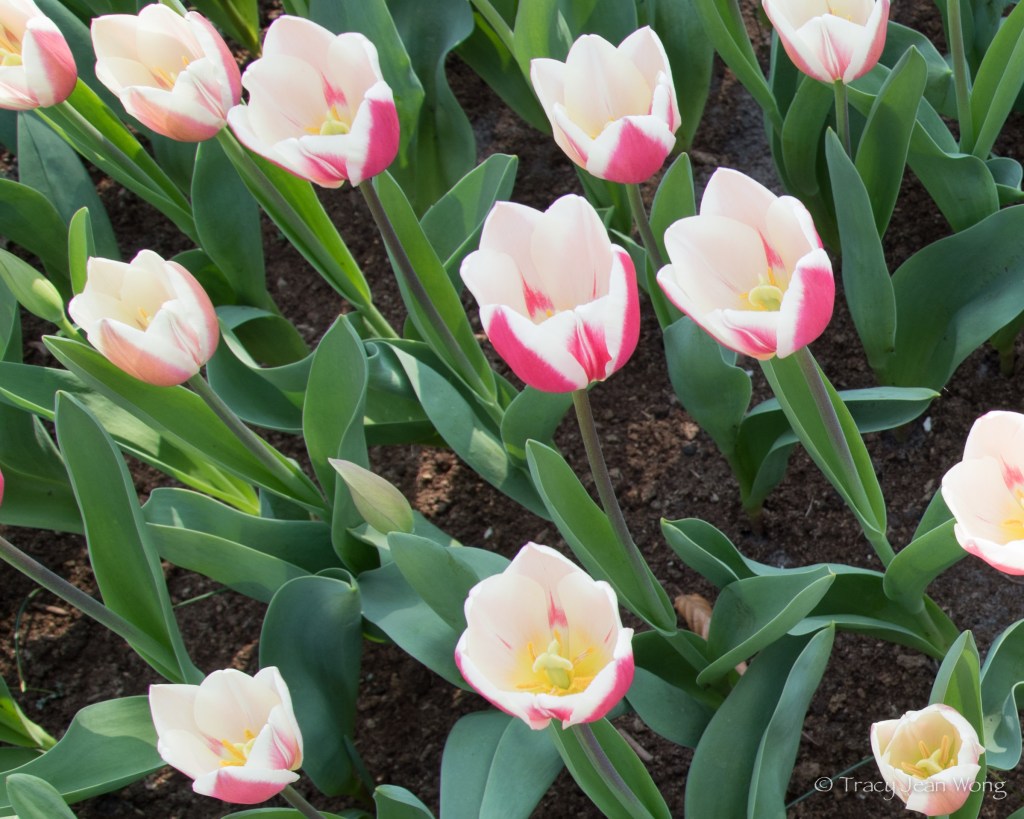
I was inspired by the flush of spring flowers emerging this time of year. Whether it be yellow daffodils, red tulips, or pink cherry tree blossoms, the gardens are alive with colour and called me to include them in my hat designs.

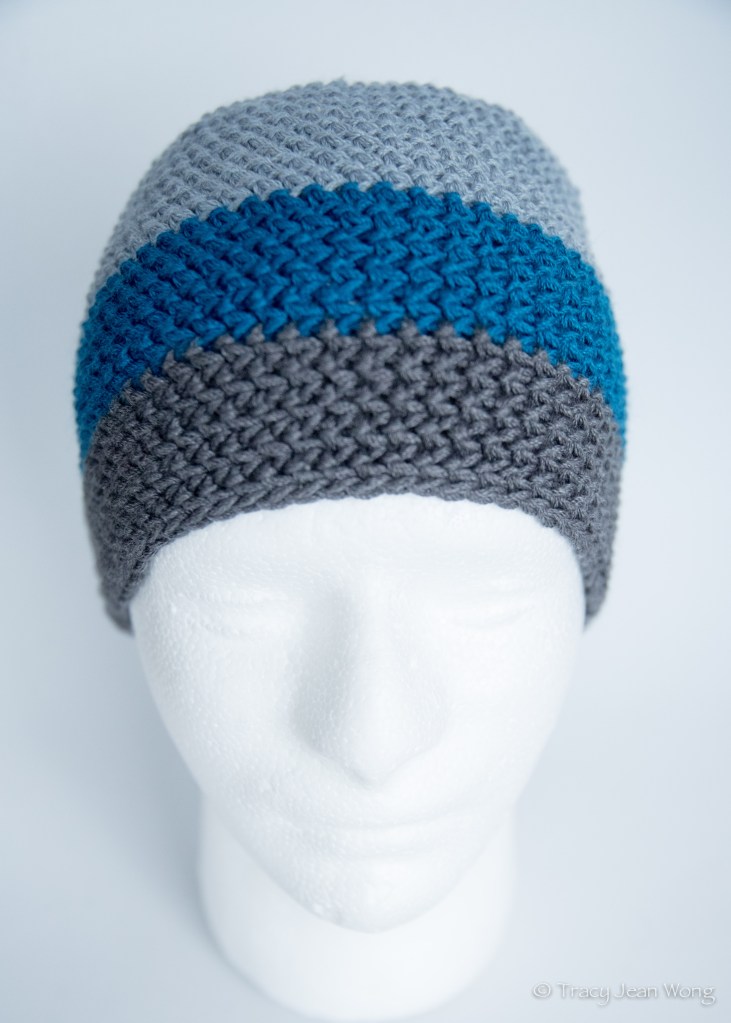
Herringbone beanies crocheted in 66% Merino Wool/34% Tussah Silk
Tulips, Keukenhof, NetherLands, Spring 2025
Striped herringbone beanie, 66% Merino Wool/34% Tussah Silk

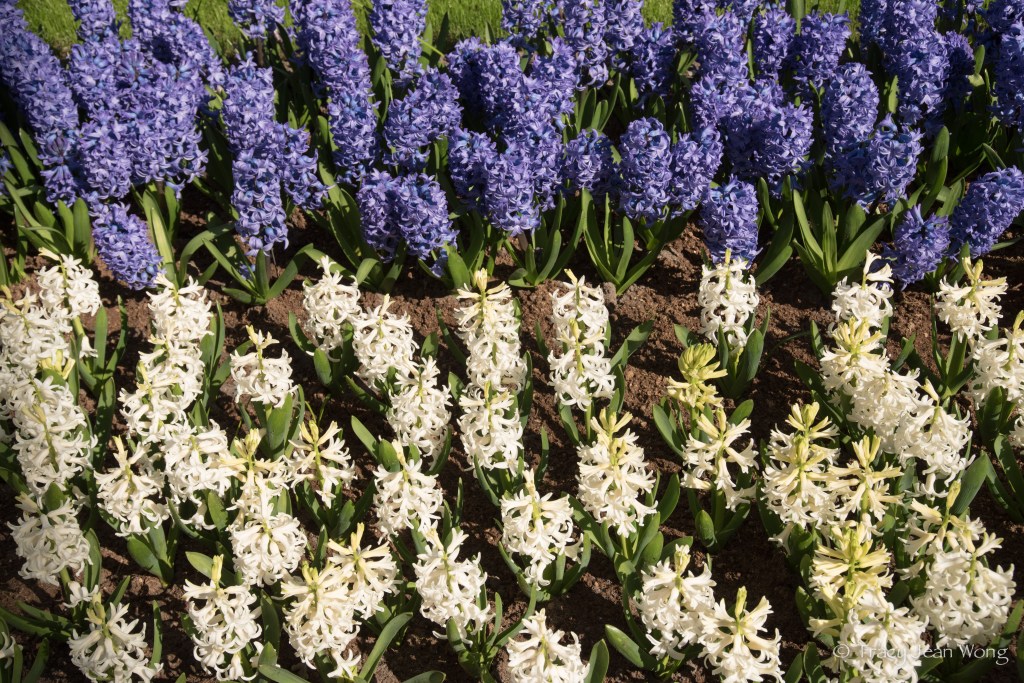
Though rare in nature, flowers in shades of blue – china blue, deep blue, and lilac – are common in spring. It’s lovely to see clumps of bluebells, forget-me-nots and grape hyacinths growing along footpaths. Blue is a very popular and flexible colour for women’s, men’s and children’s hats.
Hat and flower with button based on “Frosty Morning” pattern by Susie Gourley, 55% Alpaca/35% Cotton/10% Merino Wool
Contrasting purple blue and cream Hyacinths, Keukenhof, Netherlands, Spring 2025

Hat of Many Colours

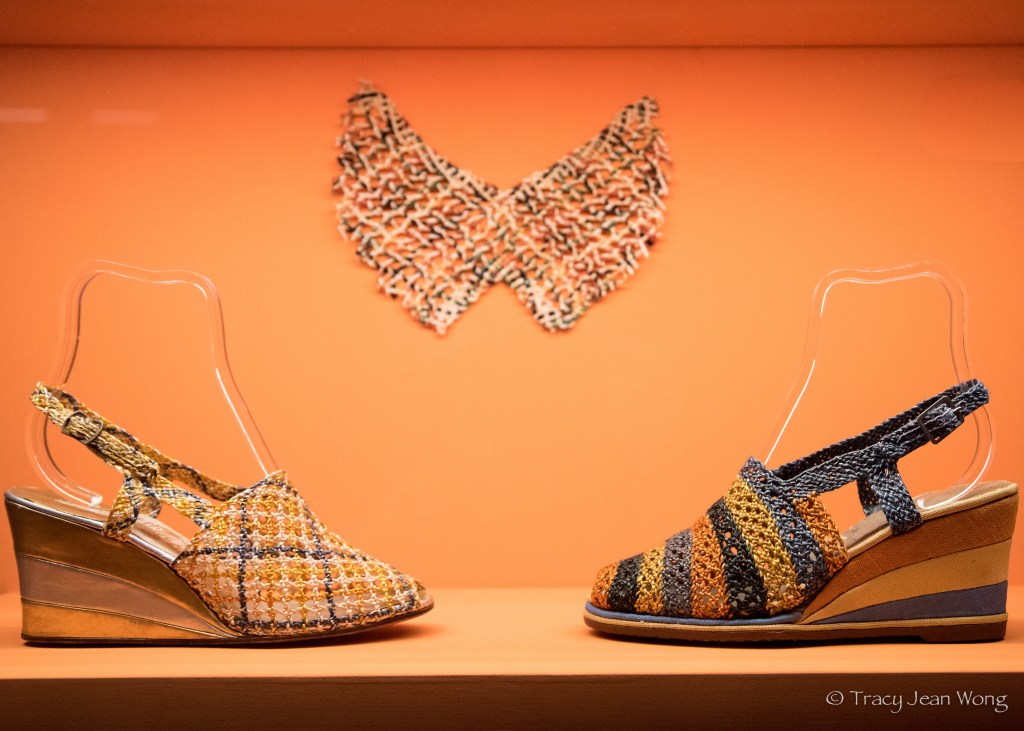
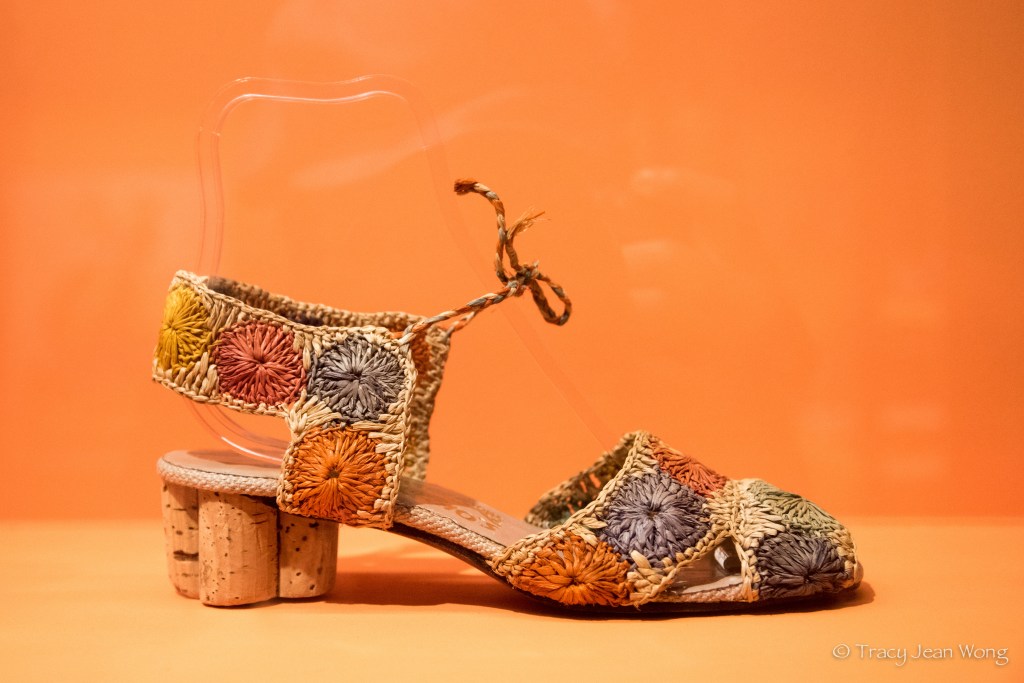
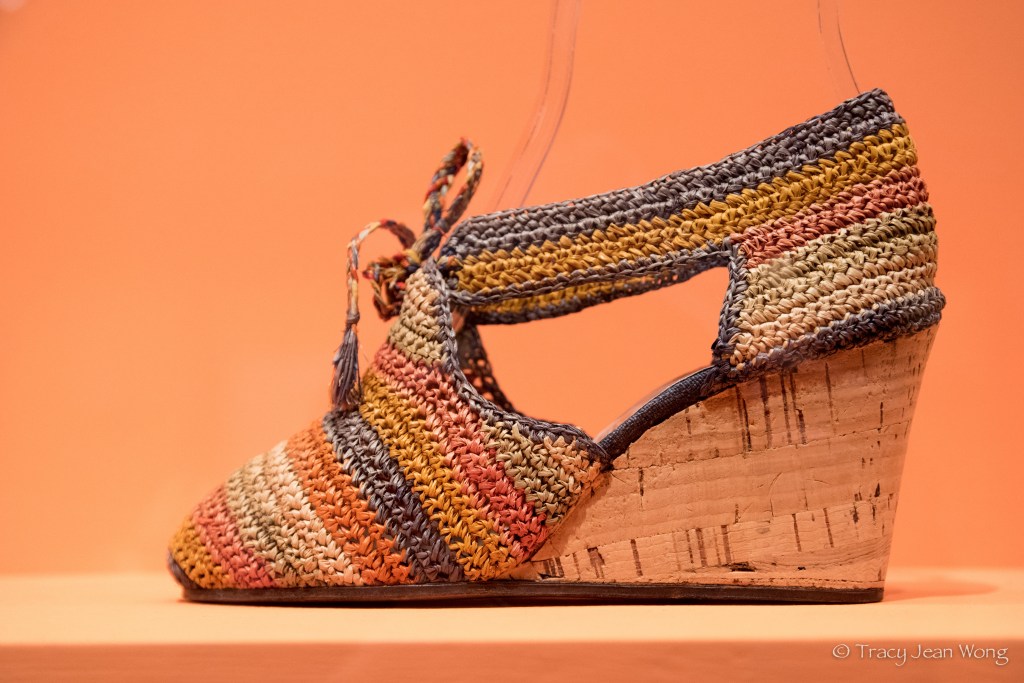
Wedge sandals at the Salvatore Ferragamo Museum, October 2024

I visited the Museum of Salvatore Ferragamo (1898-1960) while in Florence. There I saw a magnificent display of shoes crafted with architectural and engineering perfection and artistic ingenuity. During his lifetime (1898-1960), Ferragamo used all sorts of materials, such as hemp, straw, animal skin and cellophane, to substitute for leather. He invented the “invisible” sandal with the upper made of nylon fishing line. He introduced the platform sole and patented the cork wedge in the 1930s. Cork wedge sandals with uppers of stripes and motifs were often woven, embroidered, and crocheted. As you can see in the photo of Coco on the left, I was inspired by the bright multicoloured shoes!

I crocheted this striped child’s hat using a herringbone stitch. The yarn is 70% Merino Wool and 30% Mulberry Silk. The silk gives the hat a lustrous look and feel. I incorporated a fluffy fibre to add plushness to the pompom.
Sandal with a cork heel and raffia upper at the Salvatore Museum.
Wedge sandal with upper crocheted in multiple bright colours, Salvatore Museum.
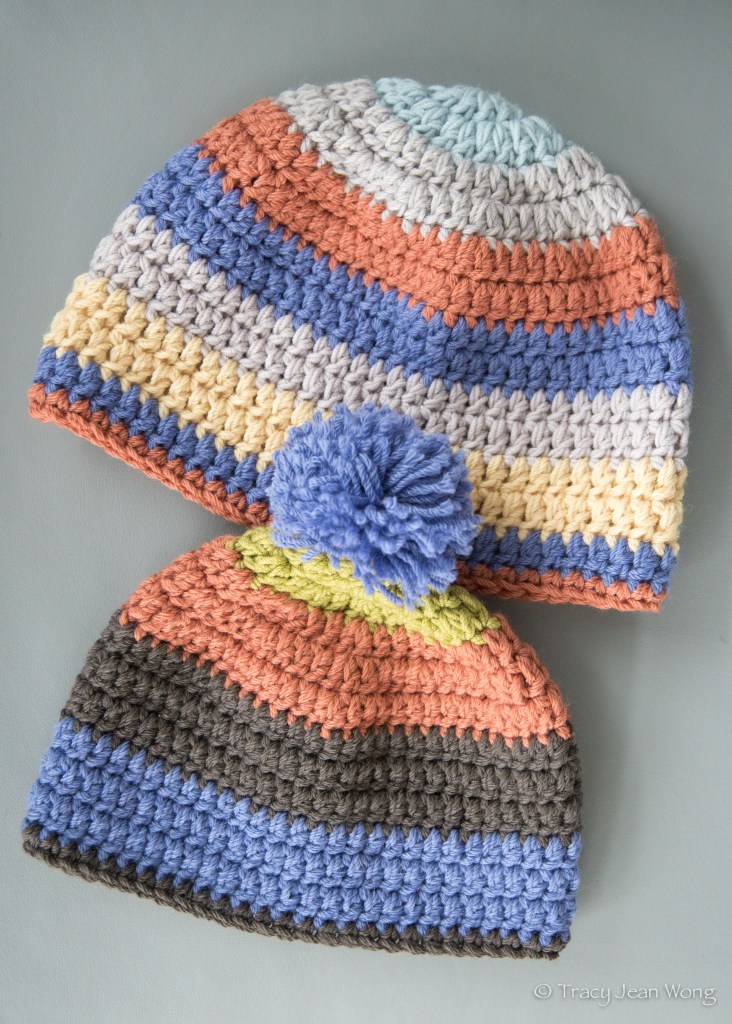
I used a double strand of Merino Wool to crochet these two beanies, the top one for an adult and the other with the pompom for a child.

V is for V-stitches, Visor and In Vogue

A new creation featuring V-stitches, a visor and a strap with buttons.

My sister wanted something a little different from the hats she already owns. She liked the V-stitch as seen in the Vee Beanie pattern by Simply Made by Erin. Rather than a conventional band, she requested a visor and strap with button adornments for flair.

A felted tweed aran, granite-coloured, 50% Merino Wool/25% Alpaca and 25% Viscose.

We selected a felted tweed aran with merino wool and alpaca to show off the V-shaped stitches. The yarn had enough structure to support a stiff brim. I also crocheted the brim with a smaller hook to give it a tighter weave. My sister dove into my button collection and picked out matching buttons.

The same hat in treacle.

The result was satisfying and I went on to make another similar hat in treacle, the colour of molasses. Then I morphed the pattern into a floppy beret using the same tweedy yarn in a colour named stone.

This is a V-stitch beret with a smaller visor and decorative strap. Elaine wears the beret so it slouches to one side.

Hats and Scarves

Slouch Beanie and Windows Cowl, 50% Cotton/30% Viscose/20% Silk

Several customers and followers of this blog suggested that I make hat and scarf sets. I had acquired some beautiful oversized skeins of two Noro yarns. Perfect for projects that require more yarn. To the maker, that means less joining of yarn ends!

Feather and Fan Neck Scarf with buttons, adapted from design by Elisa Purnell, 50% Cotton/30% Viscose/20% Silk

“Noro Uchiwa” blends colours and makes up soft and tweed-like. It has fibres of cotton, viscose, and silk. I experimented with different scarf patterns and used vintage buttons to finish off the necklines.

Brickwork Beanie and Neck Scarf with button, 50% Cotton/30% Viscose/20% Silk

“Noro Tsubame” proved to be one of my favourite yarns. I crocheted a slouch beanie using the brickwork stitch and loved the way the silk and wool blend yarn seemed to naturally stripe. As well, I completed a one-skein scarf project. I left the scarf unblocked, giving it a wabi sabi, less is more, woven aesthetic.

Brickwork Beanie, 50% Silk/25% Wool/25% Polyamide
Wabi Sabi Brickwork Scarf, 50% Silk/25% Wool/25% Polyamide

Single-Ply Merino (Version 2)

I knitted this Flip Hat with a super bulky, single-ply, slightly felted Merino Wool with a twist.

Plying is the process of twisting two or more strands together to make one strand of yarn. When multiple strands are twisted together, they are stronger than “single-ply” yarns. A single-ply yarn is a single strand that isn’t plied with another and spinning the yarn gives it its twist. Since single-ply yarn isn’t as strong, it will break if you pull on it tightly. In other words, you need to take care when working with it.

The wide headband looks like it’s made from dreadlocks. The name of the yarn is Rasta which, in Spanish, means “dreadlock”.

The characteristics of single-ply yarn include its smooth surface, lightness and fluffy texture. With wear, the yarn will become fuzzy. Compare this with plied yarn where strands are twisted together, compress each other and the fuzziness or “halo” effect is not as noticeable. The downside is that single-ply yarn tends to pill easily. As a maker, you do not want to rip out stitches and work the yarn over and over again. As the owner of a garment made with single-ply yarn, you will want to handle it gently when wearing and washing it.

This Newsboy Hat in a crocheted herringbone stitch shows off the variegation of kettle dyed Merino Wool.

Single-ply yarns are ideal for hand dyeing. The outer surface absorbs dye more easily. During the making or wearing of the garment, fibres slide across each other, unwind and twist to reveal the lighter inner core. It gets even more interesting when more than one dye is used. Some dyes penetrate more easily, resulting in variegation in colour, tint, and saturation. Malabrigo, the producer of the yarn featured, says on their website https://malabrigoyarn.com/yarns/rasta, “When we dye our yarns, the same formula is used each time but every batch of yarn may vary. The differences from one dye lot to another can be very subtle, or extremely noticeable, specially on variegated yarns.”