Tweed – Neps and Noils

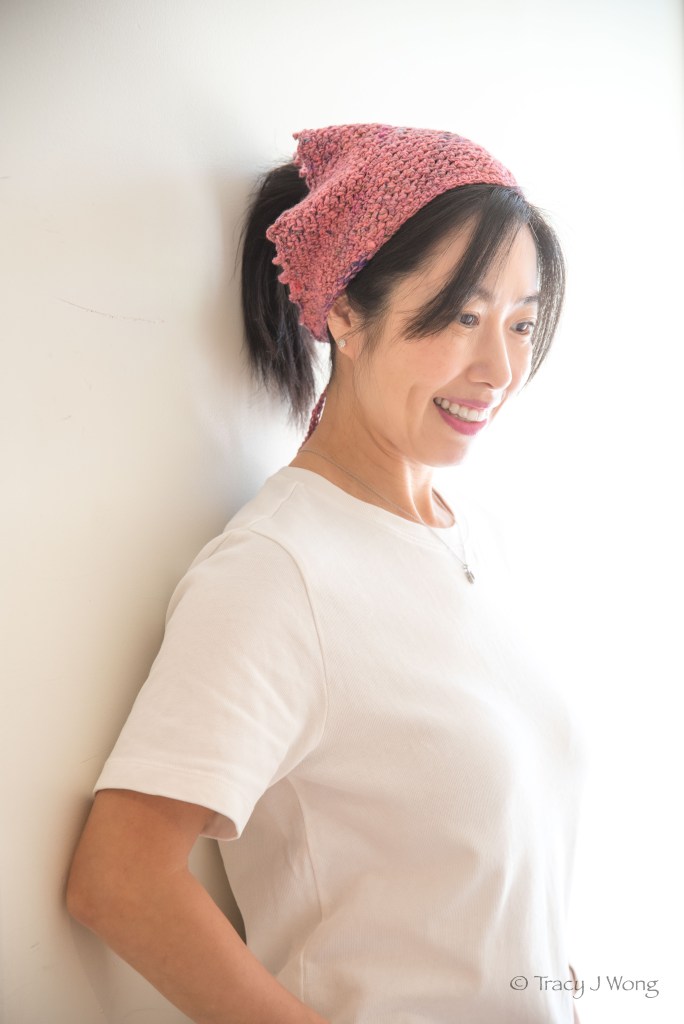
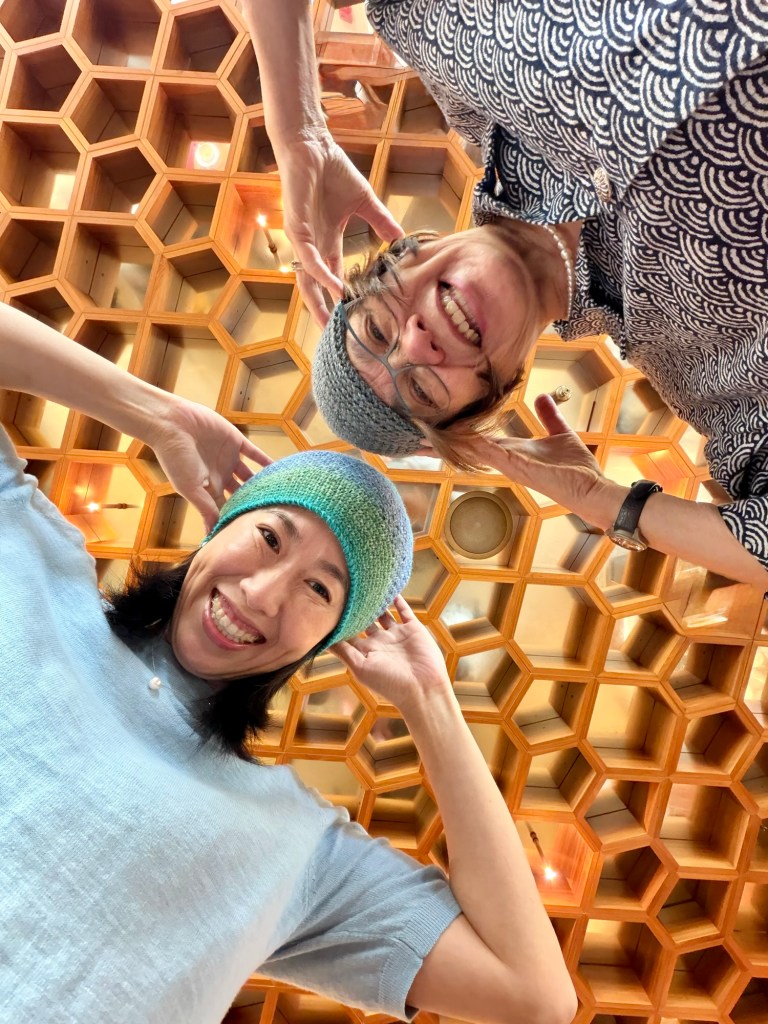
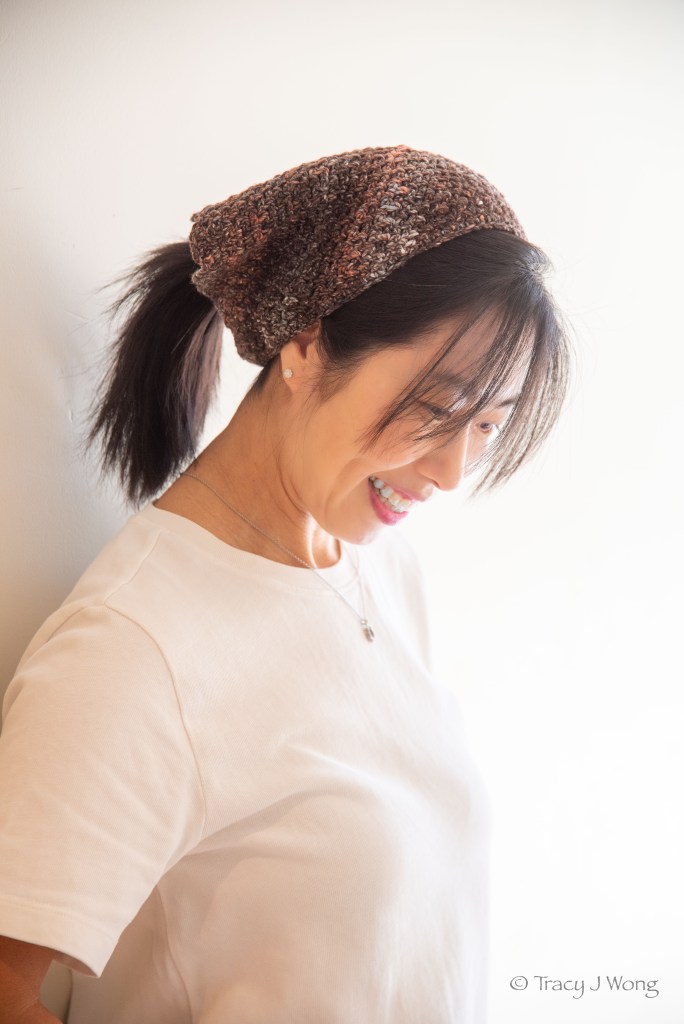
Coco and Tracy J at a favourite coffee shop sporting tweedy hats.

Tweed yarns are made by incorporating imperfections, impurities and waste products obtained from the processing of fibres. These fibre inclusions appear as multi-coloured flecks. They are called neps and noils. Neps are small tangled knots that may or may not be entangled around seed coats or dust. Noils (rhymes with soils) are short irregular fibres combed out of long fibres. Once cleaned of short fibres, the long fibres will be used to prepare luxurious wools, cottons or silks.
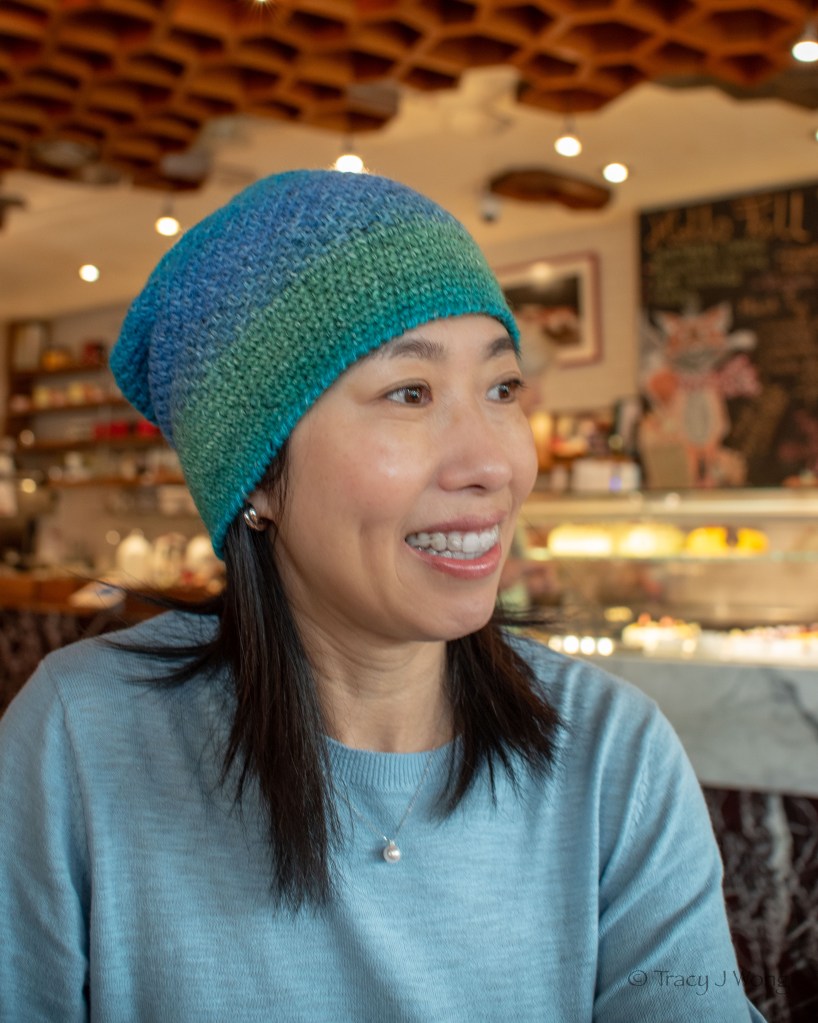
Seed Stitch Slouch Hat

Coco is modelling a slouch hat made from a tweed of 50% lightly felted Merino wool, 25% viscose and 25% alpaca. This particular yarn has plenty of personality with its gradual shifting from blue to turquoise to green tones. Its neps add a rustic heathered look.
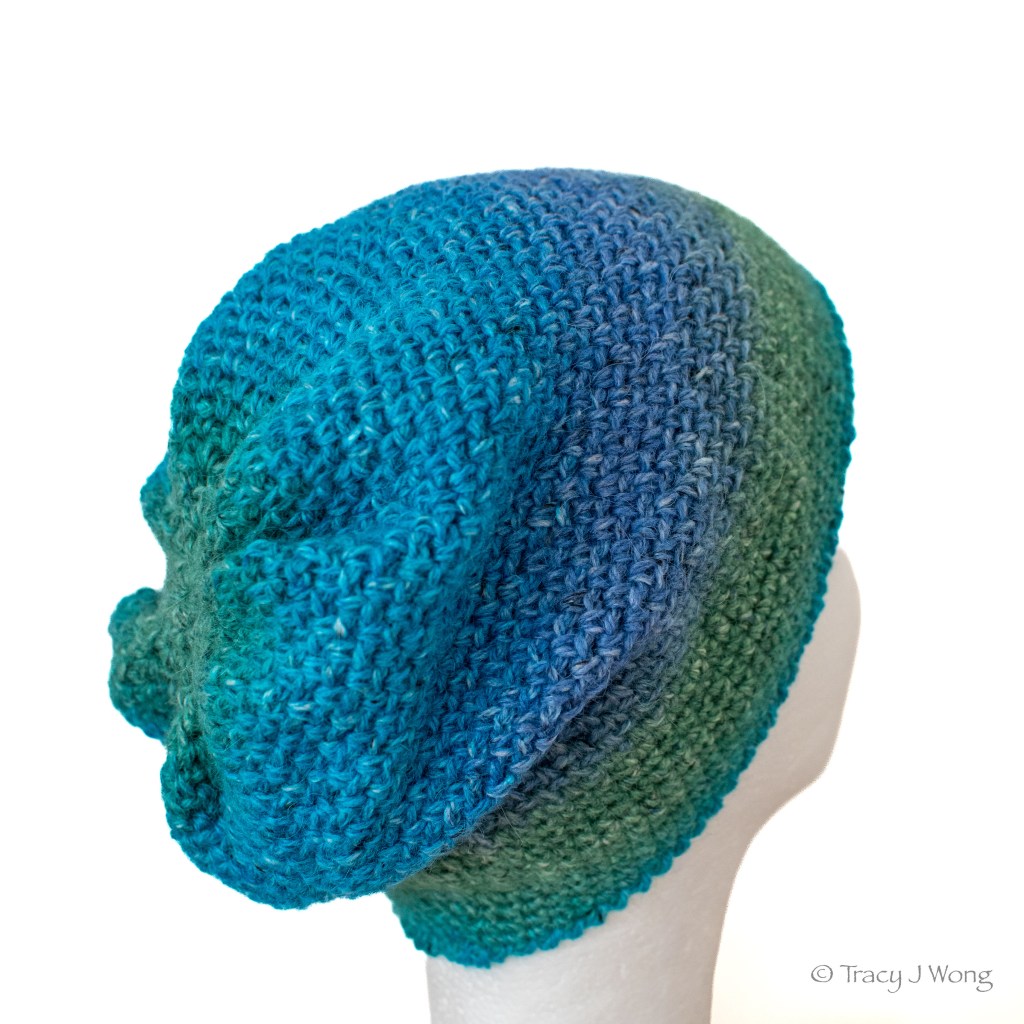
This slouch hat features a gathered top and a wide band trimmed with reverse single crochet “crab stitch”.

The hat below looks tweedy too, though not as rustic. It is the texture, its lightness and subtle colour variations that make it special. The fibre content is 60% wool, 20% alpaca and 20% silk noils. Luxury silk yarn is smooth and lustrous due to long continuous monofilaments unwound from the cocoon of the bombyx moth. In contrast, silk noil yarn is made up of short or broken filaments. These lesser “staple” fibres result from cocoons where moths have broken out too early, damaged cocoons or leftover waste from processing silk.

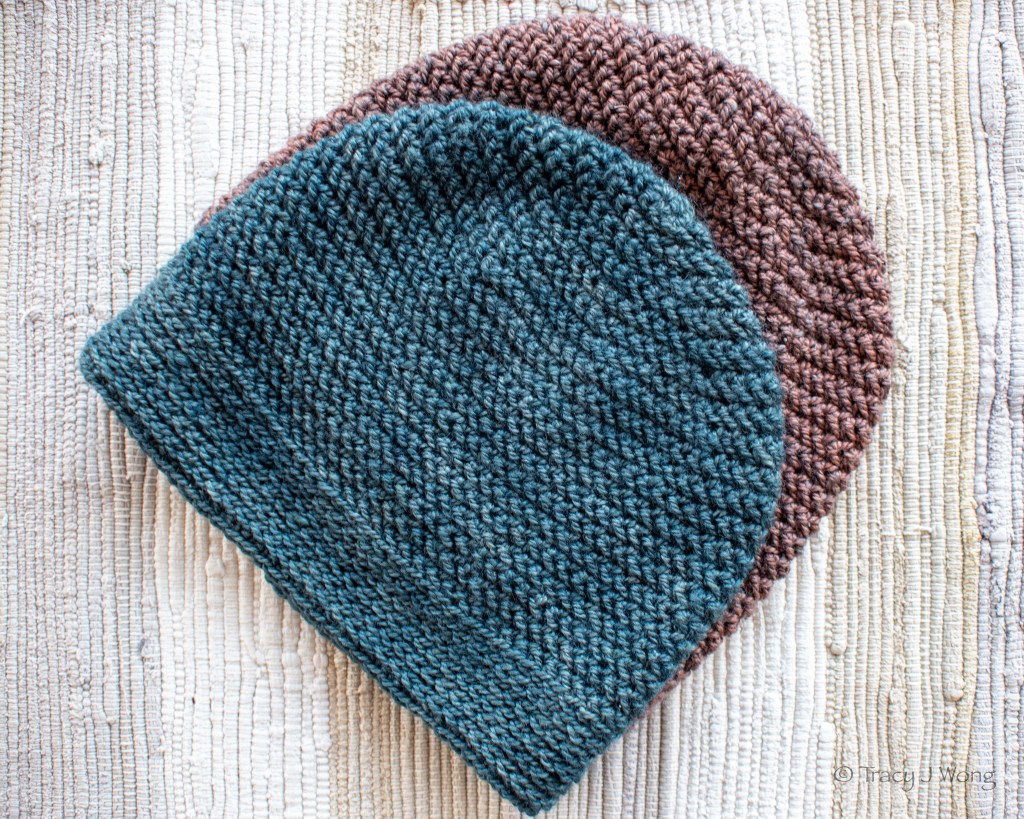
Crocheted Herringbone Hat crocheted with a blend of wool, alpaca and silk noils.
The silk noils give a depth of colour and texture to the yarn.

Hat Decorations

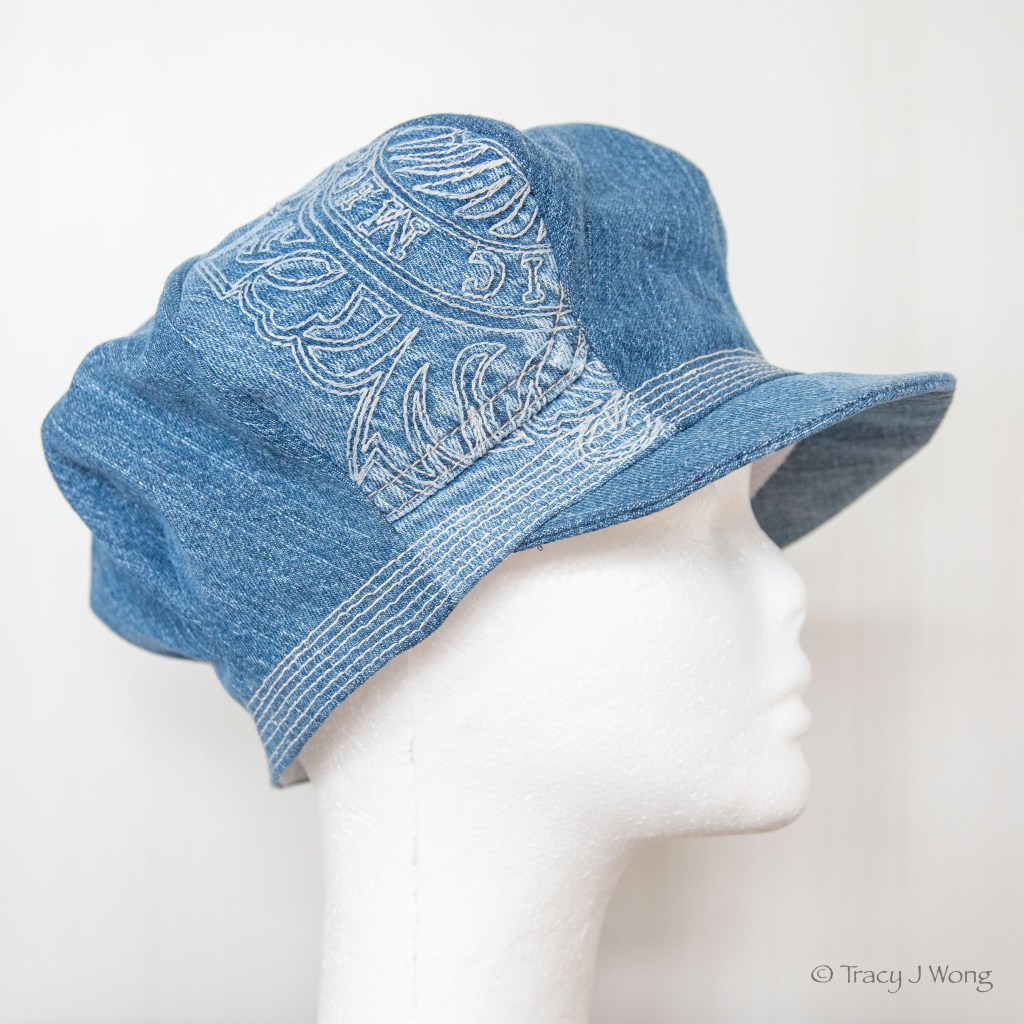
Make a hat uniquely yours by customizing it using embellishments like pins, patches, feathers, bands, pompoms or flowers. I upcycled a pair of baggy men’s jeans from 2007 into a hat. The pants had a back pocket with elaborate signature embroidery of the brand “Mecca”. I incorporated this into one of the fabric panels of a newsboy cap. To emphasize the graphic, I sewed multiple rows of topstitching with a similarly coloured thread to simulate a hat band.

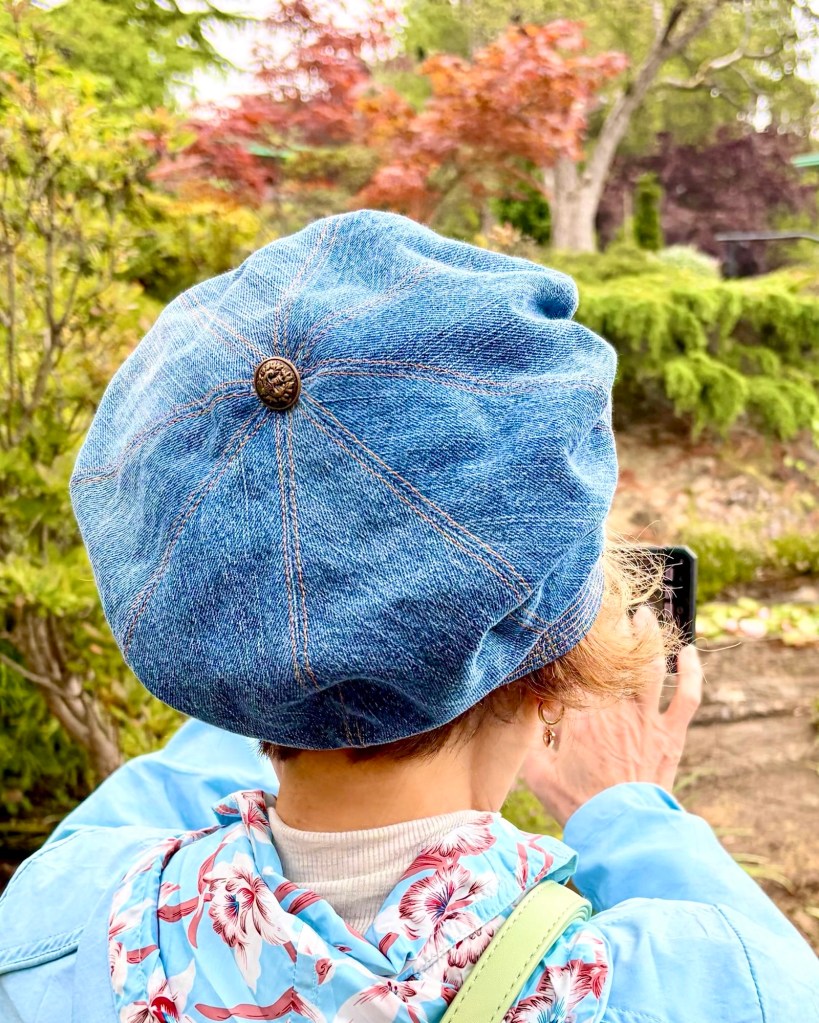
In another upcycled denim hat, I used yellow ochre topstitching thread along the seams joining the fabric panels. This colour of heavy-duty thread is traditionally seen in blue or dark navy ready-to-wear jeans. My customer selected a vintage button with gargoyles and fleur-de-lis to top off the hat.

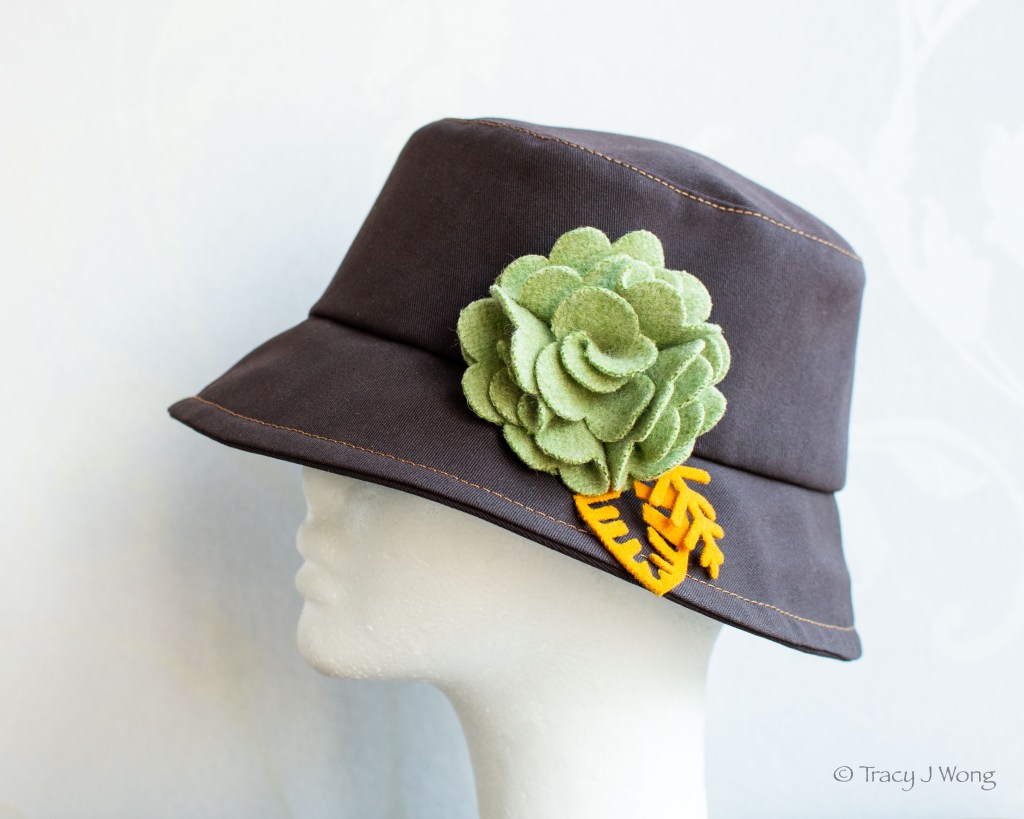
The simple brown bucket is decorated with a layered felt flower and leaf accent that I found in a small shop in Lisbon. The hat is sewn with a weather-resistant twill fabric and lined with a patterned green and gold cotton.

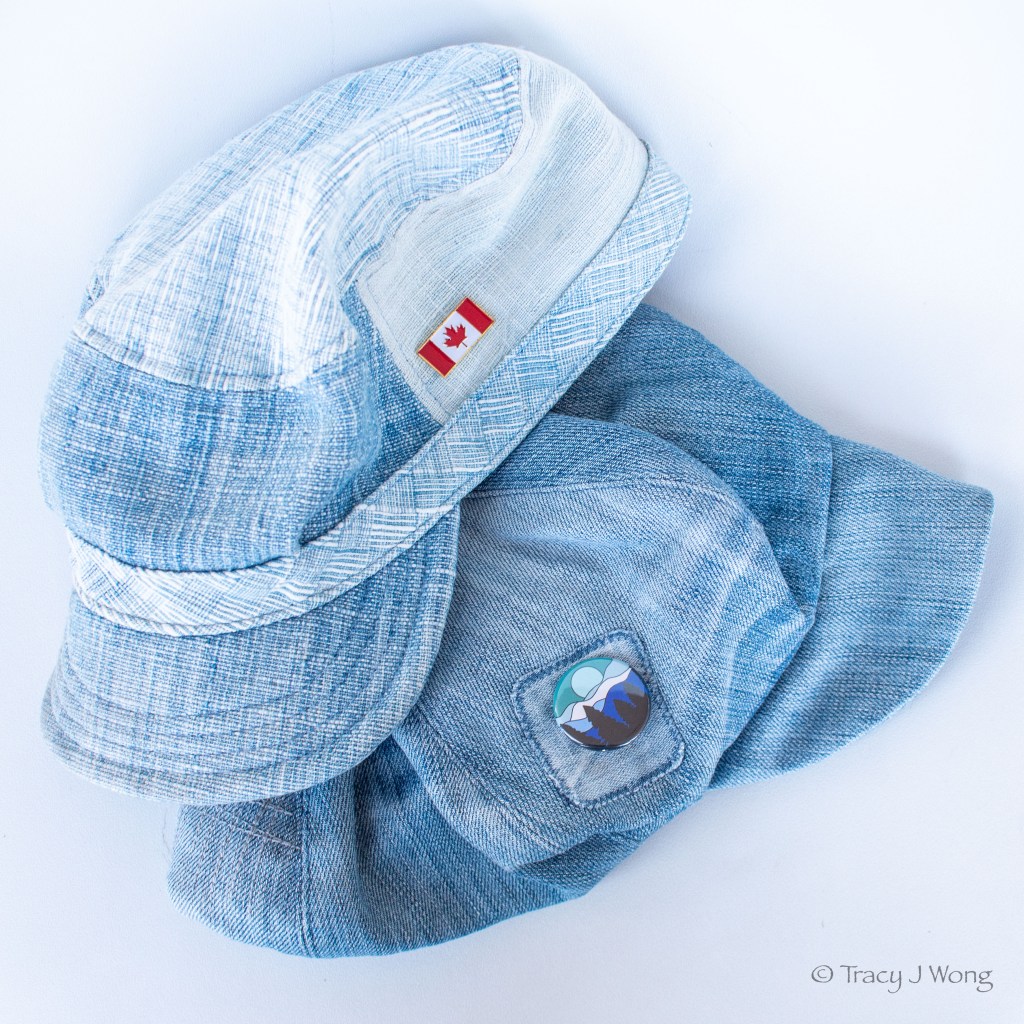
These are my own favourite denim hats. The patchwork quilt baseball cap made by the artisans of “Walk on the Wild Side” is one I purchased at Jing Jai Market in Chiang Mai, Thailand. The other was handmade by me of “Hats by Tracy J”. Both feature patches and pins that connect me to the place I come from.

Hats Inspired by the Canadian Shield

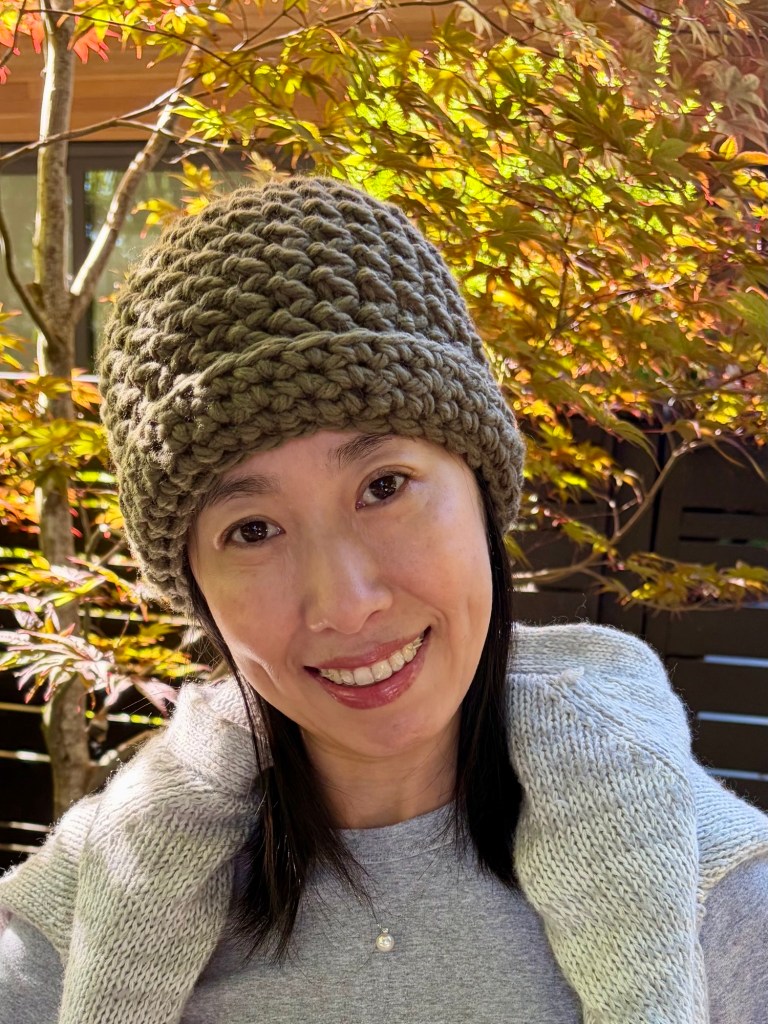
The super-bulky merino wool of this beanie will keep your head warm where winters can be long and cold, like on the Canadian Shield. I chose the colour and heavy herringbone texture to represent the angled forks of conifer tree branches.

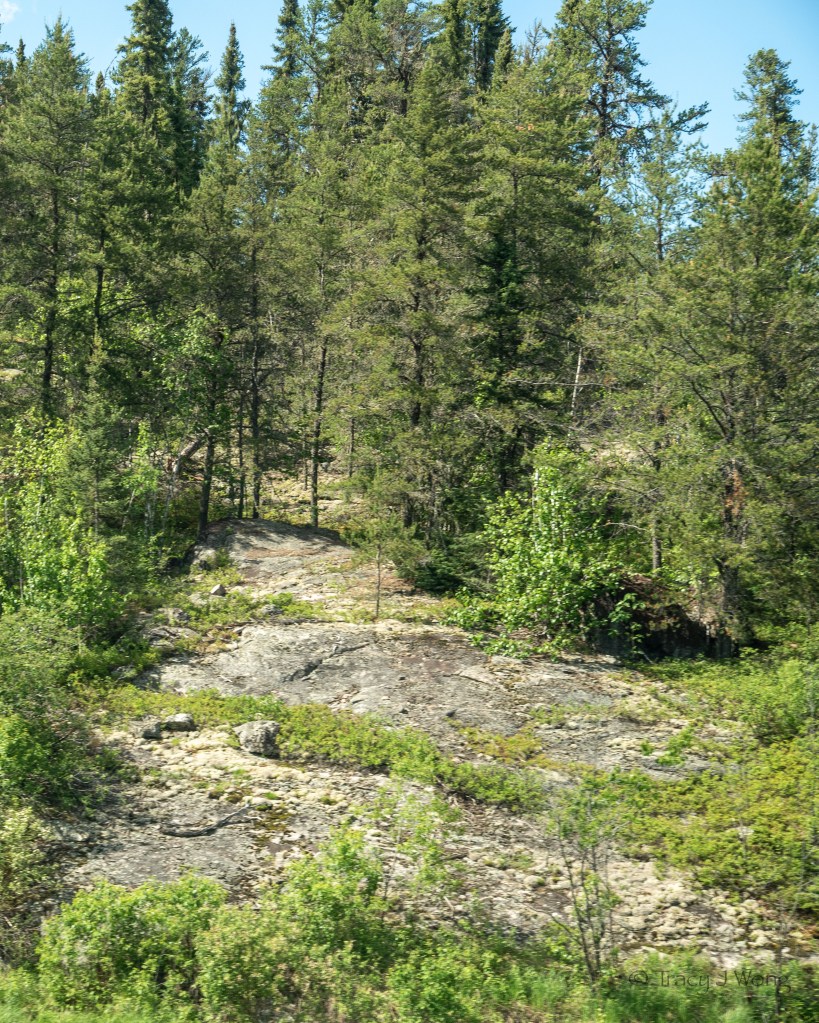
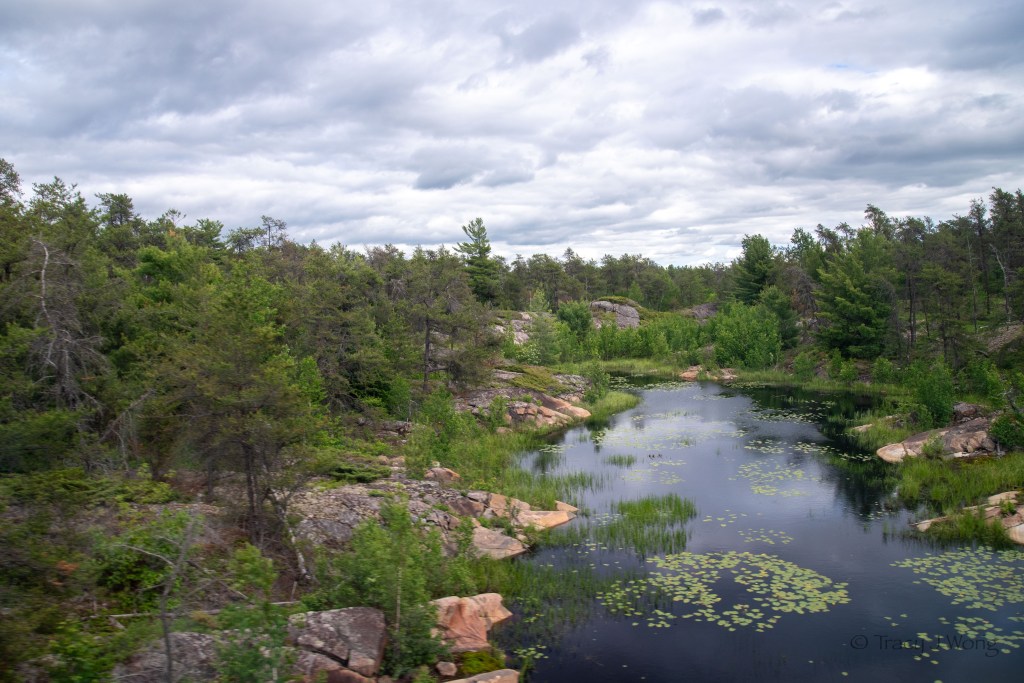
Rock, waterways and forest make up the Canadian Shield, a vast geological formation of approximately two million squares miles. Tectonic shifts, erosion and glaciers formed the characteristic exposed ancient bedrock, rolling hills and thousands of lakes. Boreal forests are supported despite just a thin layer of soil over bedrock. Granite and gneiss are the most common rocks seen in the Canadian Shield. They are not one colour but spotted or banded with light and dark stripes, some shiny and some dull.

This seed-stitch beanie was crocheted with a yarn from Newfoundland, 85% merino wool and 15% donegal neps. Donegal neps are small knots of fibre spun into yarn to give a tweed-like, three-dimensional texture. The neps reminded me of granite with its flecks and specks of mixed minerals. This specific beanie can be worn as a slouch hat or cuffed as shown.

The Canadian Shield is a region of remote wilderness that supports a wide variety of birds, mammals and fish. Many have adapted to survive the harsh winters and environment. Perhaps the most iconic animal of the Canadian Shield is the beaver with its thick, water-repellent fur, ever-growing incisor teeth and flat, broad paddle-shaped tail.

Soft and plush, this beaver-brown bucket hat is made of cotton velvet and decorated with a vintage button.

Hats Inspired by the Canadian Prairies

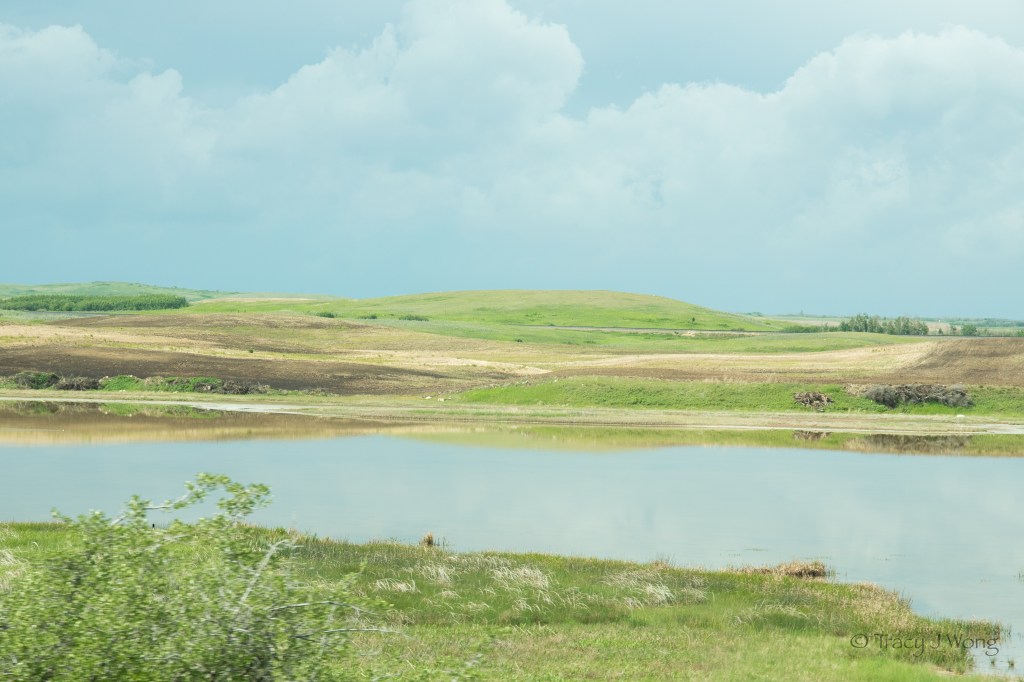
Scene from train window near Saskatoon, Saskatchewan.

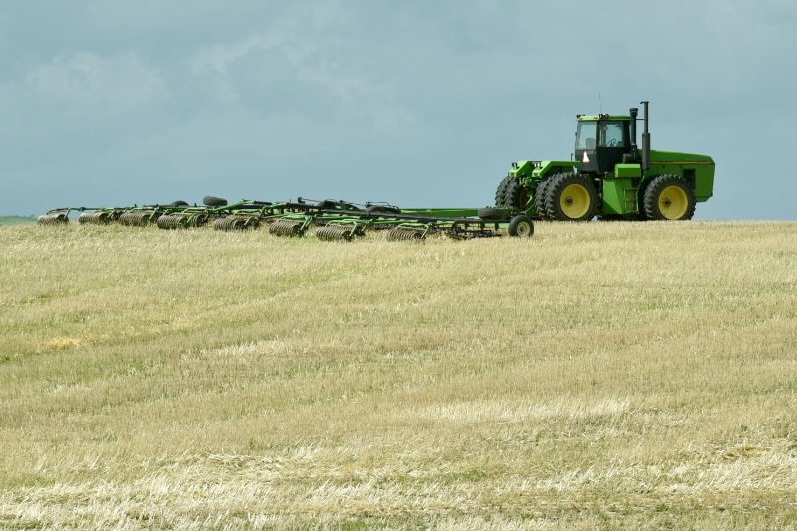
Sandwiched between the Rocky Mountains and the Canadian Shield are the Canadian Prairies. It is a region characterized by flat grassland plains in three provinces – Alberta, Saskatchewan and Manitoba. Vast open skies give an impression of endless light and dramatic cloud formations. Fertile soil has led to grasslands turned into farmland, most notably for wheat and canola. The world’s largest and richest deposits of underground potash used to make agricultural fertilizer are found in Saskatchewan.

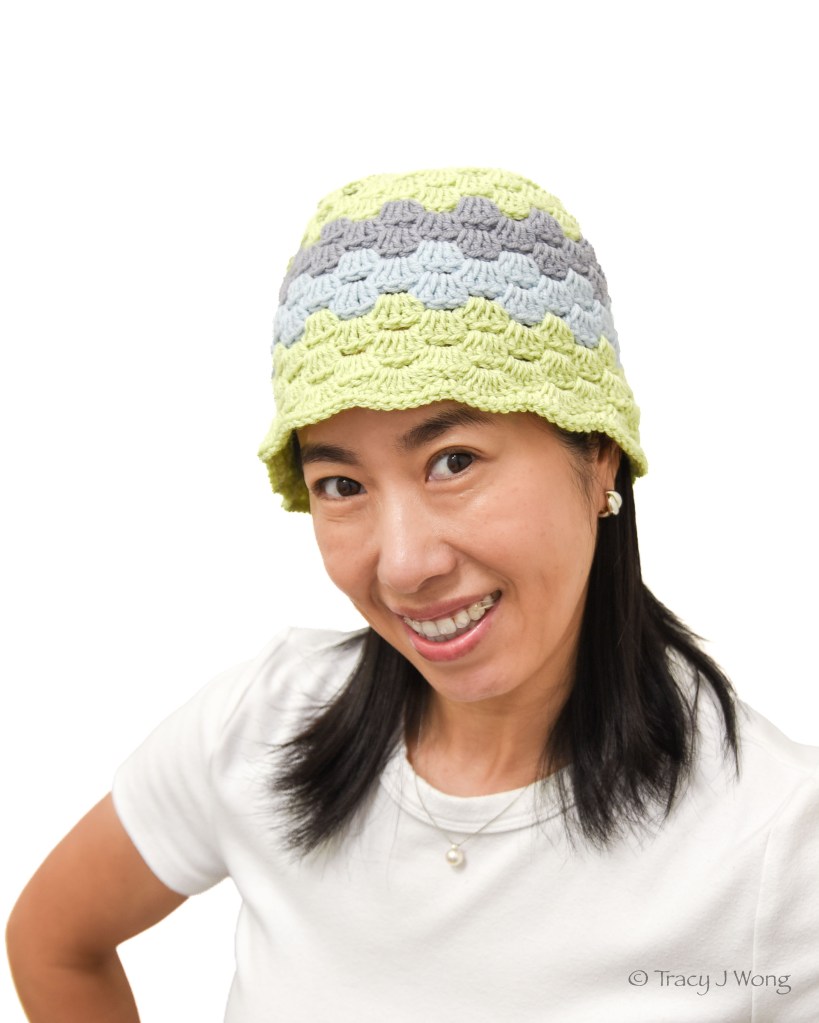
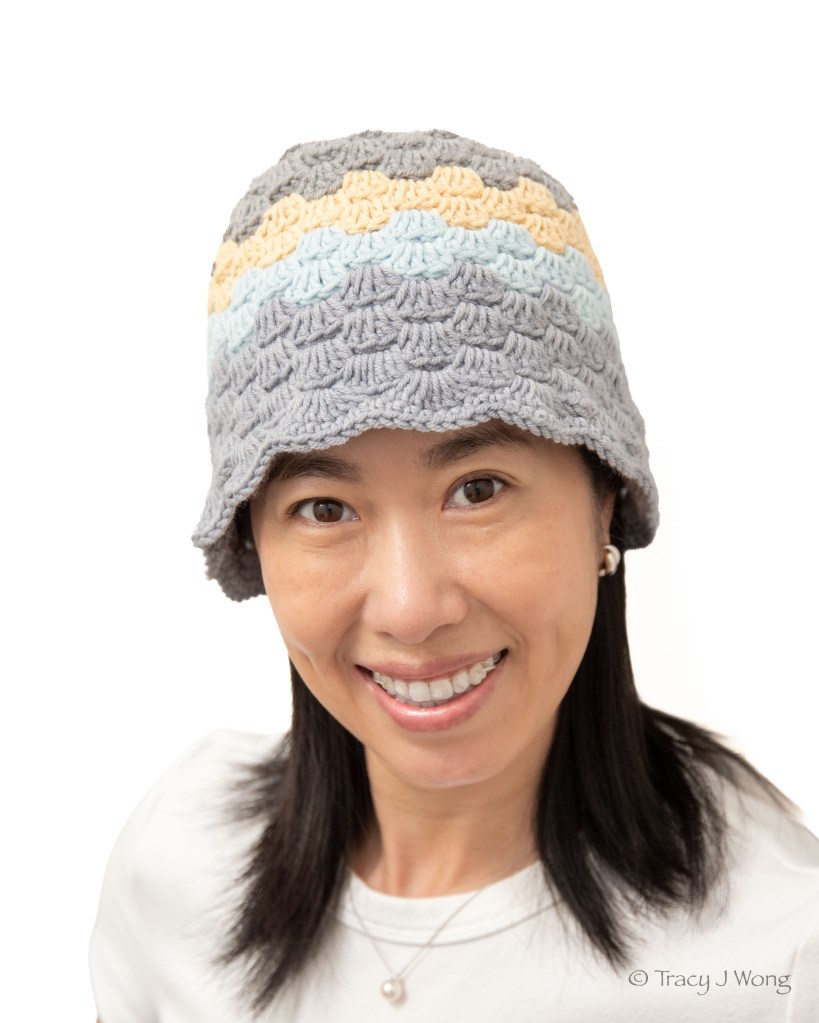
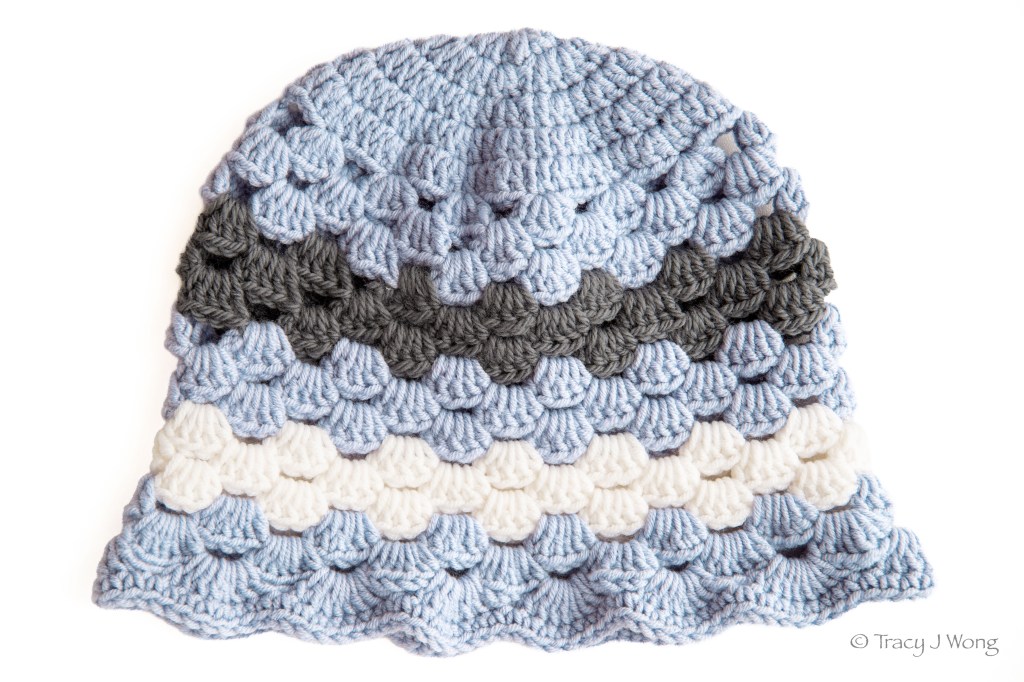
I selected a colour palette inspired by Canadian Prairie images to crochet cloches – the gold of wheat, the green of rolling hills, the grey of clouds and the blue of Prairie sky. My choice of yarn was 100% Merino Wool. All the cloches feature a shell stitch, multiple double crochet stitches worked into a base stitch. I layered the hats’ colours to resemble the Prairie landscape with its horizontal bands from sky to earth.

Prairie farmland.

Low angles of sunlight illuminate the undersides of clouds and make sunset skies glow with colour. The flat wide expanse of Prairie horizon accentuates the bands of colour. Saskatchewan’s motto is “land of the living skies”, a description fit for all the Prairie provinces.

Hats Inspired by the Rocky Mountains

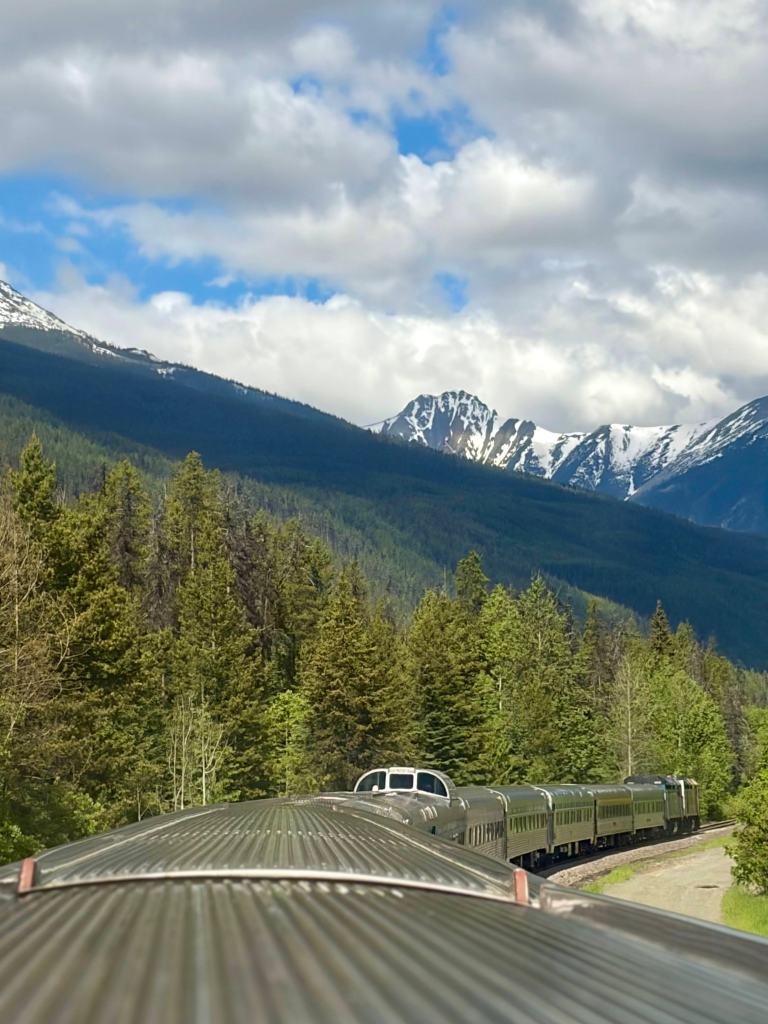
VIA RAIL’s “The Canadian” train leaving Jasper, Alberta.

I travelled across Central and Western Canada by train and marvelled at the spectacular landscapes. My journey ranged from the vast ruggedness of the Canadian Shield and the flat plains of the Prairie provinces to the grandeur of the Rocky Mountains, from rural communities to urban centres. Each region’s palette was so distinct and dramatic that I decided to create hats in colours inspired by the Canadian scenery.

View of the Rocky Mountains from the train.

My first of three Canadiana posts features the majestic Rocky Mountains that appeared blue from afar. Up close, the mountains’ coniferous trees were a jumble of every shade of green. There were snow-capped summits reaching up to a sky filled with cotton clouds shadowed in grey. I chose colours from the scenery to sew a new collection of beanies.

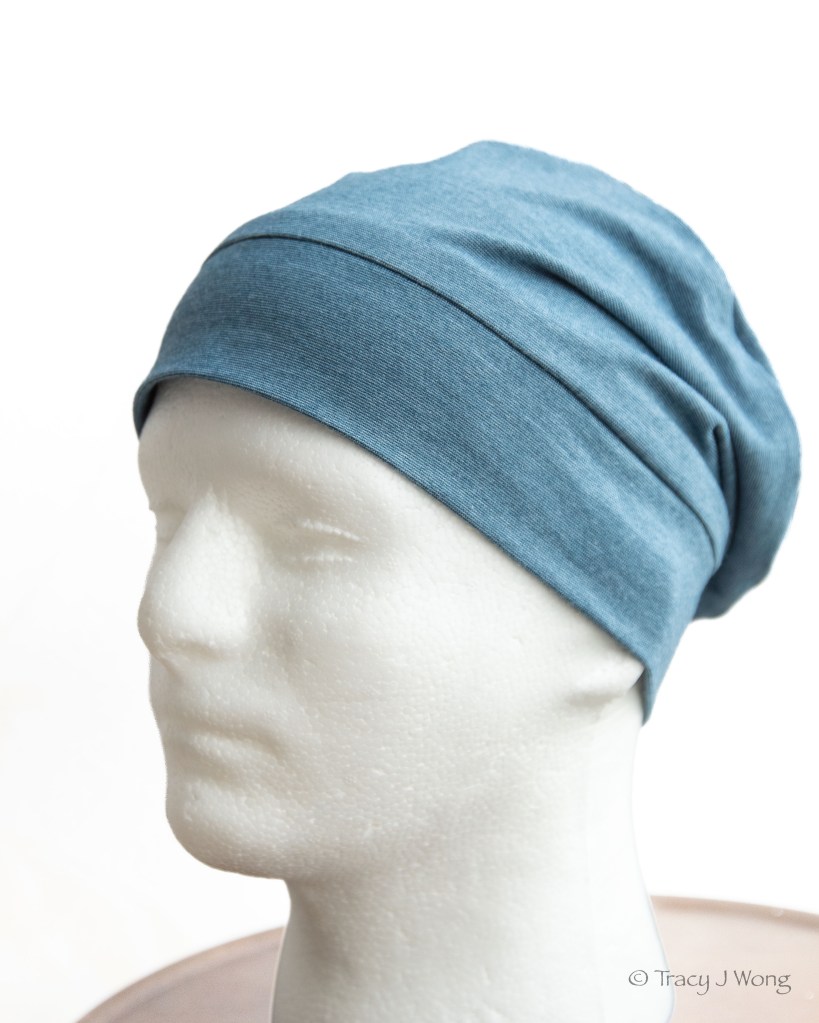
Beanie sewn from Micro Bamboo Fleece.

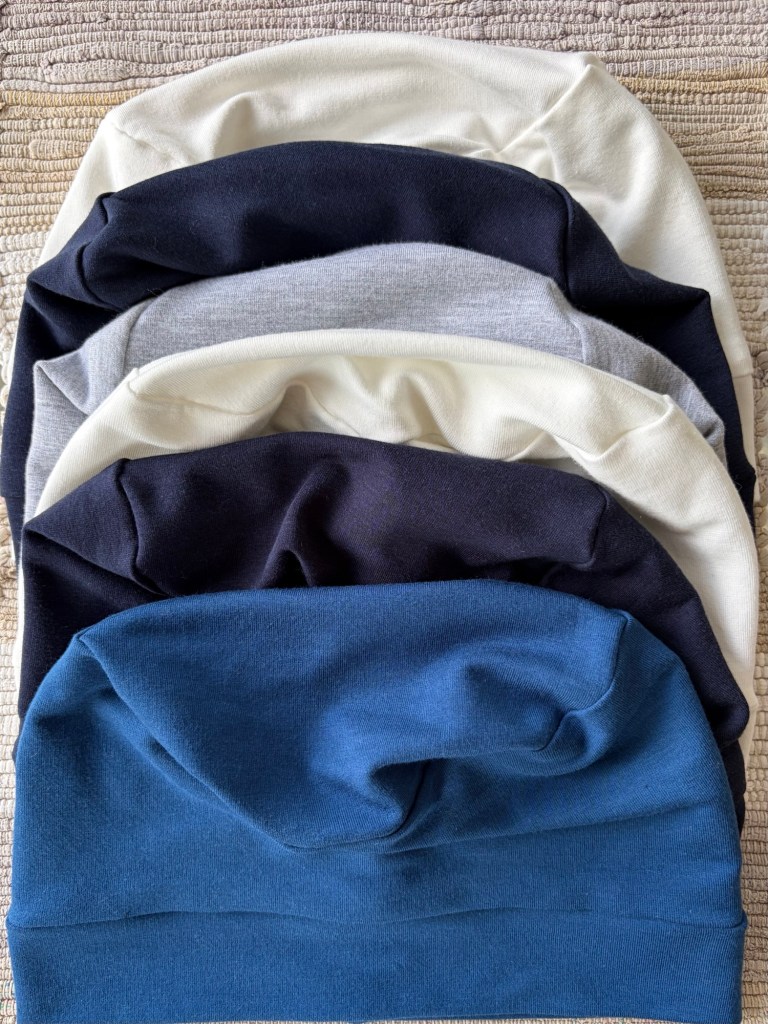
My bamboo beanies are a year-round wardrobe staple for outdoor enthusiasts – hypoallergenic, moisture wicking, odor resistant and breathable. They are comfortable for mild and transitional weather such as cool summer mornings. Wear one if you enjoy activities like hiking or trail running. The bamboo rayon used to make my beanies may have an underside of looped terry cotton or brushed fleece.

Unisex Bamboo Beanies are available in different colours and sizes.
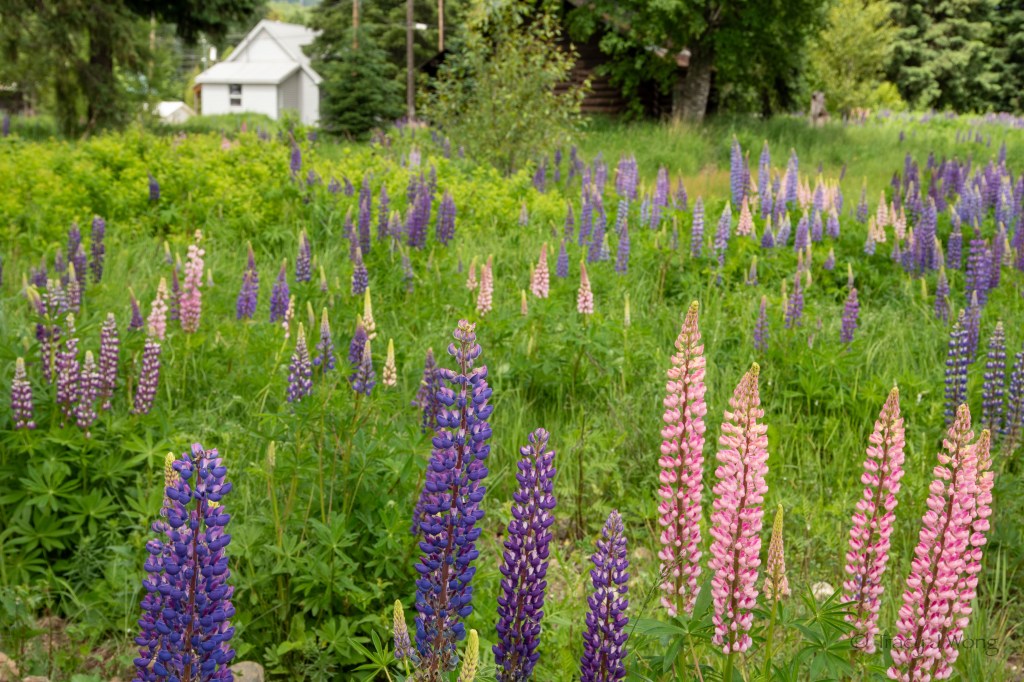
Flowering lupin plants grow wild and with abandon.

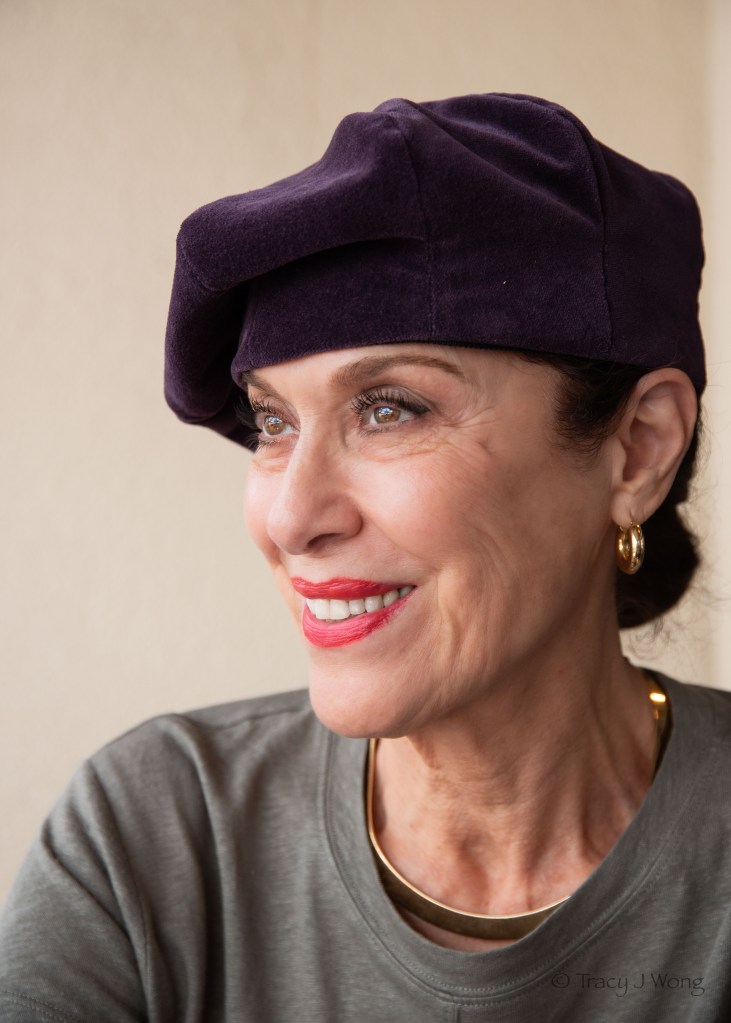
The Rocky Mountains are home to the lupin, a perennial flowering plant belonging to the legume family. Travellers delighted in these showy spikes of pink, blue and purple flowers at a train station stop. Below I feature two hats inspired by the lupins, a pink summer hat crocheted with cotton and silk yarn and a purple cotton velvet beret.

O Canada

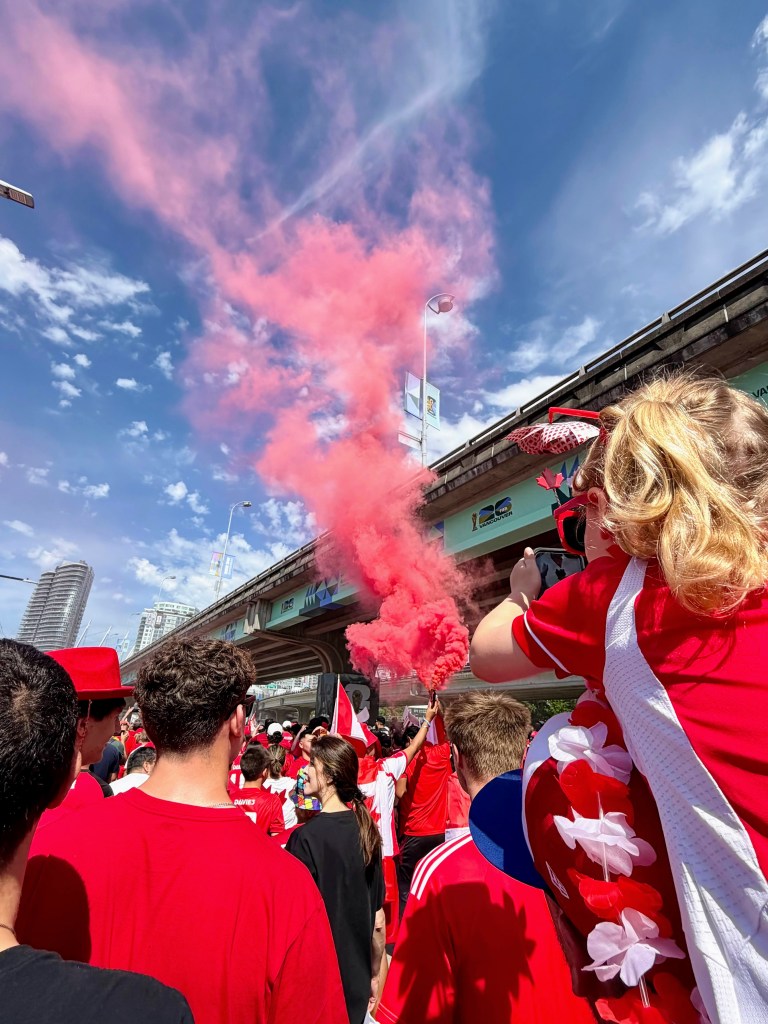
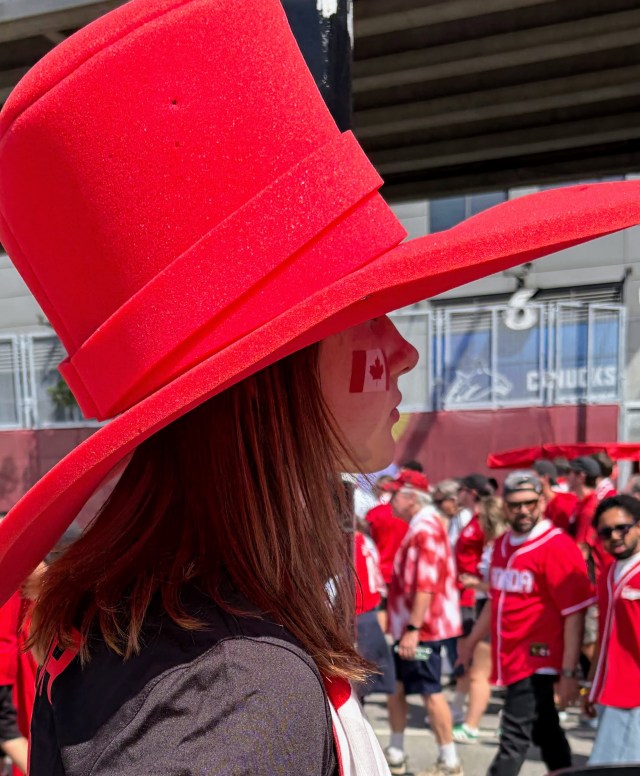
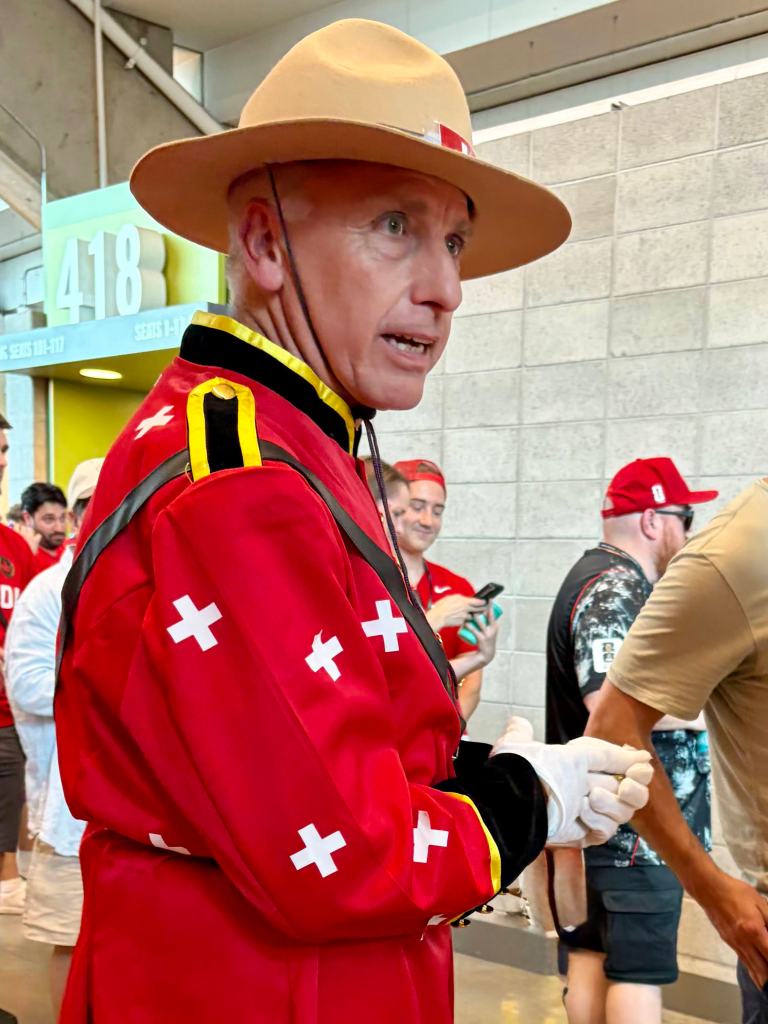
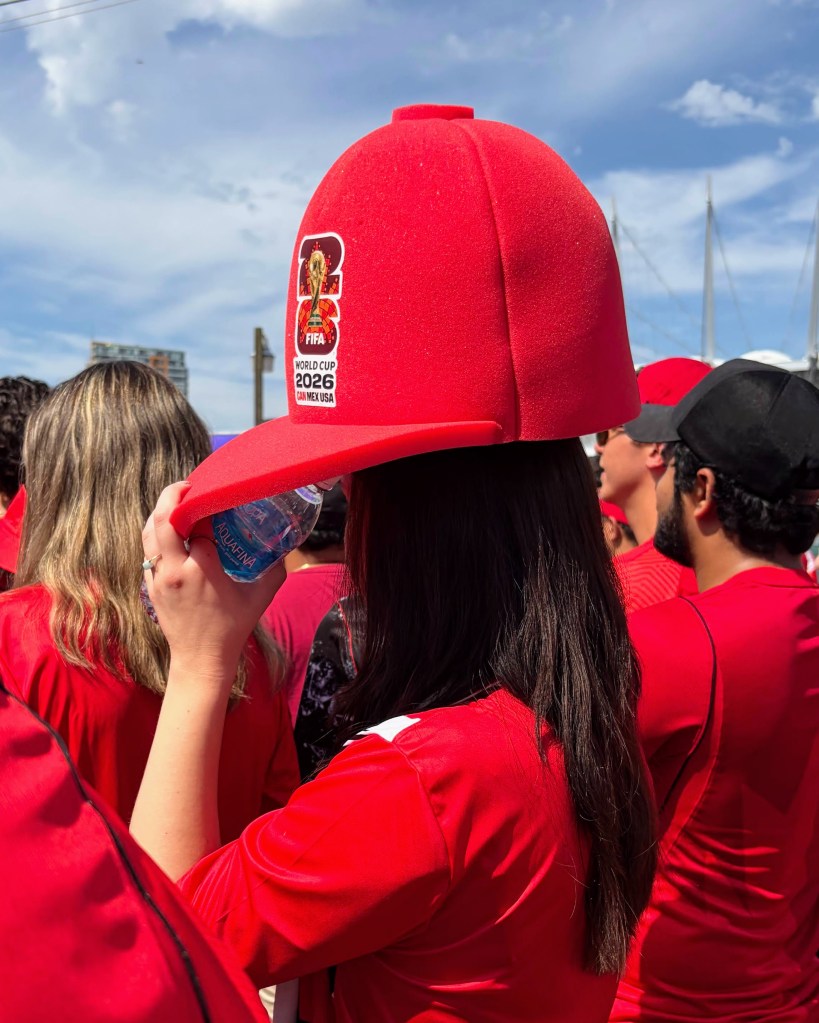
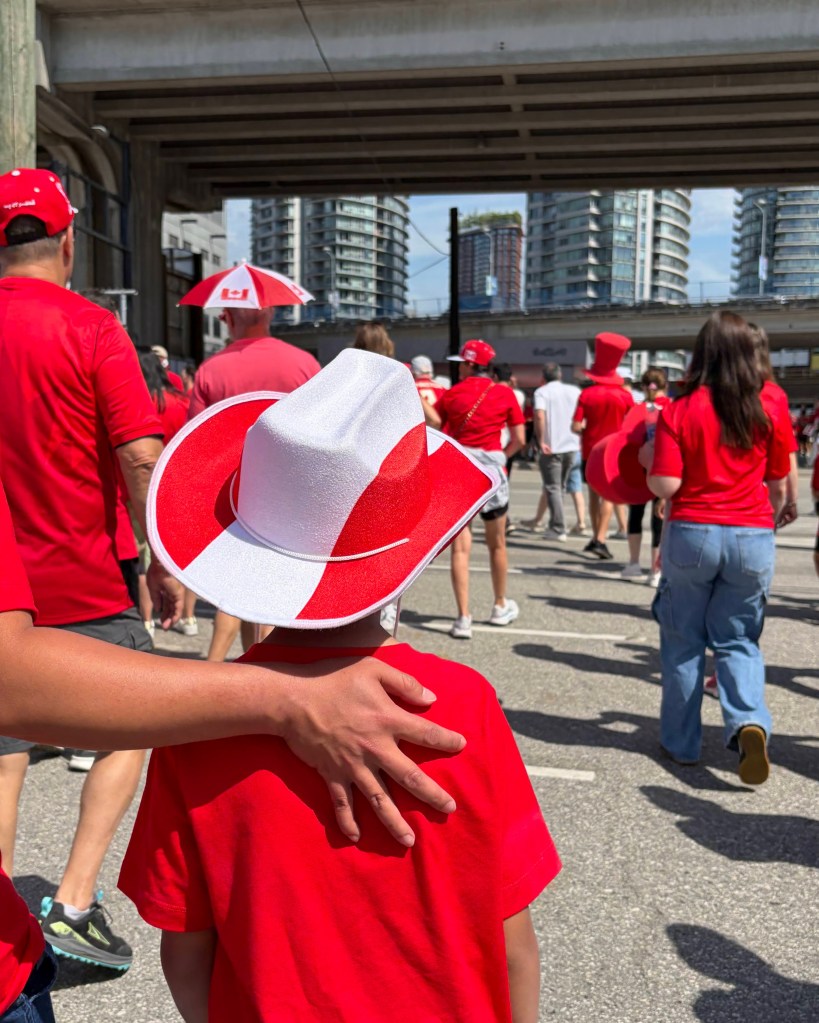
Thousands of Team Canada fans marched the “last mile” from Science World to BC Place Stadium.

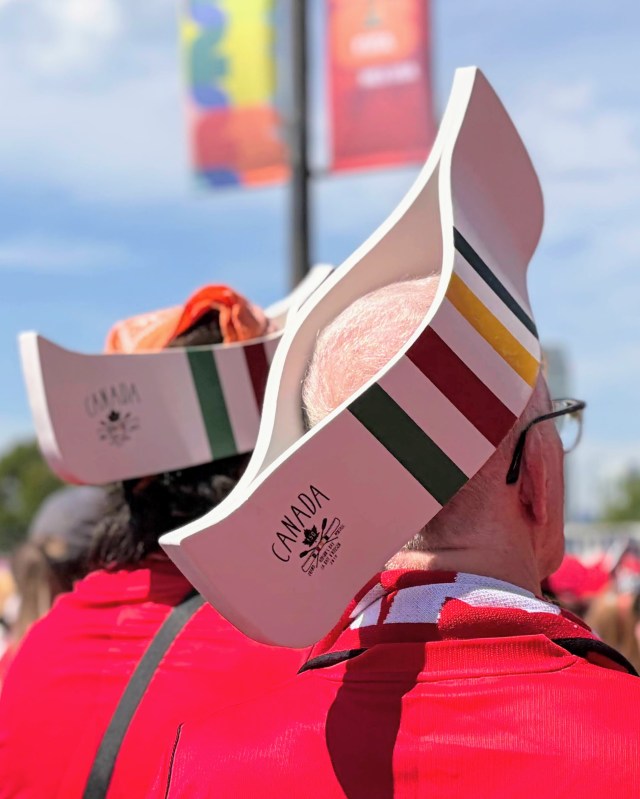
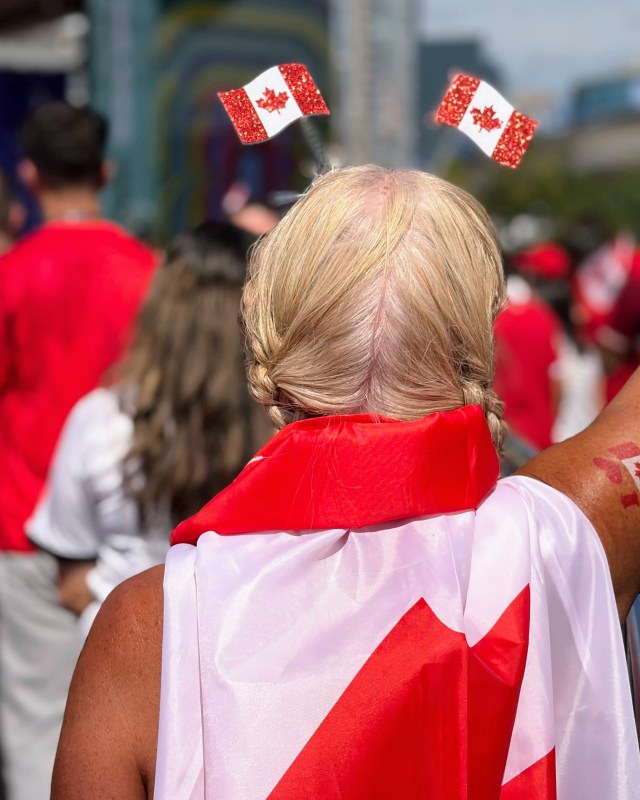
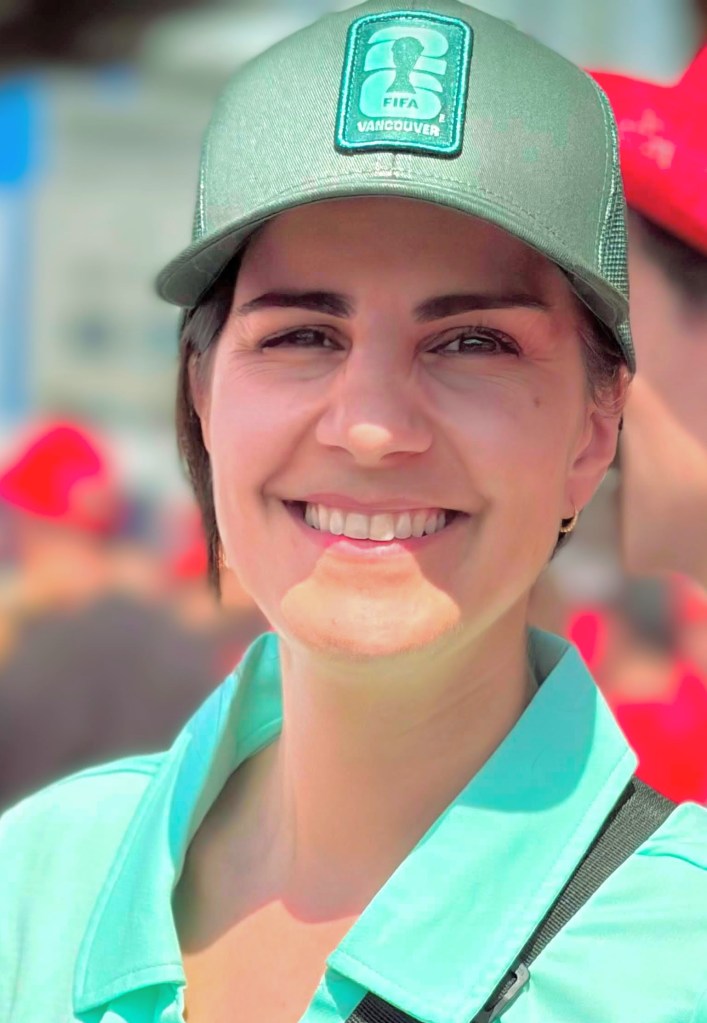
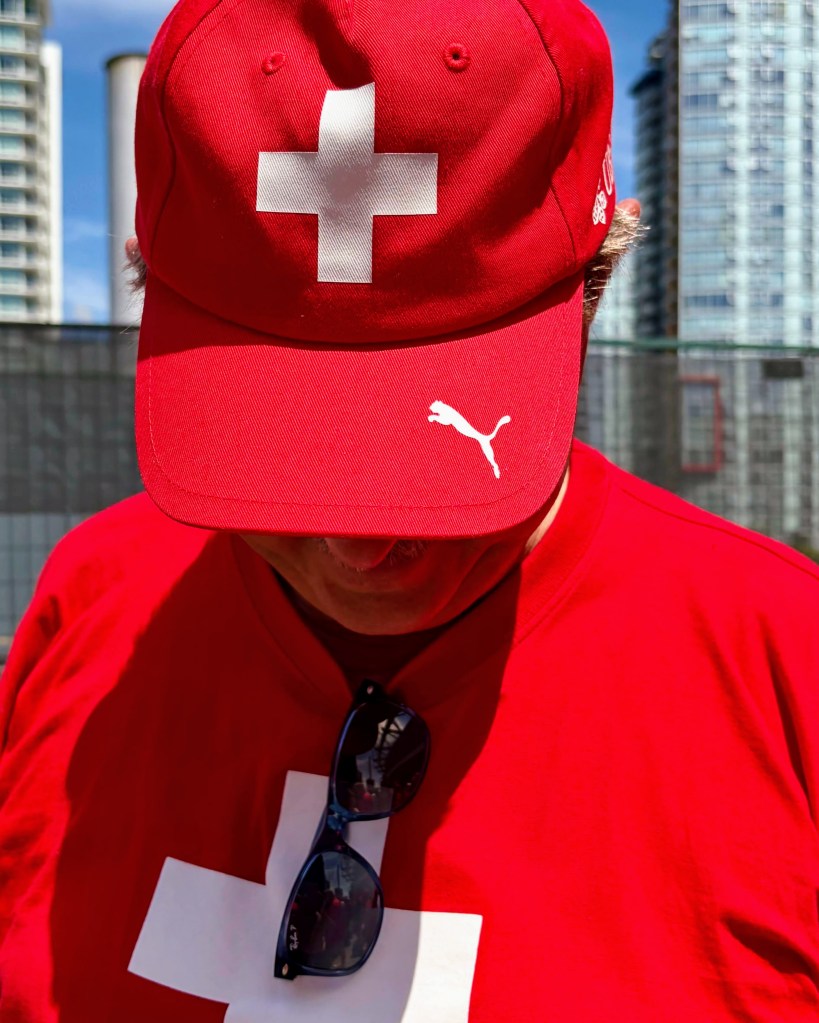
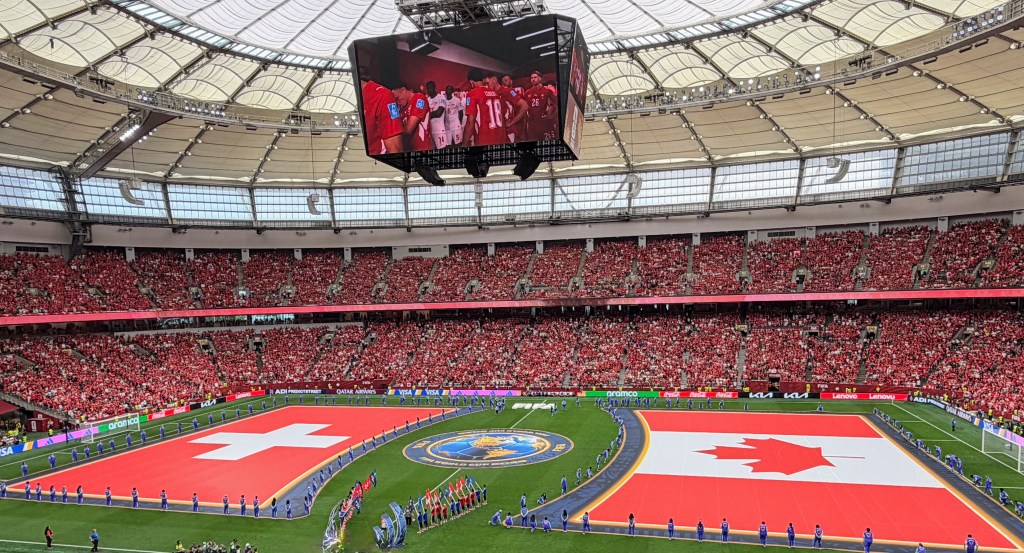
A sea of football fans hit the streets of Vancouver, Canada on the way to BC Place Stadium for the 2026 World Cup match between Canada and Switzerland. The weather was sweltering with a record-breaking temperature of 27.7 degrees Celsius for the day of June 24th. Trying to stay and look cool, supporters of the Canadian and Swiss teams showed up in red and white, carrying their national flags and wearing all sorts of headwear.

The Canadian team fought hard in the second half of the match, but ultimately was defeated by the Swiss 2-1. Hats off to the show of support, unity and patriotism by the dedicated football enthusiasts!

Giant flags were unfurled across the pitch during the singing of the national anthems.

More Bandanas

From my model Coco:

“I’m curious – do any of you enjoy wearing bandanas? I had never worn one before, but yesterday I tried on a few as a model. I have to admit, I was pleasantly surprised by how flattering they are and how they can enhance your overall look. I had a lot of fun wearing them during the photo shoot!”

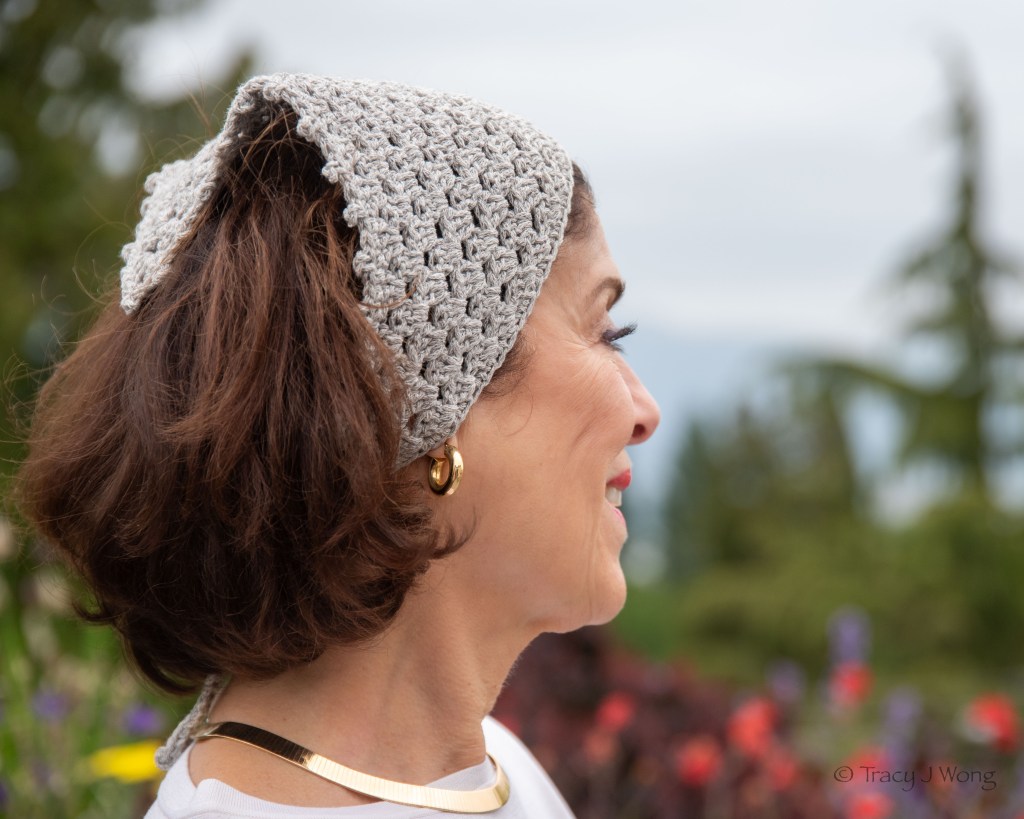
Moss Stitch Kerchief, pattern by Heart Hook Home, 35% Cotton/35% Silk/30% Nylon+Polyamide

Coco asked me what to wear for the photo shoot and I recommended something spring-like and casual, like a solid coloured shirt in blue, green or white. She opted for a simple white t-shirt.

Moss Stitch Kerchief, inspired by Heart Hook Home, 60% Wool/40% Cotton

I gave Coco free rein to try on a few of my crocheted bandanas and play around with different ways of wearing them. She let her long hair be loose. She tied it in a ponytail. Head scarf, neckerchief…her look went from flirty to reflective, peasant girl to assured woman.

Bobble Kerchief, designed by Pattern Paradise, Recycled Denim/Cotton

Using a square knot at the back, Coco tied a larger bandana around her neck in a cowboy kerchief style. Later she tied a daintier picot-edged one around her neck, shifting the neat shoelace bow to one side.

Picot edging and a shoelace bow finish the look of this kerchief worn around the neck.

Why not try accessorizing with a bandana to change up your summer wardrobe? Bring out some of your inner Audrey Hepburn elegance, boyish charm and playfulness.

Bandanas Back in Style

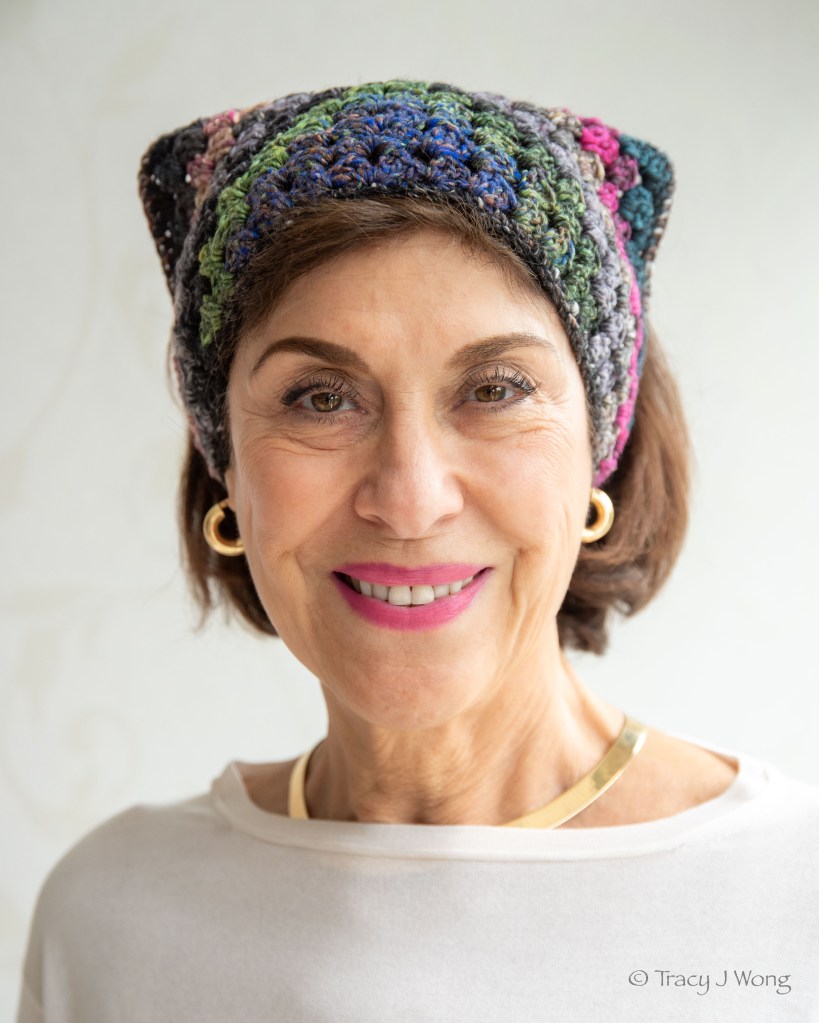
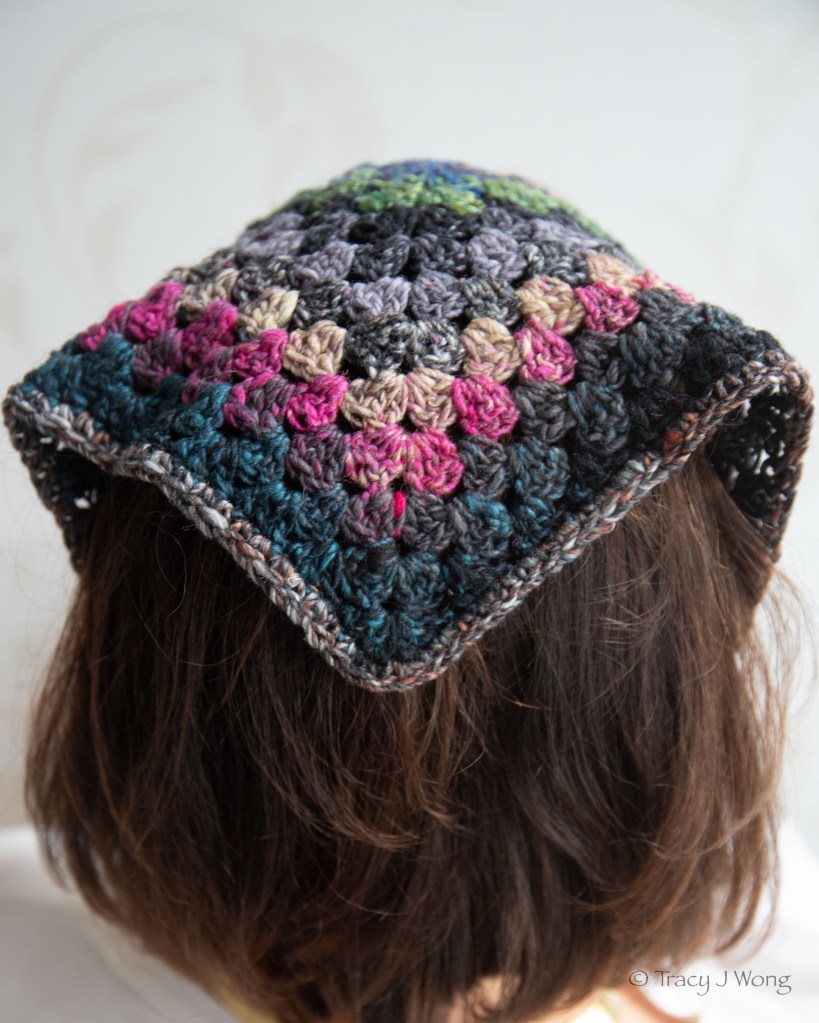
Granny Triangle Bandana, design by Hayhay Crochet, 50% Silk/25% Wool/25% Nylon/Polyamide

Whether you’re going for a boho chic, beach or cottage vibe, this summer accessory adds personality to your outfit. While the bandana or kerchief protects your hair from the sun, it is also easy to pack for travel if you want to take a break from styling your hair. It keeps your hair away from your face, framing it whether you sport a short bob, long tousled waves, or front bangs.

Granny Triangle Bandana with picot edging, design by Hayhay Crochet, 85% Organic Cotton/15% Baby Alpaca

I crocheted the Granny Triangle Bandana for a vintage vibe, experimenting with solid and self-striping yarns. The granny square is an iconic motif from the 1970s. Its traditional pattern, clusters of three double-crochet stitches separated by chain stitches, is easy to crochet.

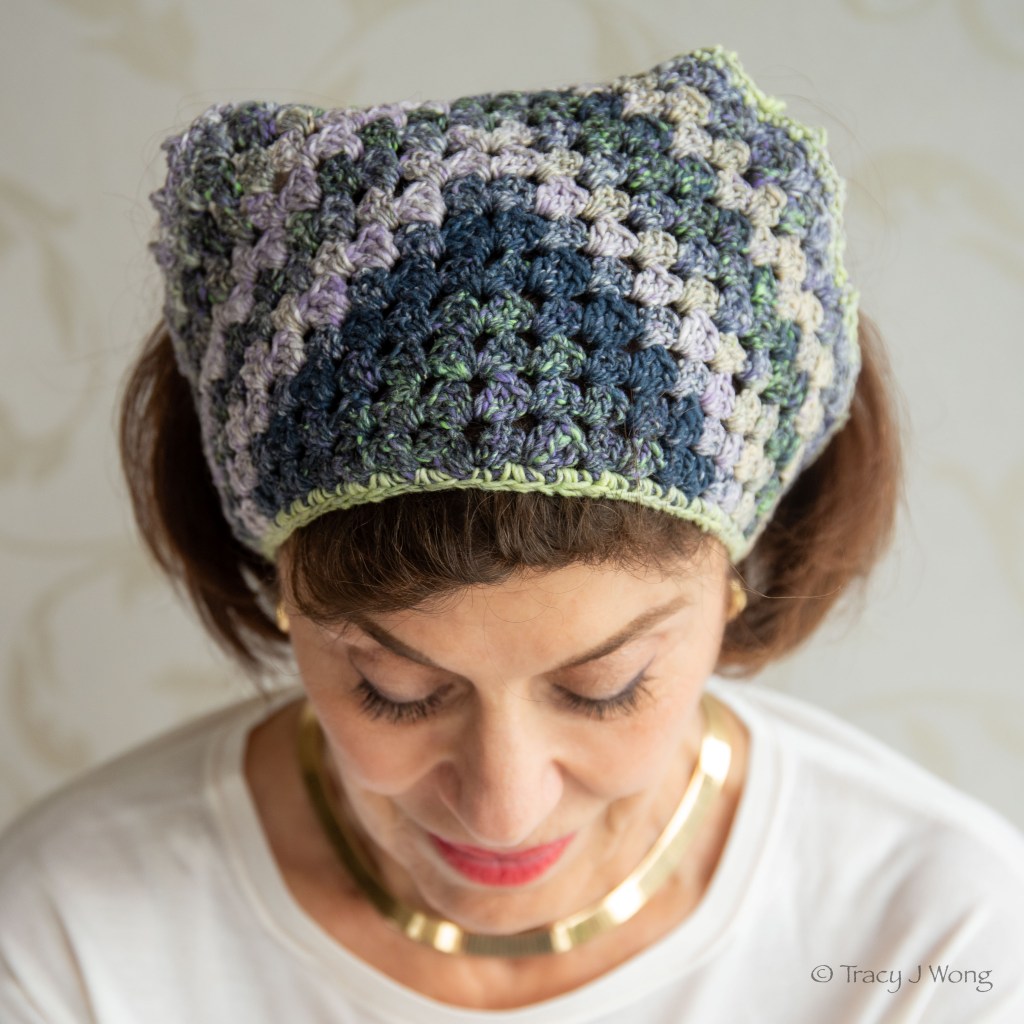
Granny Triangle Bandana, design by Hayhay Crochet, 60% Cotton/25% Silk/15% Polyamide

Fold a fabric bandana, also called a kerchief, into a strip and use it to tie a braid, a ponytail or a bun. Wrap it around your head as a headband or your neck as a neckerchief scarf. I sewed these square kerchiefs using Australian Aboriginal cotton fabrics (patterns designed by Debra McDonald and Tanya Price).

Effortlessly Cool Slouch Hats

The Slouch Hat is comfortable, stylish, unisex and all-season.

The slouch hat is part of a casual urban streetwear look that can be worn all year round. It looks great with a t-shirt, jeans, an oversized hoodie and sneakers. For warmer months, pair a slouchy beanie made from a natural breathable yarn (such as cotton, linen or hemp) with tees and cut-offs. Take along a sweater or denim jacket for cool evenings. Create a cohesive look by matching the colour of your hat to a colour in your outfit. Hide your messy hair under the hat, show off your waves or put your hair in a loose side braid or ponytail.

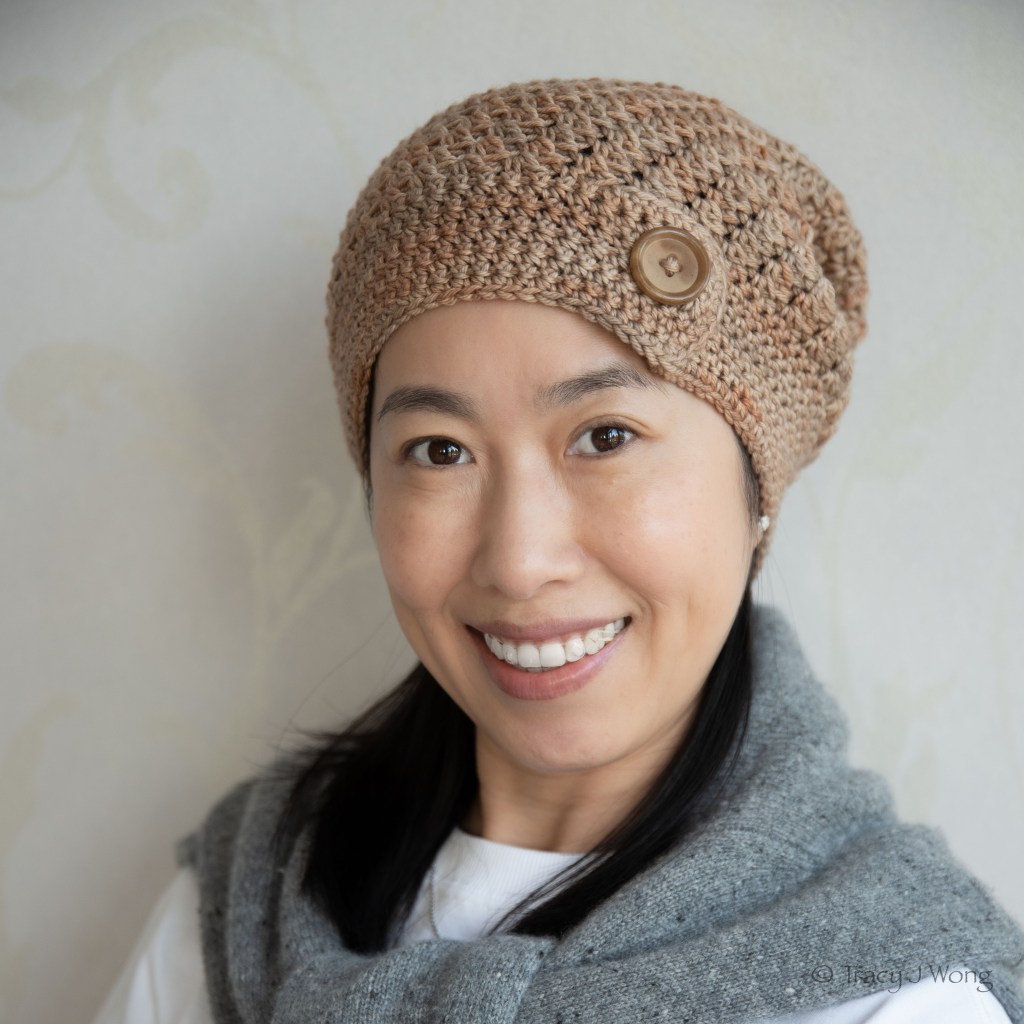
Sandy Slouch Hat, designed by Yarn+Chai, 85% Organic Cotton/15% Alpaca.

In the summer, wear the slouch hat further back on your head so that there’s extra material to drape or slouch at the back. You can expose your forehead, hairline and ears, as the hat is more about aesthetics than warmth this time of year. Work the slouch so it falls in soft tucks. You might have to try on slouchies with different heights. You want it to look cool and not too floppy.

Sandy Slouch Hat, designed by Yarn+Chai, Alpaca/Merino.

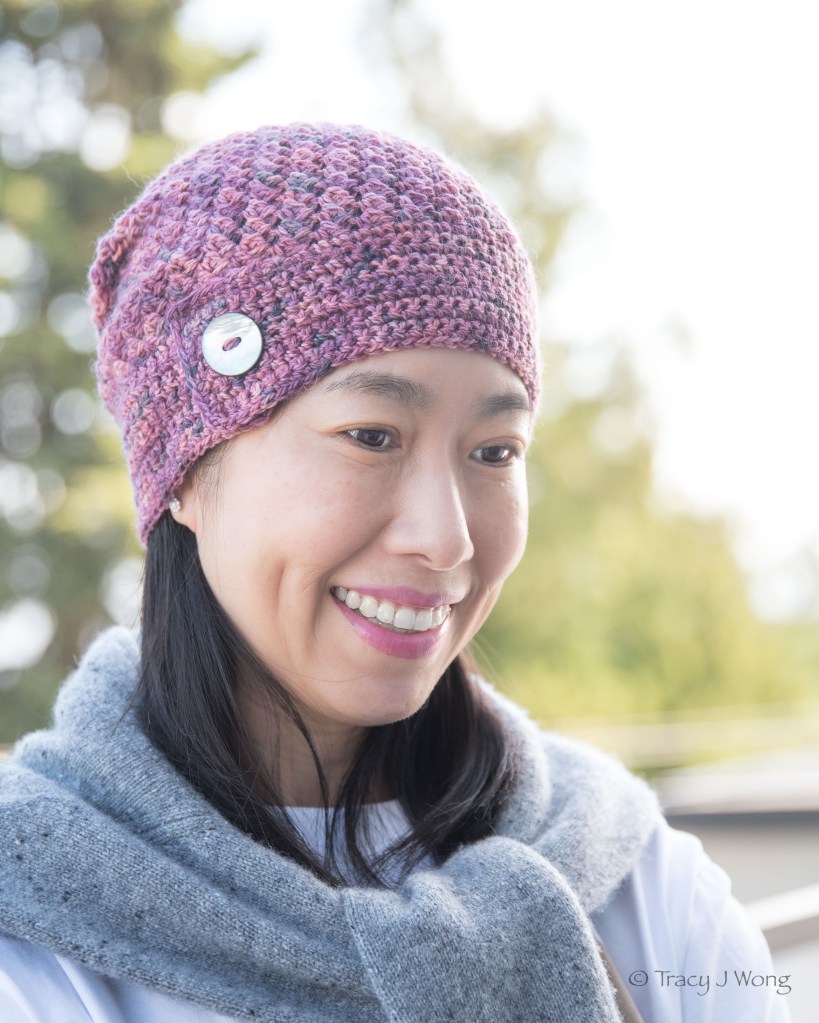
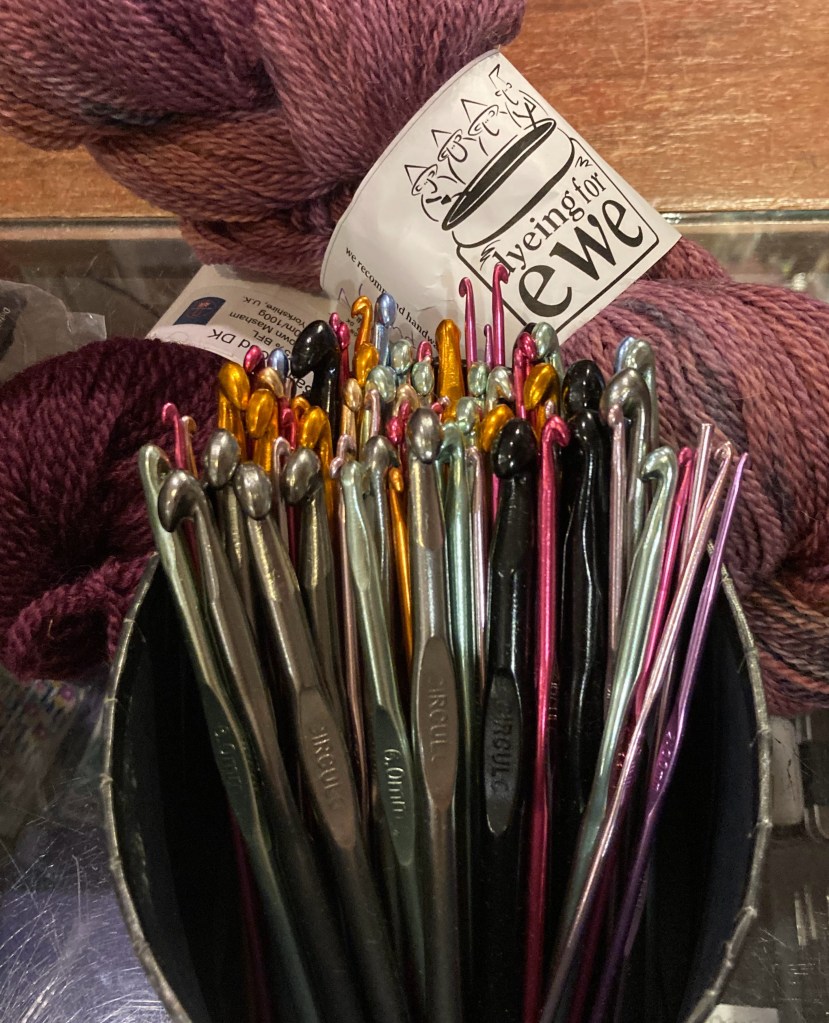
I crocheted a few slouch hats, but elevated this one with an alpaca/merino blend in shades of pinks and purples and a mother-of-pearl button. I sourced the locally dyed wool from a shop in Nanaimo, B.C., “Mad about Ewe Fine Yarns”.

Find all things yarn related at Mad about Ewe Fine Yarns, Nanaimo, B.C., including friendly and knowledgeable staff.
Sandy Slouch Hat, designed by Yarn+Chai, Superwash Merino Wool.

Spring Fling Hats

Springtime in Vancouver’s Kitsilano.

Celebrate the arrival of warmer and sunnier days with a spring fling. Maybe there’s an occasion where you’ll come together with others over cherry blossoms, family activities, music or fundraising. Attire is not prescriptive, but pastel dresses and floral prints might suit the season and the event.

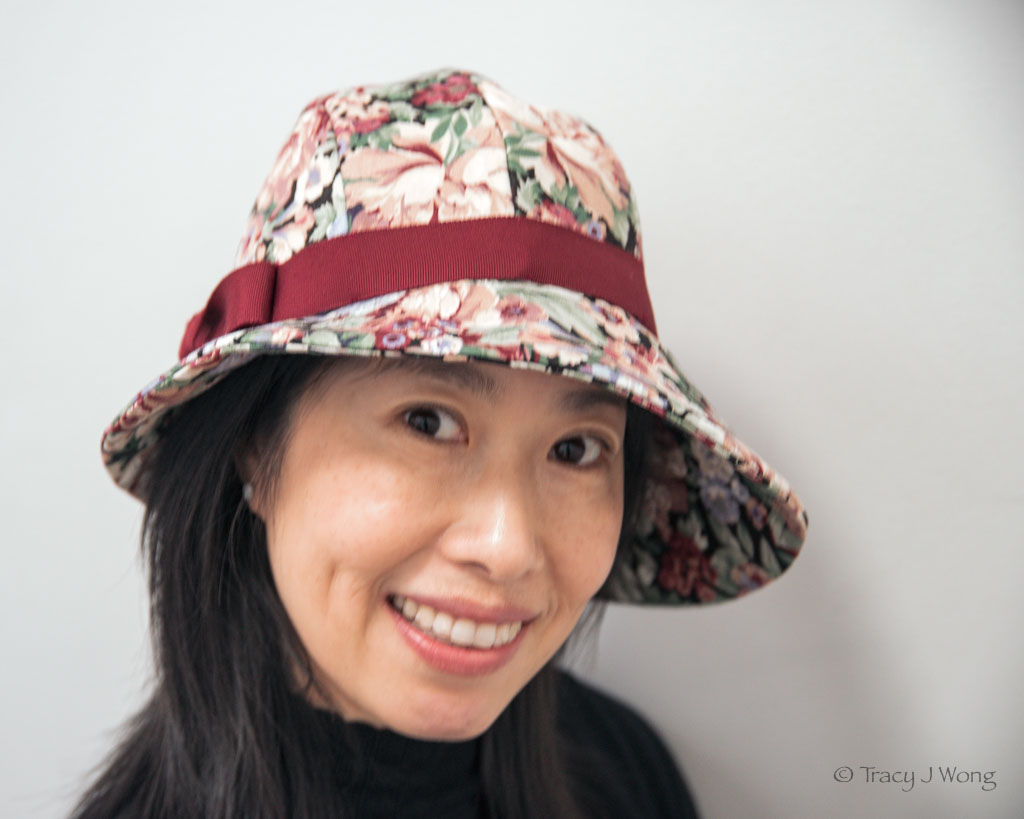
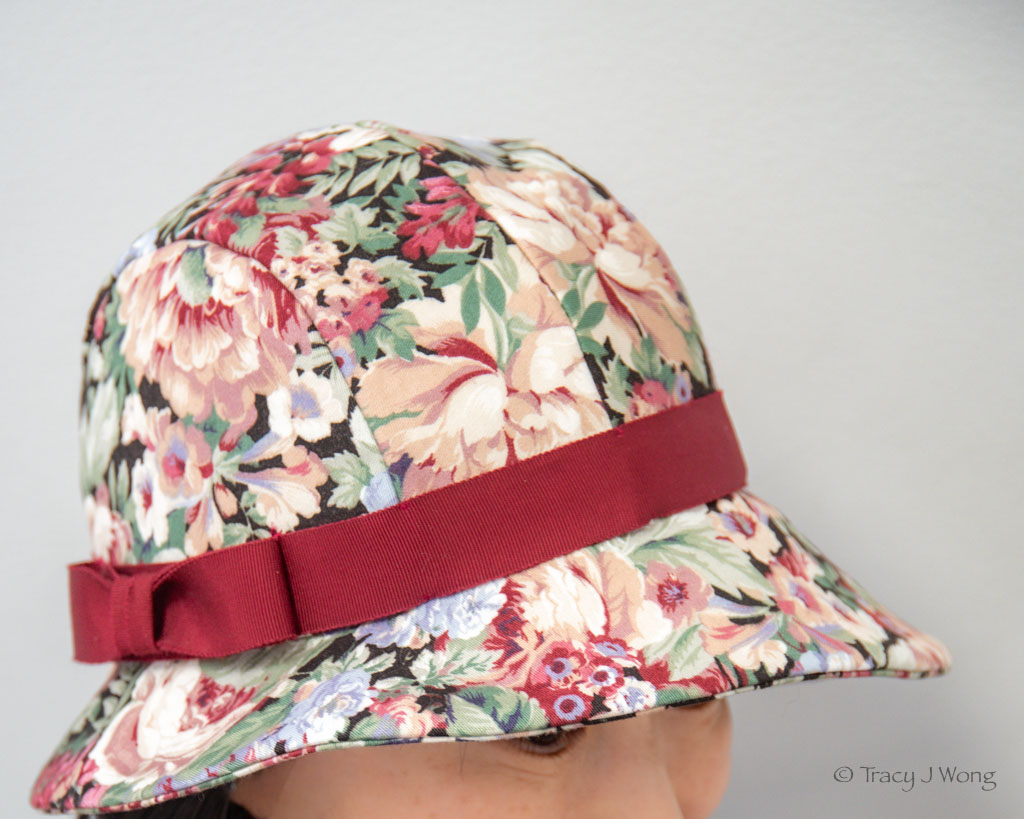
Elevate your look at a garden party with a cotton botanical floral hat. I sewed this one from a McCall’s fashion accessories pattern. It has an asymmetrical brim and a ribbon accent. It’s stylish and functional. 

Hats with symmetrical or slanted brims are particularly flattering for those with round or square faces because they break up the natural symmetry of the face and add interest from the angle.

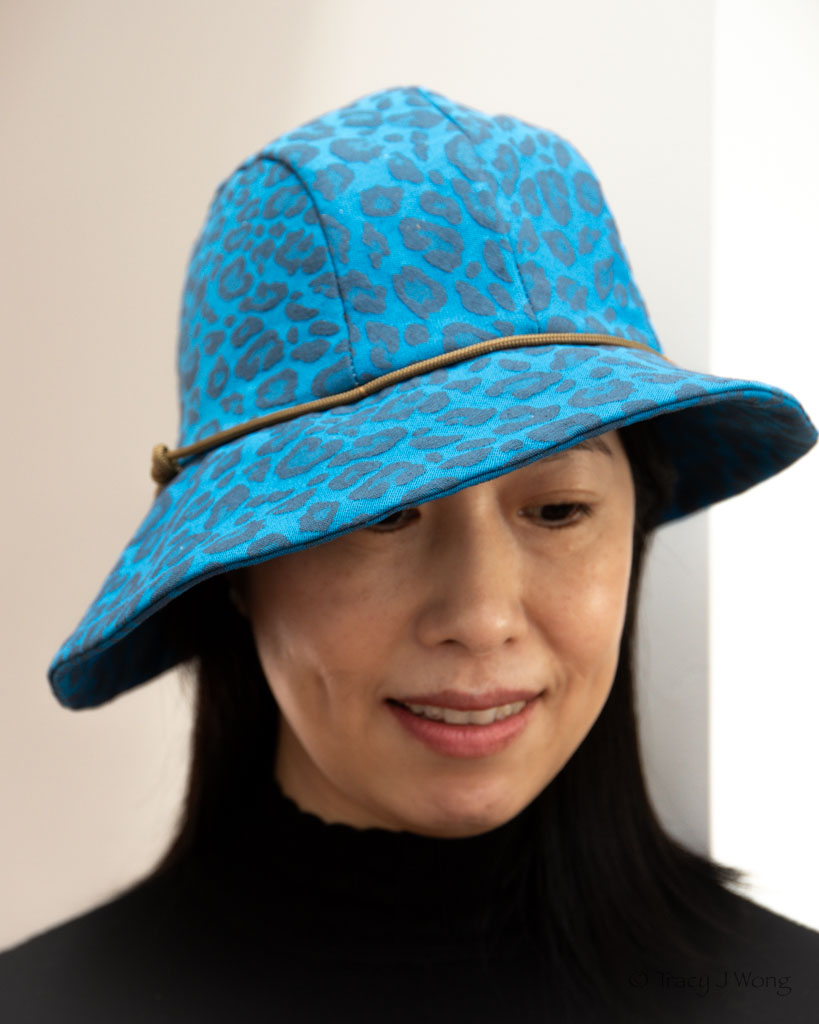
For something more avant garde, try this hat made from the same pattern in a blue leopard print. The fabric is a warp stretch cotton (73% Cotton, 23% Polyester, 4% Spandex). Being mid-weight and sandwiching a substantial layer of interfacing helps to hold the “crisp” hat shape. I knotted a length of paracord to finish the hat.