Welcome to 2026

Whether it’s a casual coffee date or dining out, the new year provides opportunities to wear a warm hat. I took a break over the holidays, but now I’m recharged and inspired to learn more and create hats with a fresh outlook.

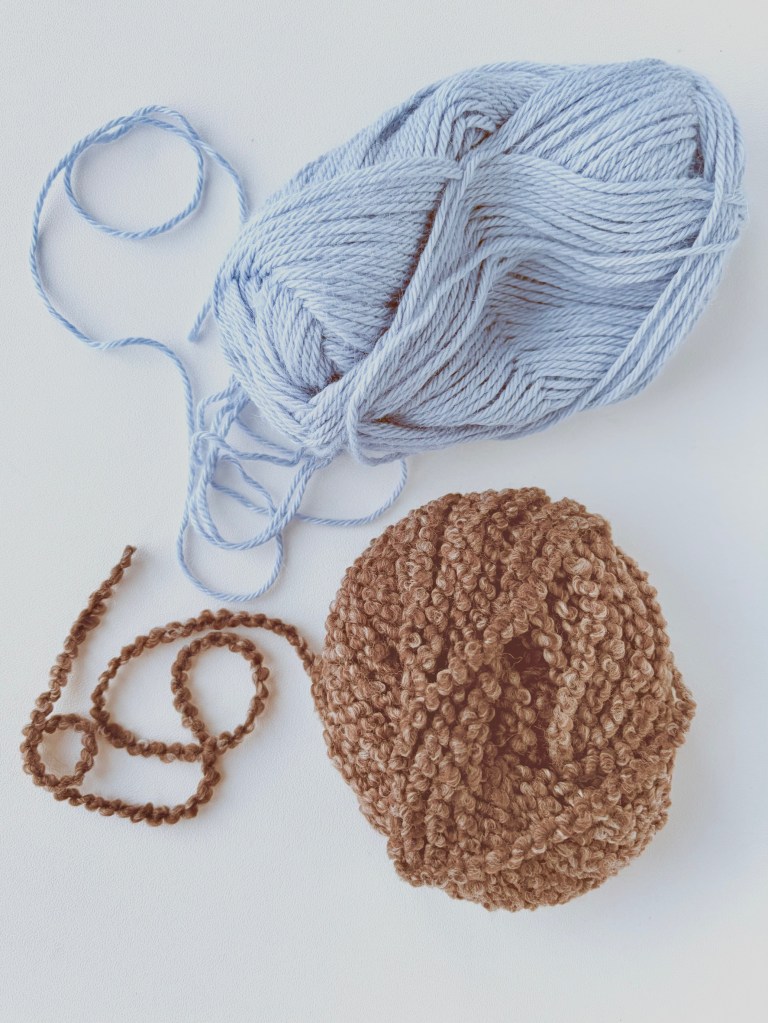
Lucky me, I received a ball of cornflower alpaca wool from a friend. Knowing that alpaca wool has a tendency to stretch and lose its shape when crocheted, I chose a pattern for a fitted hat. I am going to take special care with this Fisherman Beanie designed by Pukapuka. When not wearing it, I’ll be sure to store it flat in a drawer.

Alpaca and bouclé yarns: different in look and feel
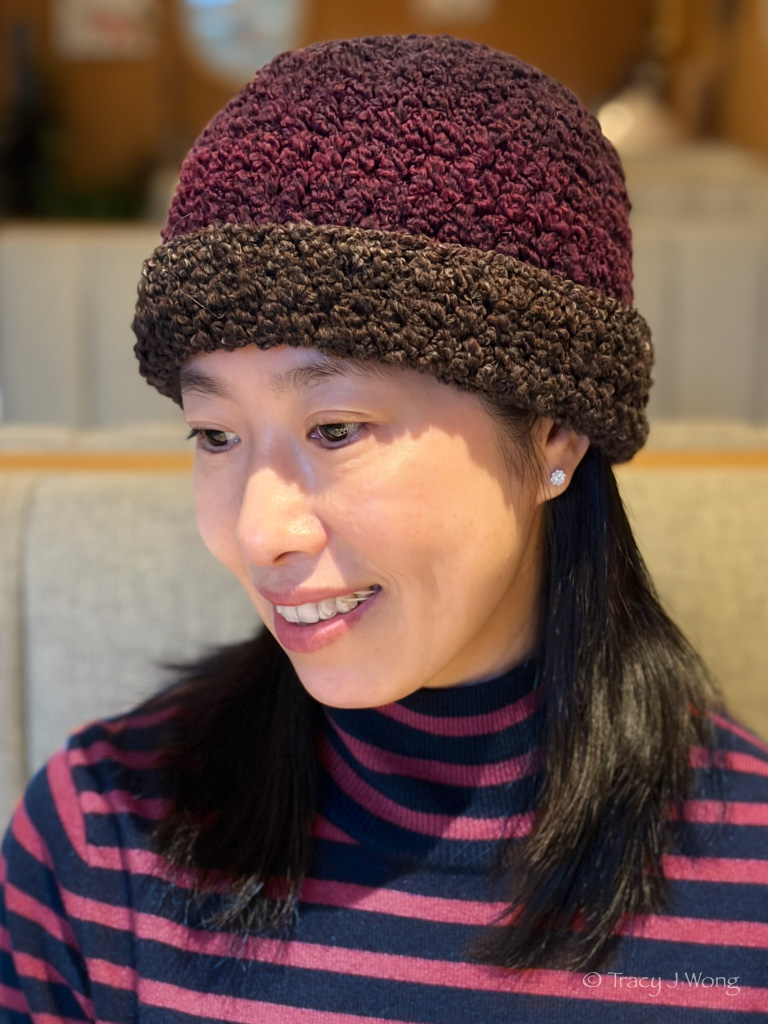
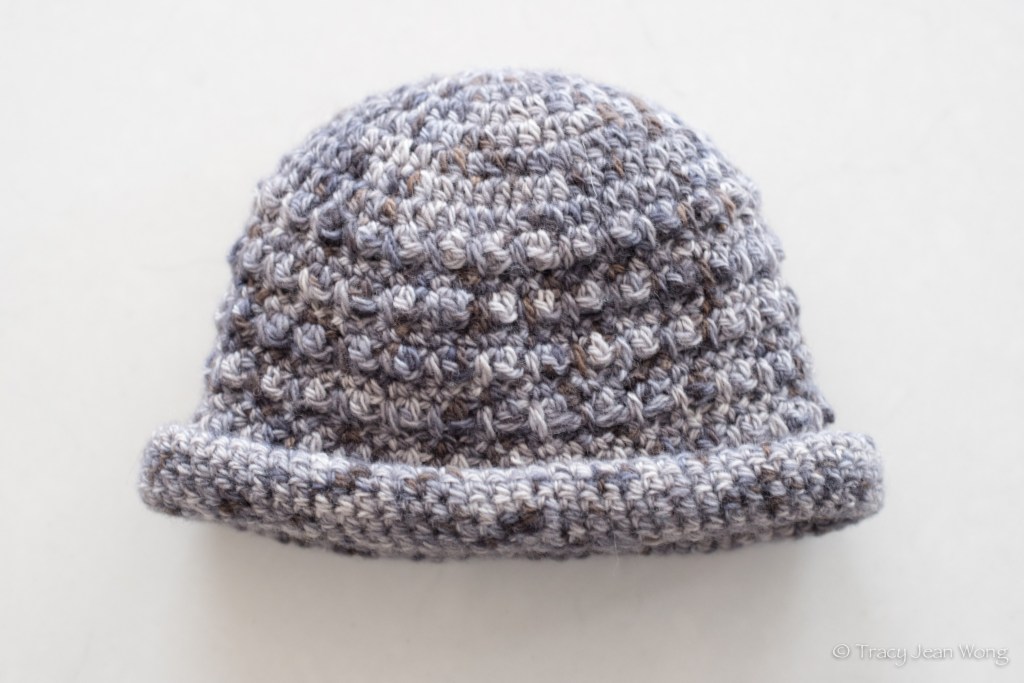
Cuffed Fisherman’s Hat, 76% Virgin Wool/14% Acrylic

Bouclé yarn gives a hat a textural feel with its curls or loops. This Fisherman’s hat worn by Coco is made from a bouclé that is composed of a core acrylic yarn with wool loops. Due to the loops, the yarn calls for a simple pattern as stitch definition is poor. The main beauty of bouclé is in its cozy shearling-like look and feel.

Beret, design by Joyce Nordstrom, 75% Wool/25% Viscose

A customer requested a crocheted beret in the jewel tone of teal, her favourite colour. Teal is named after a bird, the Eurasian Teal, which has a rich deep blue-green stripe on its head. Candace knew exactly what she wanted and I had one ball of yarn remaining in my stash of yarn, fortunately enough to complete the project in time for winter. Warm and stylish!

At the Craft Market

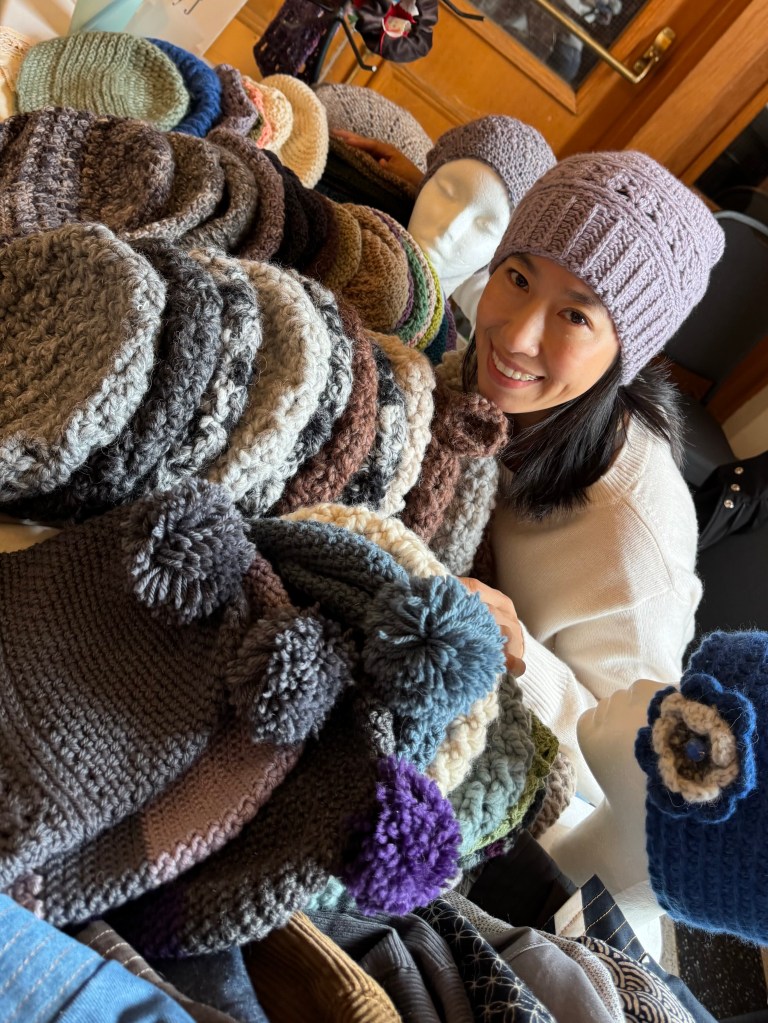
Tracy J at Dunbar Holiday Craft Fair, November 22, 2025

Coco and I have met so many people at holiday craft markets. We love the moments when we fit someone with a hat that suits them so perfectly that it feels like it was made for them. We enjoy meeting not only new people, but also the loyal customers who return year after year to see what’s new in the world of Hats by Tracy J. We appreciate our supportive friends and family that come by to say hello. Thank you!

Coco at Made in the 604 Pop-Up Market, November 1, 2025

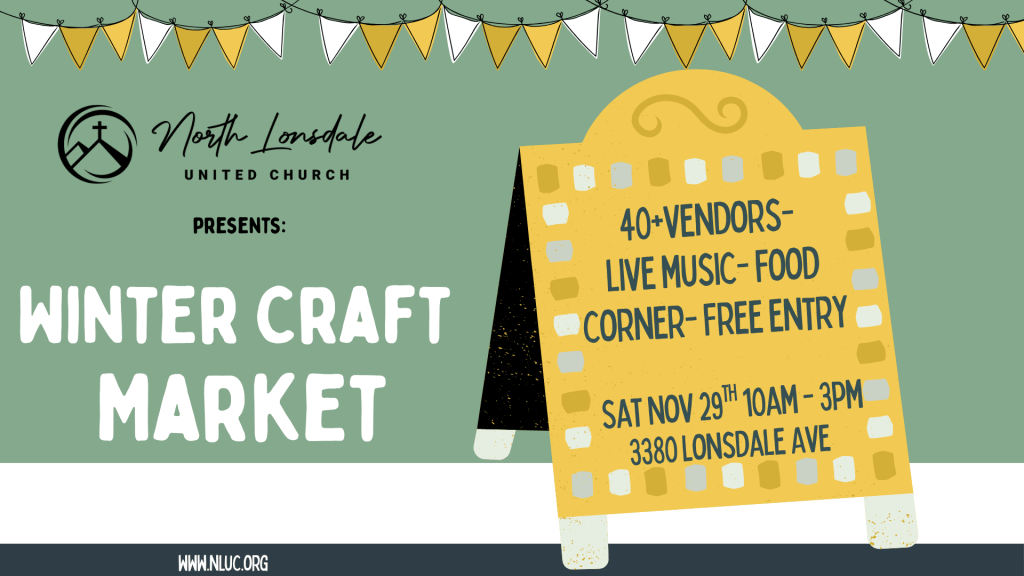
Hats by Tracy J will be a vendor at one more Winter Craft Market this season. Hope to see you at the North Lonsdale United Church on Saturday, November 29th, 10AM-3PM.

Alike Yet Different

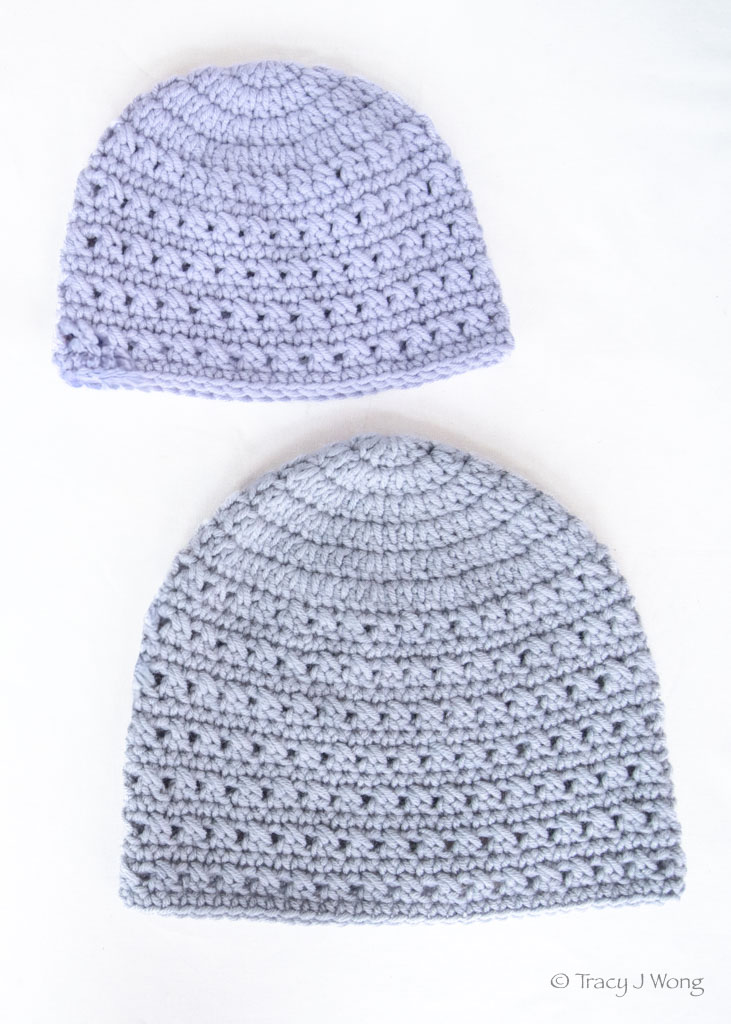
Warm and cuddly children’s hats in two sizes made from Merino Wool and Superfine Alpaca.

After crocheting many, many hats, I have become adept at changing the size, look and feel of a hat made from the same basic pattern. When I find a style that I like, I think about variations along a similar theme. For instance, to make a child’s or baby’s version, I experiment by adjusting the number of stitches to fit different width of heads and decreasing rows to reduce the height of a hat. Embellishments like pompoms, bear ears, flowers and buttons can amp up the playful factor or add a unique element.

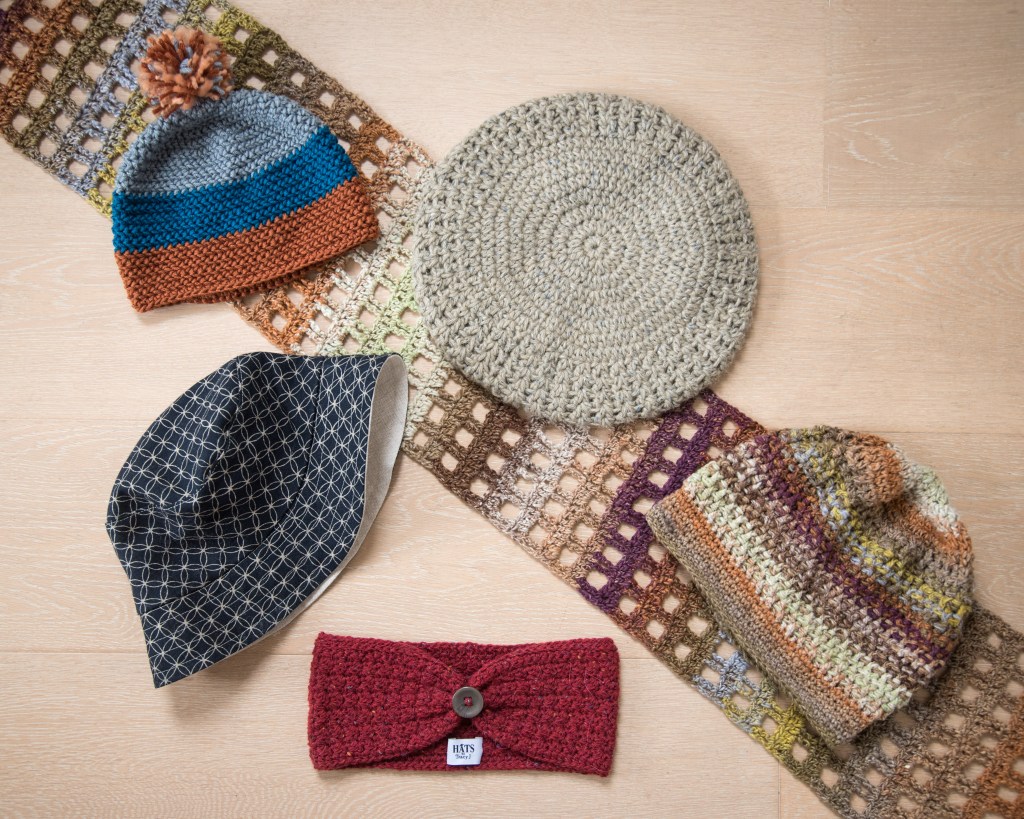
Hats made from different yarns. The tweed hat with the button is 75% Organic Wool/25% Cellulosic Viscose. The fisherman beanie is 75% Fine Highland Wool/25% Alpaca wrapped in a contrasting wool strand.

I have crocheted another two hats, alike yet different. One has a button that fastens asymmetrically. The other is a cuffed beanie or fisherman beanie with a shorter length designed to fit high on the head and sit just above the ears.

Little Textures Beanie, Prince Edward Island Worsted Wool, with a rolled cuff.

In the two hats pictured above and below, the long or spike crochet stitch adds a decorative element to the body of the hats. While the main stitch is the same, each hat has a distinct look and hand touch. This is because the yarns are of different colour combinations, fibre sources and weights. Likewise, a brim, a cuff, ribbing or border stitch separates one hat from another.

Child’s beanie, New Zealand Wool, finished with the crab stitch (reverse single crochet stitch) at its border.

The Holiday Craft Fair at Dunbar Community Centre is a much-loved market where you can find unique gifts and support local artists, including Hats by Tracy J. Come enjoy a festive atmosphere at this one-day only event on Saturday, November 22nd. 

Holiday Craft Markets

“Hats by Tracy J” will be participating in a number of craft markets this holiday season. Please come by and see what I have been crocheting and sewing, from the classic to the contemporary. I would be delighted to help you pick something to top off your personal style.

Holiday Markets

Made in the 604 Pop-Up Market: Saturday & Sunday, November 1st-2nd, 2025, 11AM-5PM, Heritage Hall, 3102 Main Street, Vancouver, B.C,

Dunbar Holiday Market: Saturday, November 22nd, 2025, 10AM-5PM, Dunbar Community Centre, 4747 Dunbar Street, Vancouver, B.C.

NLUC Winter Craft Market: Saturday, November 29th, 2025, 10AM-3PM, North Lonsdale United Church, 3380 Lonsdale Avenue, North Vancouver, B.C.

Kick off the holiday season. Shop local.

Hats with Pompoms

Misty Hollow Slouch Hat, Design by Kirsten Holloway, 70% Wool/30% Alpaca

Pompoms today make a fashion statement, but they have a long history of being more than decorative. Over the centuries, they have been used to distinguish regiment, rank, and role in military, naval and clerical settings. French sailors added them to their hats to prevent them from knocking their heads on low ceilings in rough waters. The word “pompom” is believed to have originated and been anglicized from the French “pompon” which means ornamental tuft or bobble.

Assortment of children’s hats in Merino Wool and Merino Wool blends

Modern wearers of hats with pompoms include children and winter sports enthusiasts. If you’re out in the cold and wearing mittens, you can just tug on the pompom to remove your hat.

Crocheted Women’s Hats with herringbone stitch, 70% Merino Wool, 30% Alpaca. Pompom: Yay or nay?

The pompom as a decorative element seems to be a matter of personal taste if you’re an adult. There are those who adore the addition of a pompom on a hat and those who find them frivolous. The pompom trending now is large and fluffy and typically made from yarn or from real or faux fur.

Fall Denim and Corduroy

Blue jeans are staples of most fall wardrobes, but cords might be another of your go-to choices. Denim and corduroy are also great fabrics for hats. Both are durable and primarily made from cotton, but differ in their look and hand feel.

Newsboy cap from upcycled denim jeans and topstitched with gold jeans thread.
Another newsboy cap sewn by Tracy J from a pair of upcycled blue jeans.

The manufacturing processes of denim and corduroy gives each its classic look. The “twill weave” is commonly seen in blue jeans. Warp yarns (vertical yarns) are dyed with indigo and weft yarns (horizontal yarns) are left undyed. Twill is made by offsetting rows of weft yarns woven over and under warp yarns. For example, the weft might be woven over three warp yarns and under one warp yarn. The result is a fabric with a diagonal pattern.

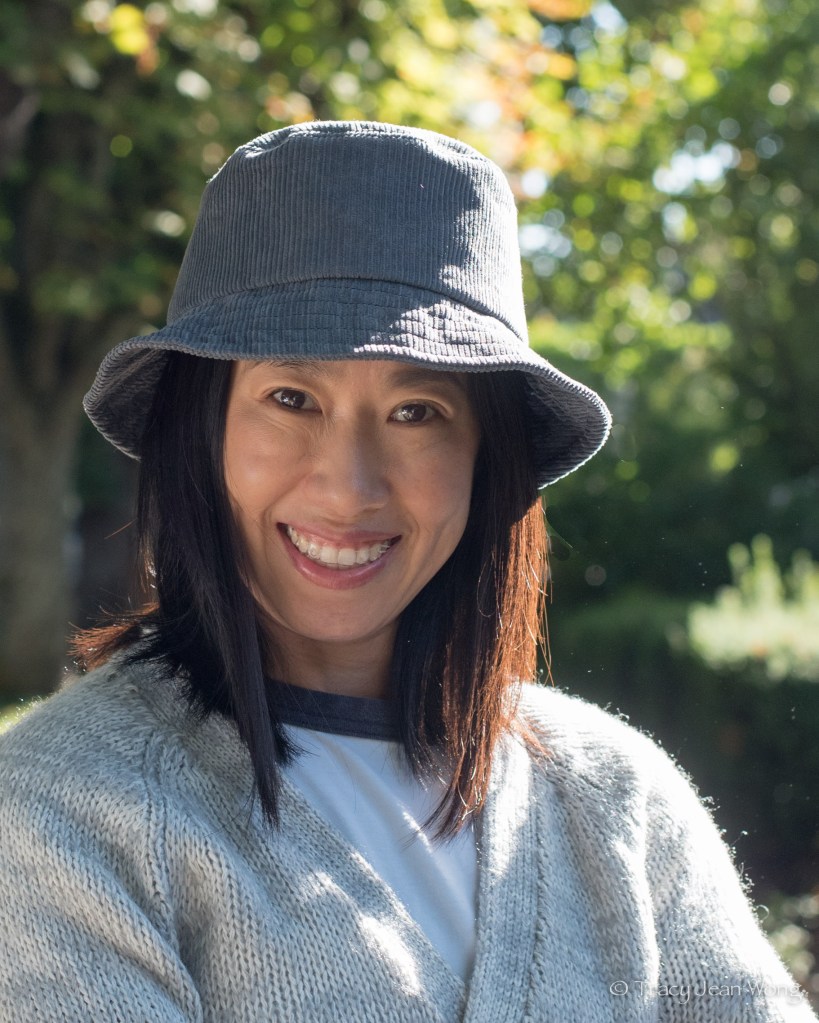
Cotton corduroy bucket hat.

Corduroy is produced from a base of primary warp and weft yarns woven together. Using a technique called “cut-pile”, an extra set of yarns is interwoven into this base fabric, then cut and brushed to form the characteristic textured lines of corduroy. These ridges formed by the upright cut fibres are called wales or cords and give corduroy its plush, textured feel. The wale number determines how closely bunched the ridges are. For instance, standard wale corduroy has 10-12 lengthwise pile rows per inch and wide wale has 6-10.

Wide wale corduroy in merlot and caramel, standard wale in grey.

Both denim and corduroy soften, fade and age with time. Denim fades with washing and wearing for two reasons. When warp fibres are indigo-dyed, the dye doesn’t penetrate to the core of the fibres. The surface dye washes and wears off. At the same time, the undyed weft fibres become more prominent. On the other hand, corduroy loses its dye and fades in high wear/stress points with the channels between cords maintaining some of the original dye. Both fabrics are extremely durable. Denim gets better with age, while corduroy needs a little extra care (wash garments inside out and iron carefully on the wrong side) to avoid flattening of the pile and development of shiny spots.

Chapeau Rouge

When my friend, Yvonne, and I were travelling in Dijon, France, we visited a hat shop named Chapellerie Bruyas. The shop has the look of an old-fashioned boutique with its wood-framed windows and doors. The window displays entice the passerby with a collection of stylish and well-crafted hats for women and men.

We were welcomed at Chapellerie Bruyas by sales representatives who are as passionate about hats as I am. Murielle (above left) helped me find a beret, made in the EU, and showed me how best to wear it. Deciding on a red beret was a bold colour choice for me and I’m happy with it. Murielle also gave me a great tip on how to take care of the hat: When not wearing it, turn it inside out to prevent snags or pilling on the right side of the wool blend fabric.

Yvonne had already picked out a summer hat, but decided that she too wanted a beret. After trying on many, she finally selected a dusty rose one. We had fun posing and photographing ourselves wearing our chic French hats and later on Rue de Chapeau Rouge as the sun was setting.

Jewel Tones

Beret in Dahlia Deep, 70% Wool/30% Alpaca, design adapted from a pattern by Joyce Nordstrom

It is time to swap out warm whites and pastels for rich hues like emerald, sapphire, ruby and amethyst. Saturated colours can add drama to our homes and wardrobes. Be bold with upholstery or a dress in a jewel tone. Or accent your outfit with a pop of colour in a hat, scarf, gloves, shoes or bag. Wear jewelry with precious stones or gems to complete your ensemble. The name “jewel tone”, after all, is derived from gemstones.

Beret in Thai, 70% Wool/30% Alpaca, design adapted from a pattern by Joyce Nordstrom

Shift into autumn with jewel tones mirrored in nature. Think ripe berries and plums, squashes and pumpkins, coneflowers and rose hips. Notice green foliage as it changes to vibrant reds, oranges and yellows.

Beret in Blue Moor, 70% Wool/30% Alpaca, design adapted from a pattern by Joyce Nordstrom

I chose a yarn called “Rowan Moordale” to crochet three different berets adapted from a design by Joyce Nordstrom. The yarn is made from British Blue-faced Leicester wool and alpaca. After it’s spun, two plies are twisted together and dyed giving it a distinctly textured look. Available in neutrals and deep rich colours, I showcase three in this post: Blue Moor, the colour of a turquoise gemstone; Thai, a dark green reminiscent of the forest; and Dahlia Deep, like a purple violet. Enjoyable to work with and to wear, it’s strong, warm, soft and lustrous.

From One Hat to Another

One summer I came upon a multitude of damselflies with metallic blue bodies and elaborately veined transparent wings. They were mating in flight, the slender bodies of the male and female damselflies connecting together in a heart or wheel shape. It was fascinating to witness this ritual.

Reversible cotton bucket hat

So, it was no surprise that a gift of watery blue cotton fabric printed with damselflies resonated with me. Not only was it visually appealing, but also it brought back memories of that special time seeing the damselflies. I immediately sewed a reversible bucket hat for myself and used a creamy white cotton twill for the second side.

Newsboy cap with visor

A second “damselfly” hat was sewn in a newsboy style. Contrasting thread was used to topstitch the seams joining the six gores of the hat and a button reminiscent of the damselfly wings topped off the crown.

A close-up view of the damselflies and decorative button

Having recently acquired a length of cotton velvet, I decided to adapt the newsboy cap pattern to a beret. It was a simple matter of eliminating the visor. The look and feel are quite different with the beret made in the black velvet with the soft, plush pile.