

A friend came back from Japan with a much appreciated gift of cotton cloth. There were three cut pieces of cloth, each 110cmX50cm, that could be mixed and matched with one another or with fabrics already in my stash.

Coordinating fabrics can be easier if you find coloured dots on the edge or selvedge of the fabric pieces. The dots show the hues or colours the screen printers used in creating the fabric. They are called colour registration marks. If they’re numbered, this indicates the order in which colours are used to print the design. They also serve as a measure of quality control during production. If the colour falls outside the circle, the resulting design may be blurry. To prevent this, recalibration of the screen printing process must be done to properly align the screen, fabric and printing machine.
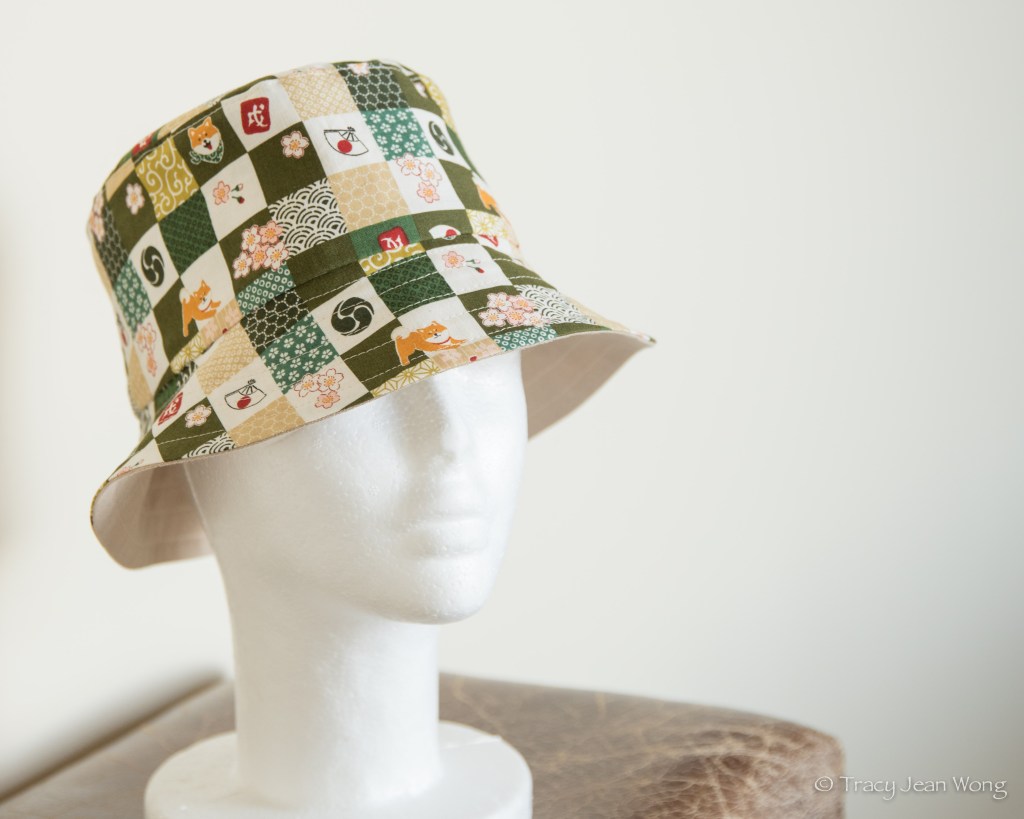
I decided to use two of my new lengths of Japanese cotton to sew a reversible bucket hat. It features a patchwork of cats, flowers and geometric designs on one side, while the other side is plain in a warm sand colour.
Some other options I had are shown below. On the left, I paired a two-toned neutral cotton which mirrors the patchwork quilt effect. And in the other two instances, I used the coloured markings on the selvedge to pull out solid colours which I thought would match up well with the print.
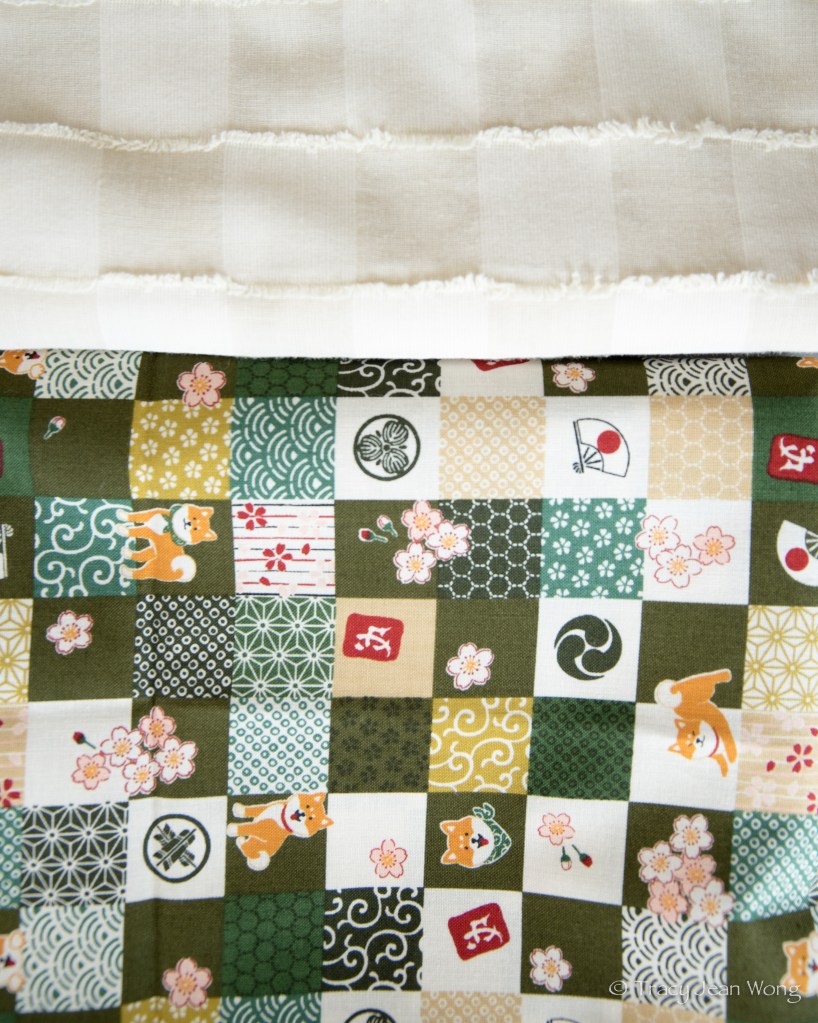


Although the choice of coordinating fabric is up to the eye of the maker, the coloured dots on the selvedge can certainly act as a guide.

 Hats by Tracy J