
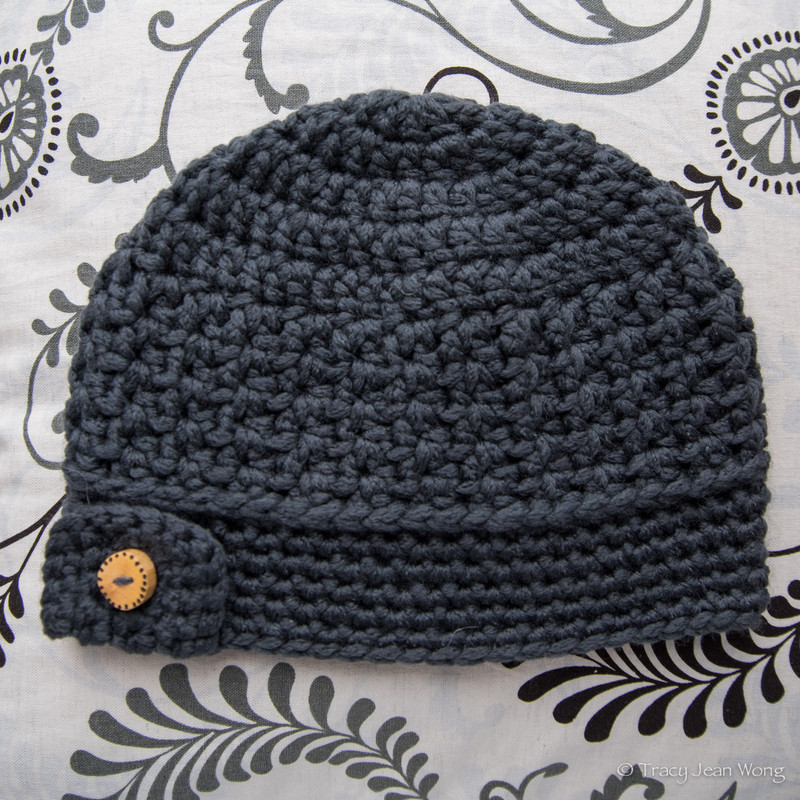
Wood Button Embellishment
I was delighted to be shown a collection of buttons that were handcrafted many years ago. A box full of wooden buttons came off a shelf at the home of Babs’ daughter. It was clear that thought for the raw natural materials had gone into the design and construction of each flat button and toggle. Some buttons were threaded through the buttonholes and attached to hand-decorated cards. A label on the back of one card read: Handmade Yew Buttons by B. Black, North Vancouver.
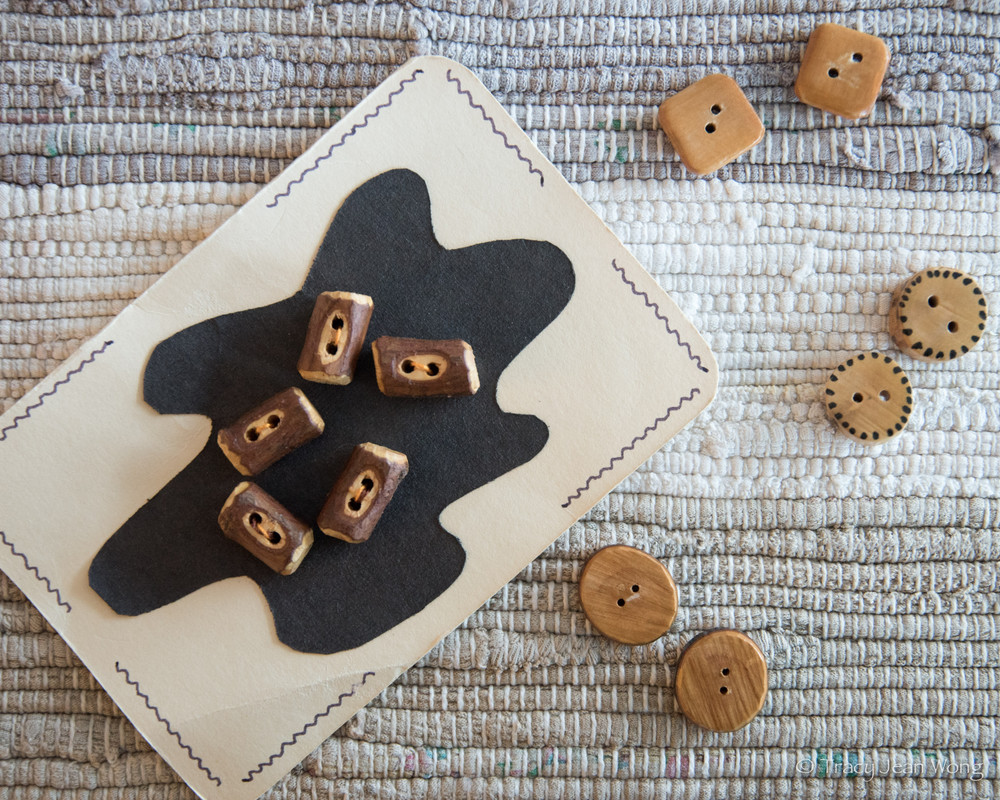
Historically, buttons were made by hand and often reflected the status of the wearer. Goldsmiths were commissioned by the wealthy to make buttons from gold, silver, and precious gems. These buttons were considered fine jewelry. Common folk had simple utilitarian buttons made from bone, wood, and coarse fabric.
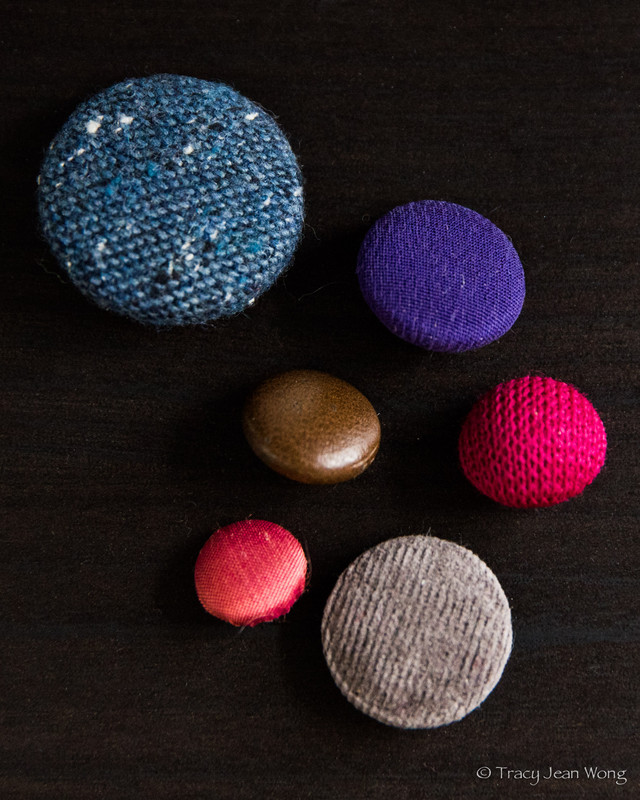
The craft of covered buttons originated in the English county of Dorset in 1622. Dorset buttons, as they were known, were handmade from natural materials such as ram’s horn and sheep hide. Fast forward to the 1960s when self-covered buttons were a popular fastener on coats, jackets, and dresses. As the name implies, these were covered in the same fabric as the main body of the garment. Fabric buttons have been used to add flair to the upholstery of a chair or sofa that has a plain back and no extra back cushion. The result is a button-backed or tufted-back piece. Though not as commonly used now, fabric-covered buttons can be obtained from a company that produces them or you can make your own by hand with a DIY kit from a sewing supplies shop.
 Hats by Tracy J