
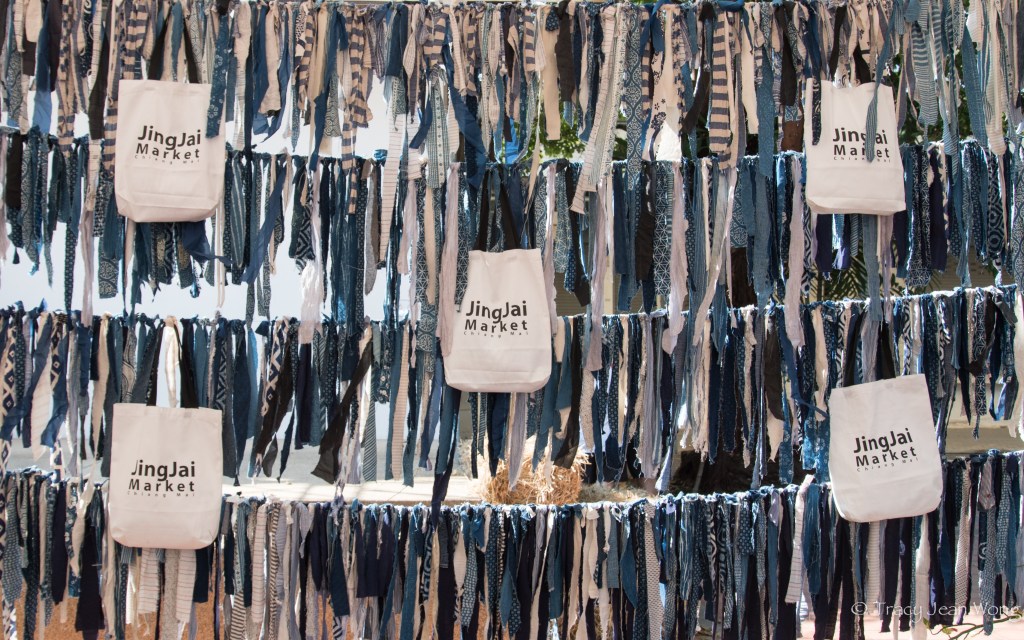
Midnight blue, cosmic cobalt, deep violet…just a few of the many shades of indigo I saw at the Jing Jai Market in Chiang Mai. Artisans of Walk on the Wild Side explained that tribes people in rural Thai villages produce much of the fibre and fabric used in their handcrafted apparel and they use natural pigments used in the dyeing process.

For thousands of years, materials such as cochineal bugs, yarrow flowers, and tea leaves have been used as dyes. In the case of indigo, many plants contain the indigo dye molecule, but successful extraction of the pigment is limited to only a few. Indigofera tinctorial grows in hot, humid climates and is the most common commercial source. In the mid-1800s, development of synthetic dyes changed the textile industry, largely replacing the labour-intensive practice of natural dyeing.
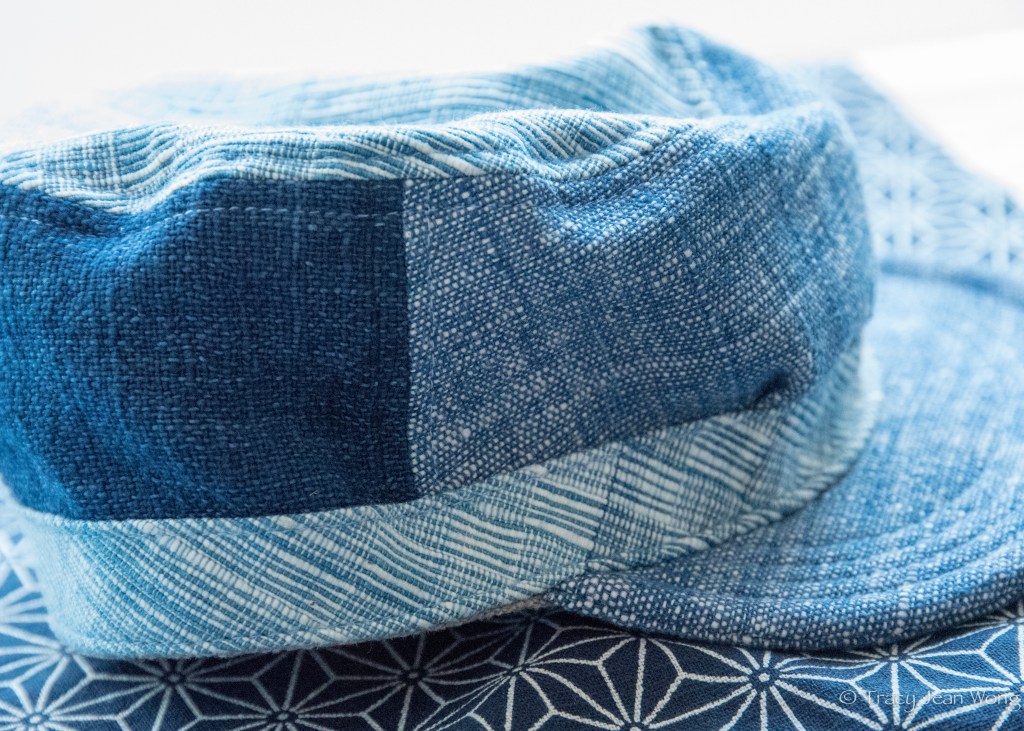
Different methods have been developed to dye plant fibres, animal hair and fur, and filaments spun from silkworms. Dyeing methods are also nuanced to produce indigo variations. Multiple dips in indigo vats intensify colour. Over dyeing a base colour such as yellow with indigo can produce an emerald hue. Surface designs can be created when dye is used as paint or dyeing is resisted as in tie dyeing.
 Hats by Tracy J